
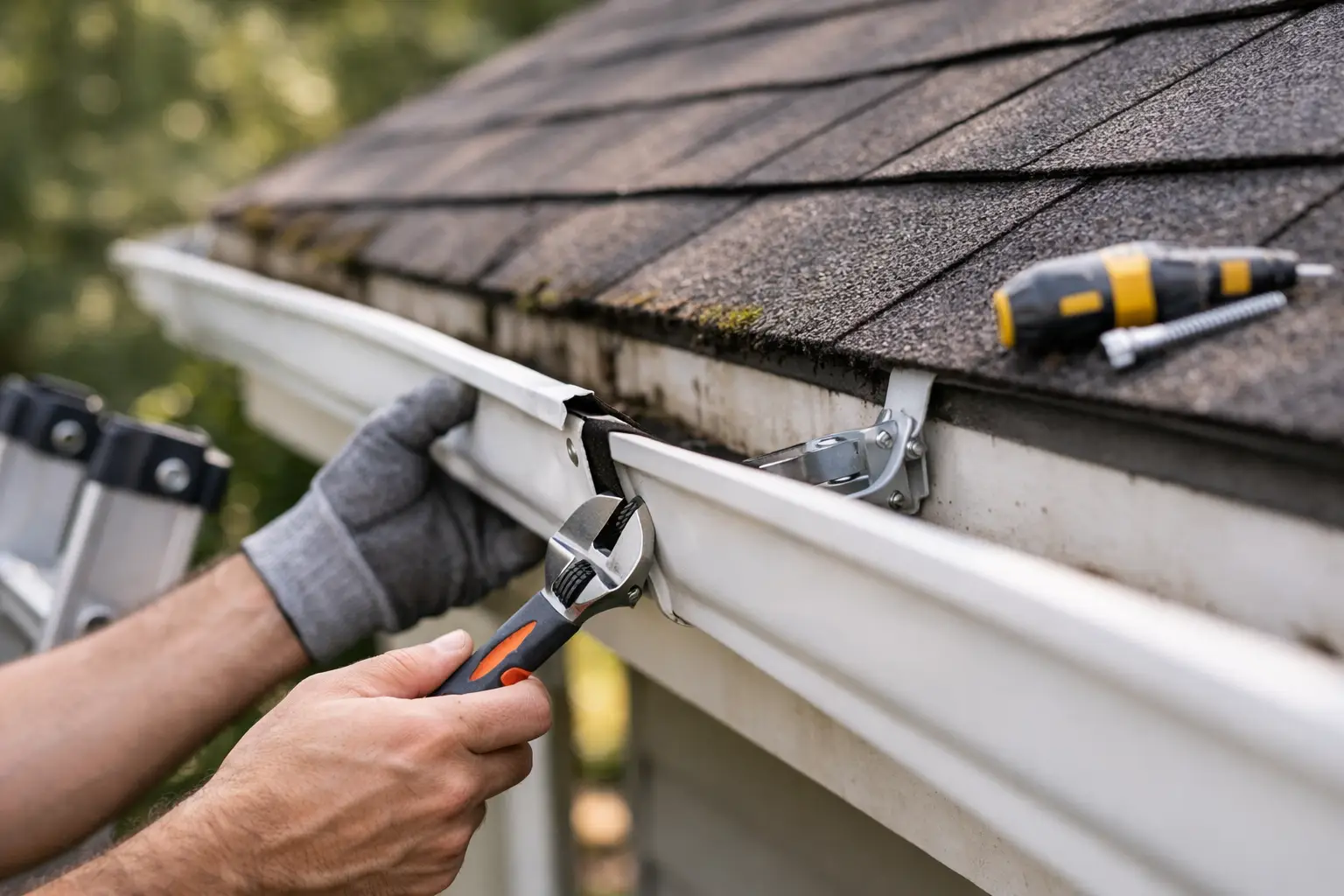
A sagging gutter usually shows up right after a hard rain. You notice a low spot holding water, a section pulling away from the fascia, or overflow pouring over the edge where it never used to. If you are wondering how to stop gutter sagging, the fix starts with finding out why that section dropped in the first place – because the right repair depends on the cause.
In Central Florida, gutters take a beating. Sudden downpours, clogged debris, loose fasteners, and aging fascia boards can all turn a small dip into a bigger drainage problem. The good news is that many sagging issues can be corrected before they lead to wood rot, leaks behind the gutter, or water collecting too close to the foundation.
Why gutters start to sag
Gutters are supposed to carry water quickly and evenly toward the downspouts. When they begin to sag, that pitch gets interrupted. Water slows down, pools in low sections, and adds even more weight. That extra weight pulls on the hangers and fasteners, which makes the sag worse over time.
One of the most common causes is debris buildup. Leaves, roof grit, and shingle granules can collect inside the trough, especially near corners and downspout openings. Once that material gets wet, it becomes heavy fast. A gutter system that was installed correctly can still start to droop if it stays packed with debris through repeated storms.
Loose or failing hangers are another common issue. Older spike-and-ferrule systems can back out over time, and even newer hidden hangers can loosen if they were spaced too far apart or fastened into weak wood. In some cases, the gutter itself is still in decent shape, but the hardware holding it in place is no longer doing its job.
Then there is fascia damage. If the board behind the gutter has started to rot, crack, or soften from moisture exposure, the fasteners may no longer have solid material to grip. That is why simply driving a screw back in is not always a lasting fix. If the wood is compromised, the sagging will usually return.
How to stop gutter sagging the right way
The best approach is to inspect the entire affected run, not just the spot where the gutter is visibly low. Sagging often starts in one place but reflects a larger support or drainage issue.
Start by checking for standing water. If water is sitting in the gutter more than a day after rainfall, there is likely a pitch problem or blockage. Next, look at the brackets or hangers. If they are bent, loose, rusted, or missing, they need attention. Then look at the fascia board behind the gutter. Peeling paint, dark staining, or soft wood are signs that the support surface may be failing.
If the gutter is full of debris, cleaning comes first. Removing the weight inside the trough may improve the sag temporarily, but do not stop there. Once the system is clean, you can see whether the hangers are still properly spaced and whether the gutter line is holding its shape.
Re-secure loose hangers or brackets
If the sagging is minor and the fascia is still solid, replacing or tightening the hangers may solve the problem. Hidden hangers generally provide a more secure hold than older spike systems, especially when they are fastened correctly and spaced for the load the gutter will carry during heavy rain.
This is where precision matters. If you pull one section up too high without checking the full run, you can create a new low spot a few feet away. Gutters need a consistent slope toward the downspout, not just a level appearance from the ground.
Clear clogs and reduce future weight
When sagging is tied to repeated clogging, cleaning the system is part of the repair. Downspout blockages and compacted debris near outlets can trap water in the gutter longer than it should stay there. Even a strong hanger setup can struggle if the trough is constantly overloaded.
If your property has heavy tree coverage or frequent buildup, adding leaf protection may help reduce future sagging caused by debris weight. It will not correct a support problem by itself, but it can help prevent the same issue from returning after repair.
Replace damaged sections when needed
Sometimes the gutter profile itself is bent or twisted. If a section has been holding water for a long time, the metal can deform enough that rehanging it will not fully restore proper flow. In that case, replacing the damaged section is often the better value than trying to force a worn piece back into shape.
This is especially true if seams are leaking or if multiple repair points are starting to stack up. A patch may hold for a while, but there comes a point where a cleaner replacement makes more sense.
Repair fascia before rehanging the gutter
If the wood behind the gutter is soft or deteriorated, that problem has to be addressed before the gutter can be securely reset. New screws in rotten fascia do not last. The gutter may look straight for a short time, but the support will fail again under the next cycle of rain and debris weight.
For homeowners, this is often the point where a professional inspection is worth it. What looks like simple gutter sagging from below can actually be a fascia repair issue with drainage consequences beyond the gutter itself.
Signs the problem is getting worse
Some sagging is easy to ignore because it starts small. The trouble is that gutters do not usually stay in the same condition for long once support begins to fail.
Watch for gutters pulling away from the roofline, screws or spikes on the ground, water dripping behind the gutter, staining on the fascia, or overflow concentrated at one low section. You may also notice mildew near the foundation, erosion in planting beds, or puddling below the sagging area. Those are signs that the gutter is no longer controlling roof runoff the way it should.
A visible bow in the middle of a run is another red flag. So is a gutter that rattles or shifts during a storm. If the system moves when it is full of water, the hardware may be near failure.
Repair or replace? It depends on the system
Not every sagging gutter needs full replacement. If the issue is isolated, the material is still sound, and the fascia is in good shape, a targeted repair can be the right move. Refastening hangers, adjusting pitch, clearing blockages, and replacing a short damaged section can restore function without replacing the whole run.
But if the gutter is older, seamed in multiple places, repeatedly leaking, or sagging in more than one section, replacement may be more practical. The same goes for systems that were installed with poor spacing, incorrect slope, or undersized components for the roof area they handle.
Seamless K-gutters are often a better long-term solution when an existing system has recurring support and leak issues. Fewer joints mean fewer weak points, and custom on-site fitting helps create a cleaner line with proper pitch. For many Orlando-area homes, that combination improves both appearance and water control.
How to prevent gutter sagging after the repair
Once the gutter is corrected, maintenance becomes the difference between a one-time fix and a recurring problem. Regular cleaning matters, especially before and during the rainy season. Gutters that stay clear drain faster, carry less standing weight, and put less strain on their hangers.
It also helps to check the system after major storms. Look for loose fasteners, separated joints, or sections that seem to hold water. Catching a small issue early usually costs less than waiting until the fascia is damaged or the gutter pulls away from the home.
If your gutters are older or you manage multiple properties, scheduled inspections can save time and prevent surprise repairs. A professional can spot pitch issues, hardware wear, and drainage problems before they turn into visible sagging. That kind of preventative service is often the simplest way to protect the home and avoid bigger exterior repairs later.
When homeowners ask how to stop gutter sagging, the real answer is not just lifting the low spot. It is restoring support, correcting drainage, and making sure the system can handle the next hard Florida rain without failing again. If the gutter is straight, secure, and draining the way it should, the home is better protected where it counts most.