
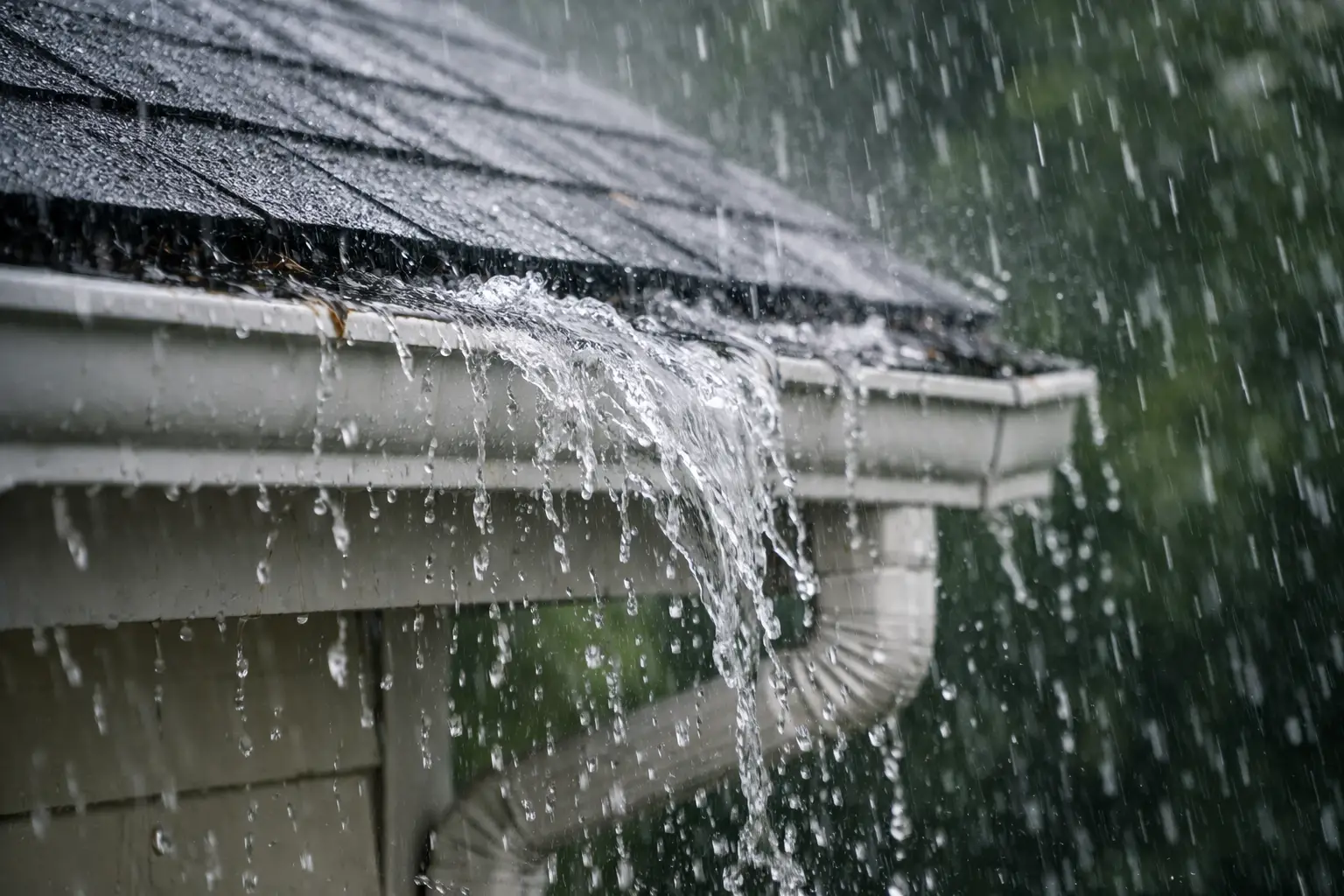
A hard Florida downpour will expose a gutter problem in minutes. If you are seeing overflowing gutters in heavy rain, the issue is usually not the rain alone. Most of the time, it is a sign that water is not moving through the system the way it should, and that can put your roofline, soffit, fascia, siding, landscaping, and foundation at risk.
In Central Florida, this matters more than many homeowners expect. Afternoon storms can dump a large amount of water in a short window, so a gutter system that seems fine during light rain may fail when it is under real pressure. The good news is that overflow usually has a clear cause, and once you identify it, the fix is often straightforward.
Why gutters overflow during heavy rain
Gutters are designed to catch roof runoff and move it toward downspouts. When water spills over the front or back edge instead, something is interrupting that flow. Sometimes it is a simple cleaning issue. In other cases, the system itself is not sized, pitched, or secured well enough for the home.
One of the most common causes is debris buildup. Leaves, pine needles, seed pods, roof grit, and shingle granules collect inside the trough and around downspout openings. Water can only move so fast through a blocked channel. Once the flow backs up, it pours over the edge.
Another common issue is improper pitch. Gutters should slope slightly toward the downspouts. If that pitch is off, water can pool in low spots and struggle to drain during a storm. The result is overflow in the middle of the run or near corners, even when there is no major clog.
Capacity also matters. Some homes simply have too much roof area draining into too few downspouts or into gutters that are too small for the runoff volume. This is especially relevant in Orlando, where intense rainfall can overwhelm an undersized system quickly.
Then there are structural issues. Loose hangers, sagging sections, separated joints, and crushed or misaligned downspouts all reduce performance. A gutter does not need to be falling off the house to fail. Even small alignment problems can change how water moves through the system.
Signs the problem is bigger than one storm
A single dramatic storm does not always mean your gutters are failing. But if overflowing gutters in heavy rain happen more than once, there is usually an underlying issue worth addressing before it leads to damage.
Watch for water marks on the fascia, peeling paint near the roofline, stained soffits, or mulch and soil washing out below the eaves. You may also notice puddling around the foundation, drips behind the gutter, or erosion near downspout discharge points. Inside the gutter, standing water is another warning sign. Gutters are meant to drain, not hold water long after the rain stops.
If you manage a rental property, overflows can be easy to miss until tenants mention water pouring near an entryway or pooling by the slab. By that point, the problem may have already been happening for several storms.
The most likely causes of overflowing gutters in heavy rain
Clogs in the gutter channel
Debris does not have to fill the entire gutter to cause trouble. A partial blockage slows the flow enough that a strong rain can overtake it. This often happens in valleys where two roof sections send concentrated runoff into one area.
Blocked downspouts
A gutter may look fairly clean from the ground and still overflow because the downspout is blocked. When that happens, water has nowhere to go, so it backs up through the trough and spills over.
Incorrect gutter pitch
If sections are too level or sloped the wrong way, water collects instead of draining. This can happen over time as fasteners loosen or fascia boards begin to deteriorate.
Too few downspouts
Even a clean gutter can overflow if it has to carry more water than the downspouts can discharge. Longer runs often need additional downspouts to keep water moving during heavy storms.
Gutters that are too small
Some older systems were installed with basic capacity in mind, not Florida storm conditions. A larger seamless K-gutter system may handle roof runoff more effectively, especially on larger roof planes.
Poor placement or roof design challenges
Water can overshoot the gutter if the drip edge, roof angle, or gutter placement is off. Fast-moving water from steep roof sections can sometimes shoot past the gutter rather than dropping into it cleanly.
What happens if you ignore it
Overflow is not just a nuisance. Repeated spillover can rot fascia boards, stain exterior surfaces, and weaken soffits. Water that falls too close to the home can saturate the soil around the foundation, contribute to settlement issues, and create conditions for mold or wood damage.
It can also shorten the life of the gutter system itself. Standing water adds weight, and that extra weight stresses hangers and fasteners. Over time, sections begin to pull away, seams open up, and leaks get worse.
For homes with landscaped beds around the perimeter, gutter overflow often shows up as washed-out mulch, exposed roots, and trenching in the soil. That may seem cosmetic at first, but it is often a clue that roof runoff is not being controlled properly.
How to fix the problem the right way
The right fix depends on what is causing the overflow. Sometimes a professional cleaning and downspout flush will solve it. If debris is the main issue, routine maintenance may be enough to keep the system working through storm season.
If the gutters are sagging or holding water, a repair may be needed to resecure hangers and restore the correct pitch. This is one of those jobs where small adjustments matter. A section that is only slightly off can still create major overflow during heavy rain.
If the system is undersized, cleaning alone will not change the result. In that case, adding downspouts, adjusting discharge paths, or replacing the existing system with properly sized seamless gutters may be the better long-term solution.
Homes with recurring debris problems may also benefit from leaf guard protection. Guards are not a cure for every issue, and they still need occasional inspection, but they can reduce buildup and improve water flow in the right setting.
When repair is enough and when replacement makes more sense
A repair usually makes sense when the gutters are structurally sound and the problem is isolated. A clogged downspout, a loose section, or a minor pitch correction can often be handled without replacing the whole system.
Replacement is worth considering when the gutters have widespread leaks, frequent sagging, separated seams, or repeated overflow despite cleaning and repairs. Older sectional gutters tend to develop more leak points over time. A custom-fit seamless system reduces those joints and gives water fewer places to escape.
That is often why homeowners choose seamless K-gutters. They are measured to the home, installed for cleaner lines, and built to improve water control with fewer connection points. For many properties, that means better performance during the storms that test the system most.
Why local conditions matter in Orlando
Not every gutter setup that works in a milder climate works well in Central Florida. Storm intensity, roof design, tree coverage, and soil conditions all affect how a system performs. A home under heavy oak canopy may need more frequent cleaning than a similar home in an open subdivision. A larger roof with steep sections may need a different drainage setup than a smaller one-story home.
That is why the best answer is rarely guesswork. It helps to look at where the overflow happens, how the roof sheds water, and whether the current system is actually sized and configured for the property.
For homeowners who want a direct answer, Precision K-Gutters focuses on practical fixes that match the home rather than pushing a one-size-fits-all recommendation.
What homeowners can do before the next storm
If you have noticed overflow recently, do not wait for the next major rain to confirm it again. Have the gutters cleaned if they are due. Check whether downspouts are draining freely and whether water is discharging far enough away from the home. Look for visible sagging, standing water, or sections pulling away from the fascia.
If those checks do not explain the issue, it is time for a closer inspection. Overflow usually gets more expensive when it is ignored, not because the gutter problem itself becomes dramatic overnight, but because the water keeps reaching places it should not.
A gutter system should do one job well – move rainwater away from your home quickly and cleanly. When it does not, the smartest next step is a clear diagnosis and a fix that holds up in the kind of rain Florida actually gets.