
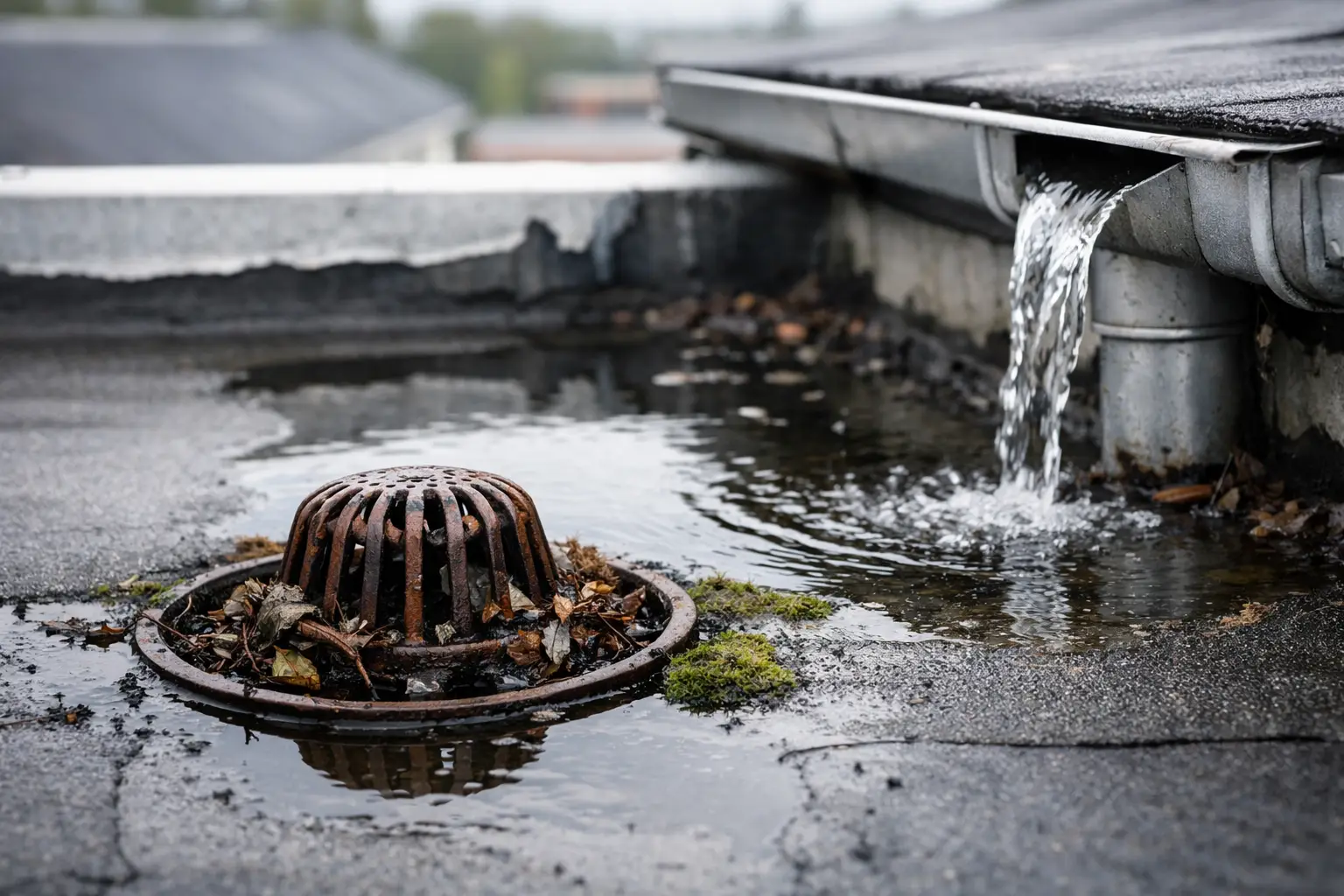
A heavy Orlando downpour can reveal a drainage problem in minutes. Water that should move from the roof, through the gutters, and safely away from the home may instead spill over the edge, soak siding, or collect near the foundation. Knowing the roof drainage warning signs early gives you a chance to correct a manageable gutter issue before it becomes wood rot, interior staining, or costly exterior repairs.
Gutters are not a set-it-and-forget-it part of the home. Leaves, roof grit, storm debris, loose fasteners, and settling soil can all affect how water moves around your property. A quick look during and after rainfall often tells you more than waiting until a leak appears indoors.
Roof Drainage Warning Signs You Can See During Rain
The clearest signs usually show up when the system is handling water. If it is safe to do so, watch your gutters from the ground during a steady rain. Do not climb a ladder or walk on the roof during wet conditions.
Water pouring over the gutter edge
Overflow is one of the most common warning signs. It may mean the gutter is packed with leaves and roof debris, but a clog is not the only possible cause. Gutters can also overflow when they are undersized for the roof area, installed with poor slope, or fed by a downspout that cannot move water fast enough.
Pay attention to where overflow occurs. Water spilling from one isolated section can point to a local blockage or sagging gutter. Water overflowing along several sides of the house may indicate a larger drainage design issue. In Central Florida, where storms can drop a lot of water quickly, capacity and downspout placement matter as much as keeping channels clean.
Water shooting from seams or corners
A drip at a gutter joint may seem minor, especially after a storm. Over time, though, repeated leaks can stain fascia boards, soak soffits, and create conditions that lead to rot. Corner joints, end caps, and connections to downspouts are common leak points because they rely on sealant and fasteners.
Seamless K-gutters reduce the number of joints along a run, which can reduce opportunities for leaks. They still need secure corners, properly sealed end caps, and regular inspections. A leak that returns after a basic sealant patch may mean the section is moving, pulling away, or holding standing water.
Gutters that sag, tilt, or pull away
Gutters should follow a subtle slope toward the downspout while remaining firmly attached to the fascia. If a section looks bowed, tilted, or visibly lower than the rest, it may be holding debris and water. The extra weight can loosen hangers and cause the problem to spread.
Look for gaps between the gutter and roofline, particularly after a strong storm. Sagging can be caused by clogged gutters, failing fasteners, or damaged fascia wood. Simply reattaching the gutter without addressing the underlying wood condition may not provide a lasting repair.
Downspouts that do not discharge water
A downspout has one job: move collected roof water away from the gutter and toward a safe discharge area. If water is pouring over the gutter directly above a downspout, the downspout or its outlet may be clogged. If little or no water comes out at the bottom while rain is hitting the roof, that is another clear sign of blockage.
Leaves can collect at elbows, underground connections, and the outlet where the downspout meets the gutter. A downspout that drains correctly but empties too close to the house creates a different problem. The water is moving, but it is not moving far enough away from the foundation.
Roof Drainage Warning Signs Around the Home
Not every drainage problem is visible from the roofline. The ground, siding, and interior often show the effects of poor runoff first.
Puddles or soft soil near the foundation
Standing water near the home after rain deserves attention, especially when it appears in the same spot repeatedly. Some temporary pooling can happen during a severe storm, depending on the grade of the yard and local soil conditions. The concern is water that remains after the rain has stopped or keeps returning near exterior walls.
Downspout extensions and adjustments can help direct discharge away from the foundation. However, extensions are not a cure-all. If the yard slopes toward the home or a drainage swale is blocked, gutter improvements may need to be paired with grading or landscape drainage work.
Stained siding, peeling paint, or rotting trim
Vertical dirt marks below gutters often show where water has been overflowing. You may also see peeling paint, dark staining, swollen trim, or soft wood around fascia and soffits. These signs do not always mean the roof itself is leaking. They can result from water repeatedly escaping a gutter seam, overflowing a clogged channel, or backing up behind the gutter.
Addressing the water path early helps protect the materials around the roofline. Once wood rot is advanced, the repair often involves more than the gutter system.
Mold, mildew, or musty odors indoors
A musty smell near an exterior wall, discoloration on a ceiling, or mildew around a window can have several causes. Plumbing leaks, HVAC condensation, roof damage, and poor exterior drainage can all contribute. The key is not to assume it is only a cosmetic issue.
If the exterior shows overflow or leaking gutter sections near the same area, inspect both systems. A professional can help determine whether the water is coming from the roof, gutters, wall assembly, or another source. Finding the source matters more than repeatedly cleaning the visible stain.
Erosion, mulch washout, and damaged landscaping
Water from a roof has force behind it. When a downspout empties onto a flower bed or bare soil, it can carve channels, wash mulch away, and expose roots. This may look like a landscape issue, but it is often a roof drainage issue at its starting point.
A properly aimed downspout protects the landscaping as well as the home. The best adjustment depends on the lot, walkways, planting beds, and where water can safely flow without creating a trip hazard or sending runoff toward a neighbor’s property.
What to Check Before the Next Storm
A simple ground-level inspection after rain can help you spot changes before damage becomes obvious. Check for visible debris at gutter openings, drips from joints, overflow marks on siding, loose sections, and water collecting around the home. Clear accessible debris only when conditions are dry and safe. For high gutters, steep rooflines, or suspected damage, professional service is the safer choice.
Regular gutter cleaning is especially useful after periods of heavy leaf drop and storm activity. Homes under mature trees may need more frequent attention than homes with limited overhead debris. Leaf guard solutions can reduce the amount of debris entering the system, but they are not maintenance-free. The right option depends on the roof type, surrounding trees, gutter condition, and how water enters the system during heavy rain.
If gutters are repeatedly overflowing despite cleaning, avoid treating the problem as a one-time clog. The slope may need correction, the downspouts may need adjustment, or the system may need a better layout for the roof’s water volume. Custom-measured seamless gutters can provide a cleaner fit with fewer long-run joints, but proper installation and discharge placement remain essential.
When a Repair Is Enough and When Replacement Makes Sense
A targeted repair is often the right answer for a loose hanger, small seam leak, clogged downspout, or one damaged section. It is practical, cost-conscious, and effective when the rest of the system is in good condition.
Replacement becomes more reasonable when gutters have widespread corrosion, repeated leaks, extensive sagging, poor sizing, or a layout that consistently sends water where it should not go. For rental properties, recurring drainage complaints are also a reason to assess the full system rather than patching one trouble spot at a time.
Precision K-Gutters can inspect the visible drainage path, explain what is causing the issue, and provide a direct recommendation based on the condition of your home. The goal is not to add work that is unnecessary. It is to make sure rainwater has a clear path off the roof and away from the areas you need to protect.
The best time to address a drainage concern is when it is still a gutter adjustment, cleaning, or repair – not after water has reached the fascia, walls, or foundation. Keep an eye on how your home performs in the next storm, because rain will show you exactly where the system needs attention.