
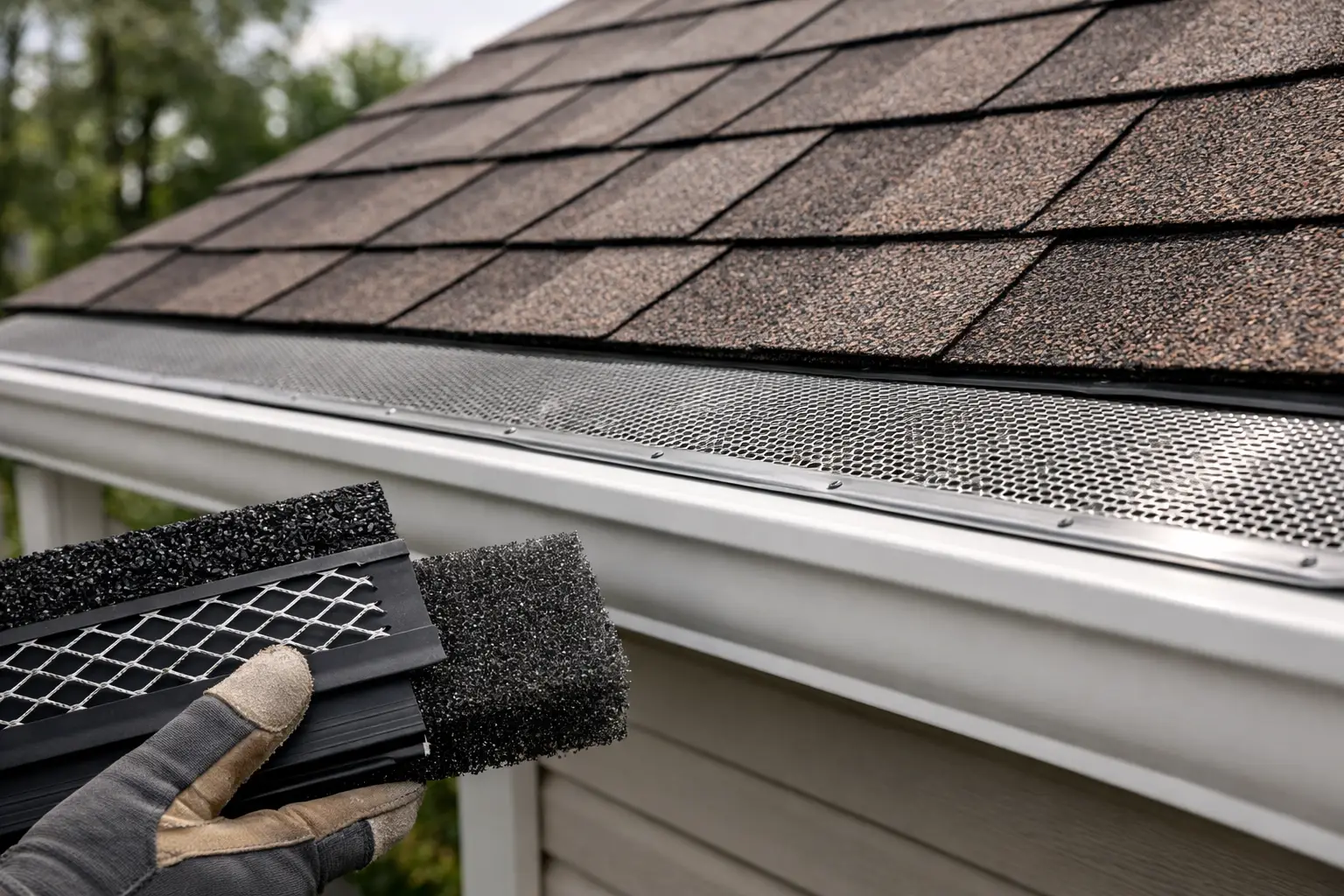
A hard Central Florida rain can expose a gutter problem in minutes. Water spills over the edge, runs down siding, pools near the foundation, and can soak fascia boards behind the gutter. Gutter guards for shingle roofs can reduce the debris that causes those clogs, but the right guard has to work with both the gutter system and the roof edge.
For Orlando homeowners and property managers, the goal is not to make gutters completely maintenance-free. It is to keep water moving where it belongs during frequent downpours while reducing the buildup of oak leaves, pine needles, roof grit, and seed pods. A properly selected and installed leaf guard can make routine gutter care easier and help protect the home from overflow-related damage.
Why Shingle Roofs Need a Careful Guard Choice
Asphalt shingle roofs shed more than rainwater. Over time, small mineral granules loosen from the shingle surface and wash toward the gutters. This is normal aging, especially after heavy weather, but it affects how a guard performs. A screen with openings that are too fine may catch granules and create a layer of debris on top. Openings that are too large may let leaves and small twigs enter the gutter.
The roof edge also matters. Some gutter guards tuck beneath the first row of shingles, while others fasten to the fascia, gutter lip, or both. A guard should never be forced under shingles in a way that lifts them, damages the roof edge, or interferes with normal water flow. On an older roof, the condition of the shingles and drip edge should be checked before selecting an installation method.
The best choice depends on the roof pitch, the amount and type of nearby tree cover, the size and condition of the gutters, and how quickly water comes off the roof in a storm. A guard that performs well on a low-slope roof with broadleaf trees may not be the best fit for a steeper roof surrounded by pines.
Common Types of Gutter Guards for Shingle Roofs
Several types of guards can work with shingle roofs. The right option is usually determined by the debris around the property and the quality of the installation, not by the product name alone.
Micro-mesh guards
Micro-mesh guards use a fine metal screen to block small debris while allowing water to pass through. They are often a strong option for homes with pine needles, shingle grit, and smaller tree debris. Quality micro-mesh materials are durable, but they still need occasional brushing or rinsing if fine debris collects on top of the screen.
The installation detail is especially important with micro-mesh. The guard needs a secure slope and a solid connection to the gutter so water does not overshoot during a heavy storm. This is a common concern in Orlando, where a short burst of rain can send a large volume of water down the roof at once.
Aluminum screen guards
Aluminum screens are a practical option for larger leaves and common yard debris. They generally allow strong water flow and are often less expensive than fine mesh products. Their limitation is that small debris, pine needles, and roof granules can pass through more easily.
For homes with light tree coverage, a well-fitted aluminum screen may provide the right balance of protection and value. For heavily wooded properties, it may reduce clogs without eliminating the need for regular cleaning.
Surface-tension guards
Surface-tension guards are designed to guide rainwater around a curved edge and into the gutter while debris falls away. They can be effective when installed at the correct angle, but their performance depends heavily on the roof line, gutter position, and rainfall intensity.
These guards are not a one-size-fits-all solution. During high-volume rain, improper positioning can lead to water running past the gutter instead of entering it. Before installing this style, it is worth evaluating the roof pitch and the existing gutter system rather than assuming it will work on every home.
Foam and brush inserts
Foam and brush inserts sit inside the gutter and are usually easy to install. They can block larger debris at first, but they often collect sediment, roof granules, and organic material within the gutter itself. In Florida’s heat and moisture, trapped material can hold water and encourage buildup.
These products may be useful as a short-term or budget-conscious option, but they typically require closer monitoring than professionally fitted metal guards. Homeowners who want a lower-maintenance solution usually benefit from a guard installed over the gutter rather than an insert that fills the gutter channel.
What a Good Installation Should Accomplish
A gutter guard should support the entire drainage system, not just cover the opening. If the gutters are sagging, leaking at seams, pitched incorrectly, or undersized for the roof area, adding guards will not fix the underlying problem. In some cases, the best first step is a gutter repair, downspout adjustment, or replacement of damaged sections.
A professional installation should leave the guard firmly secured, aligned with the roof edge, and positioned so water enters the gutter during heavy rainfall. The installer should also make sure the guard does not create a path for water to run behind the gutter, where it can damage fascia boards and soffits.
For homes with seamless K-gutters, custom-fitting the guards to the existing system creates a cleaner appearance and reduces loose edges that can shift over time. The finished system should look intentional, not pieced together or visibly bowed between fasteners.
Signs Your Home May Benefit From Leaf Guards
If you see water spilling over the gutter during storms, gutters filled with leaves shortly after cleaning, or downspouts that clog repeatedly, leaf guards may be a worthwhile upgrade. Black streaking on the exterior, rotting wood near the roofline, and mulch or soil washing away near the home are also signs that drainage needs attention.
Guards are particularly helpful for homeowners who have mature trees near the roof or who manage rental properties where frequent gutter cleaning is difficult to schedule. They can reduce the amount of debris entering the system, but they do not replace inspections. Leaves can still settle in roof valleys, around downspout outlets, and on top of certain guard styles.
A good rule is to inspect guarded gutters after major storms and at least once or twice a year. This gives you a chance to remove roof debris, confirm water is flowing freely, and catch loose fasteners or drainage issues before they become more expensive repairs.
Questions to Ask Before Installing Gutter Guards
Before choosing a guard, look beyond the promise of “never clean your gutters again.” Ask what debris the product is designed to stop, how it handles fast rain, how it attaches to the roof and gutter, and whether future cleaning or repairs will be straightforward.
It is also smart to ask whether your current gutters have enough capacity for your roof. In Central Florida, a gutter system needs to handle more than average rainfall. Proper gutter pitch, secure hangers, correctly sized downspouts, and drainage that directs water away from the foundation all matter just as much as the guard itself.
For older homes, have the fascia and roof edge evaluated before work begins. Covering a damaged gutter or weak fascia board can hide a problem temporarily, but it will not prevent water damage. Clear recommendations and a no-pressure estimate should explain whether guards are the right next step or whether repairs should come first.
A Practical Approach to Better Drainage
The best gutter guards for shingle roofs are the ones that match the home, the trees around it, and the intensity of local rainfall. They should reduce clogging without compromising the shingles, roof edge, or flow of water into the gutter.
Precision K-Gutters can evaluate the full drainage system, from the condition of the gutters to downspout placement and guard fit. A clean, properly installed guard system can take routine maintenance off your list more often and give rainwater a dependable path away from the home.
Leave a Reply