
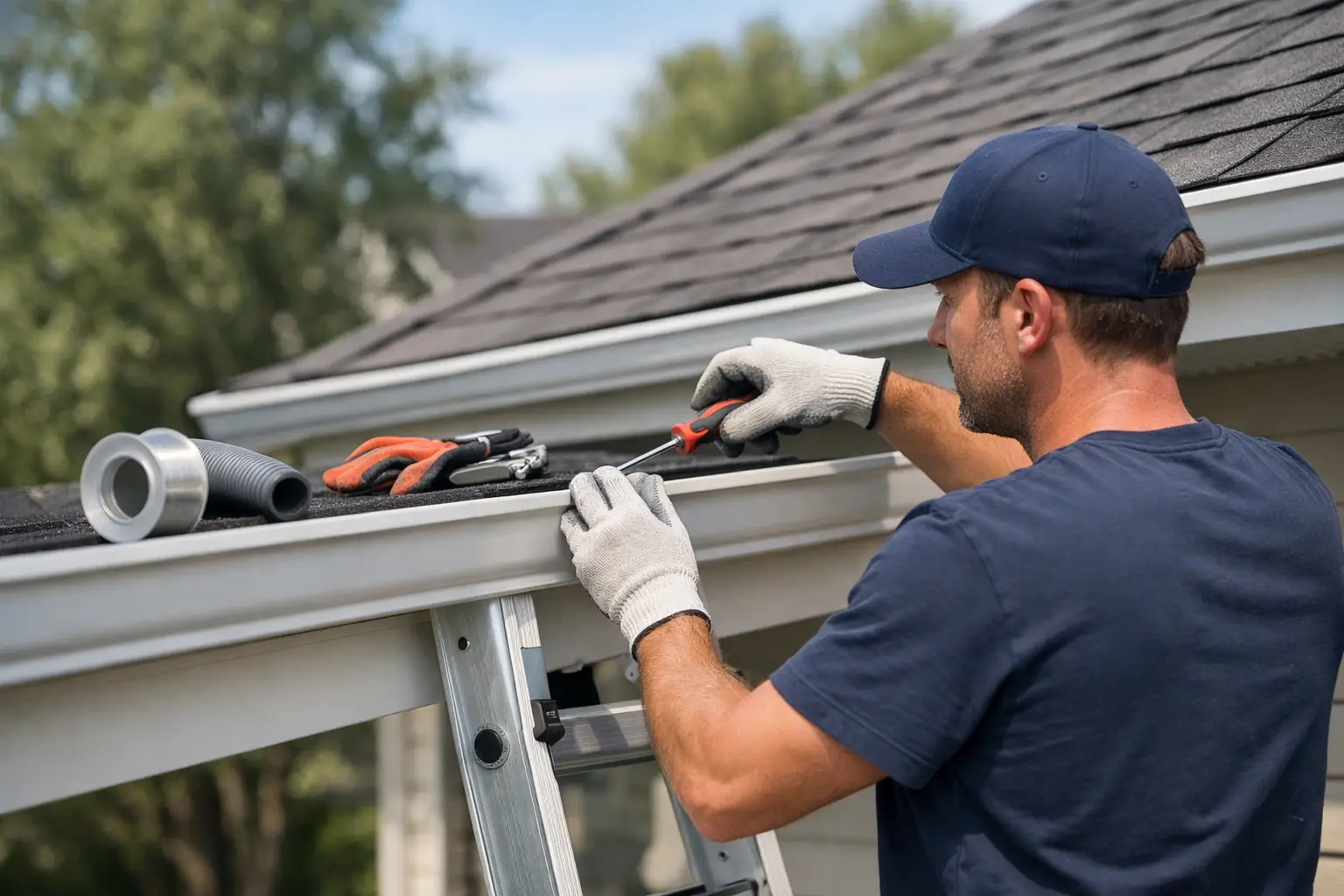
A hard Central Florida rain can reveal a gutter problem in minutes. Water spills over an edge, drips behind a fascia board, or pools beside the foundation long after the storm passes. This guide to residential gutter repairs helps homeowners and property managers recognize what is wrong, understand what can wait, and know when a professional repair is the safer choice.
Gutters are not just trim along the roofline. They direct large volumes of water away from the roof, walls, landscaping, and foundation. When a section leaks, sags, clogs, or drains poorly, the issue can spread beyond the gutter itself. Addressing a small problem early is usually simpler and less expensive than repairing water-damaged wood, stained siding, or eroded soil later.
Start With What the Water Is Doing
The most useful way to assess a gutter is during or immediately after rain. Stand safely on the ground and watch where water enters, exits, and escapes. A gutter may look acceptable on a dry day but fail when it has to handle a heavy downpour.
Overflow along the front edge often points to debris buildup, a downspout blockage, or a gutter that is not pitched correctly. Water running behind the gutter can indicate loose fasteners, improper placement under the drip edge, or damaged fascia. A steady drip from one seam or end cap usually means a failed seal or a small opening that will continue to grow.
Pay attention to the ground as well. Downspouts should release water far enough from the home that it does not repeatedly soak the same area. If mulch washes away, soil forms a trench, or water collects near the slab, the downspout may need an extension, redirection, or adjustment.
Common Residential Gutter Repairs
Leaks at seams, corners, and end caps
Traditional sectional gutters have joints where separate pieces connect. Those joints are common leak points because sealant eventually dries out, cracks, or loses adhesion. Corners and end caps also take regular stress from expanding and contracting metal.
A small, accessible leak may be resealed after the gutter is cleaned and completely dried. The repair only works when the surrounding metal is sound and the joint is properly aligned. If corrosion has eaten through the material or a seam keeps separating, replacing that section is usually the better fix.
Seamless K-gutters reduce the number of joints along each run, which means fewer locations for future leaks. They still have corners, end caps, outlets, and downspout connections that need periodic inspection, but their custom-fit design can make long runs more reliable.
Sagging or pulling away from the roofline
A gutter that dips in the middle or separates from the fascia is carrying more weight than its hangers can support. Wet leaves, standing water, and storm debris are common causes. In some cases, the fasteners have simply loosened. In others, the wood behind the gutter has started to rot and no longer holds screws securely.
Do not treat sagging as a cosmetic issue. A low spot holds water, adding even more weight and encouraging overflow. A repair may involve resetting the pitch, adding or replacing hangers, and securing the system to solid fascia. If the fascia is damaged, that wood should be addressed before reinstalling or tightening the gutter.
Clogs and slow downspouts
Leaves, roof grit, seed pods, and small branches can create a blockage in the gutter channel or inside a downspout. Even if the gutter looks clean from below, a clog at the downspout outlet can force water over the edge during the next storm.
Cleaning is often the first repair. Remove debris from the gutter, flush the channel with water, and confirm that water moves freely through each downspout. If water backs up, the obstruction may be deeper in the vertical pipe or at an underground drain connection. Forcing tools into a downspout can dent or disconnect it, so stubborn clogs are worth having inspected.
Poor pitch and standing water
Gutters should slope gently toward their downspouts. The slope is subtle, but it matters. If water remains in the channel for days after rain, the pitch may be off, a hanger may have shifted, or the gutter may have settled under the weight of debris.
Standing water speeds up corrosion, attracts insects, and adds stress to the mounting system. Correcting the pitch requires more than lifting a loose area. The entire run needs to drain consistently without creating a new low spot near the outlet.
Damaged downspouts and loose connections
Downspouts are easy to overlook, but they complete the drainage system. A crushed elbow, loose strap, disconnected extension, or outlet that is too small can limit water flow. Downspouts should be securely attached, positioned to carry water away from the home, and kept clear of landscaping that blocks the discharge point.
When water is overflowing from an otherwise clean gutter, the downspout size or placement may not match the roof area it serves. This can be especially noticeable during Orlando’s intense summer storms. A professional can determine whether an adjustment, another downspout, or a different drainage route is needed.
When a DIY Repair Makes Sense
Homeowners can often handle simple maintenance from the ground or with appropriate ladder safety. Clearing loose debris, reconnecting a downspout extension, and watching for visible overflow are practical tasks. A minor sealant touch-up can also be reasonable if the leak is easy to reach and the gutter is stable.
The trade-off is that a visible drip is not always the only problem. Repeated leaks can hide fascia damage, and a loose gutter can fail suddenly under the weight of water. Working near a roofline also carries real fall risk. If the repair involves sagging sections, multiple leaks, rotten wood, pitch correction, or recurring overflow, professional service is the more dependable option.
Avoid using gutter repairs as a reason to walk on the roof or lean a ladder against a weak gutter. Gutters are not designed to support a person’s weight or stabilize a ladder. Use safe access methods or schedule an inspection instead.
A Practical Inspection Routine for Florida Homes
Central Florida gutters work through heavy rain, windblown debris, and long periods of humidity. Checking them twice a year is a sensible baseline, with an additional inspection after a major storm. Homes beneath trees or properties with pine needles and seed pods may need more frequent cleaning.
Look for these four warning signs during each check:
- Water marks or peeling paint below the gutter line.
- Gutter sections that bow, tilt, or pull away from the fascia.
- Overflow, dripping seams, or water running behind the gutter during rain.
- Soil erosion, pooling water, or washed-out mulch near downspout exits.
Leaf guards can reduce the amount of debris entering the system, but they do not eliminate maintenance entirely. The right guard depends on the roof, nearby trees, and existing gutter condition. A guard installed over a poorly pitched or damaged gutter will not solve the underlying drainage problem.
Repair or Replace: How to Decide
Repair is usually the right choice when the issue is isolated: a loose hanger, a clogged downspout, a failed end cap seal, or a section knocked out of alignment. Replacement becomes more practical when gutters have widespread corrosion, repeated seam failures, multiple sagging areas, or the wrong capacity for the roof.
For older sectional systems, replacing long problem runs with custom-measured seamless K-gutters can reduce leak points and improve the appearance of the roofline. The best answer depends on the condition of the fascia, the roof’s drainage pattern, and whether the current downspouts can manage the water volume. A clear on-site assessment should explain the problem and the repair options without pressure.
A gutter system does its best work quietly. When the next heavy rain arrives, water should move off the roof, through the downspouts, and away from the home without spilling, staining, or pooling. If yours does anything else, a timely repair can protect far more than the gutter itself.