
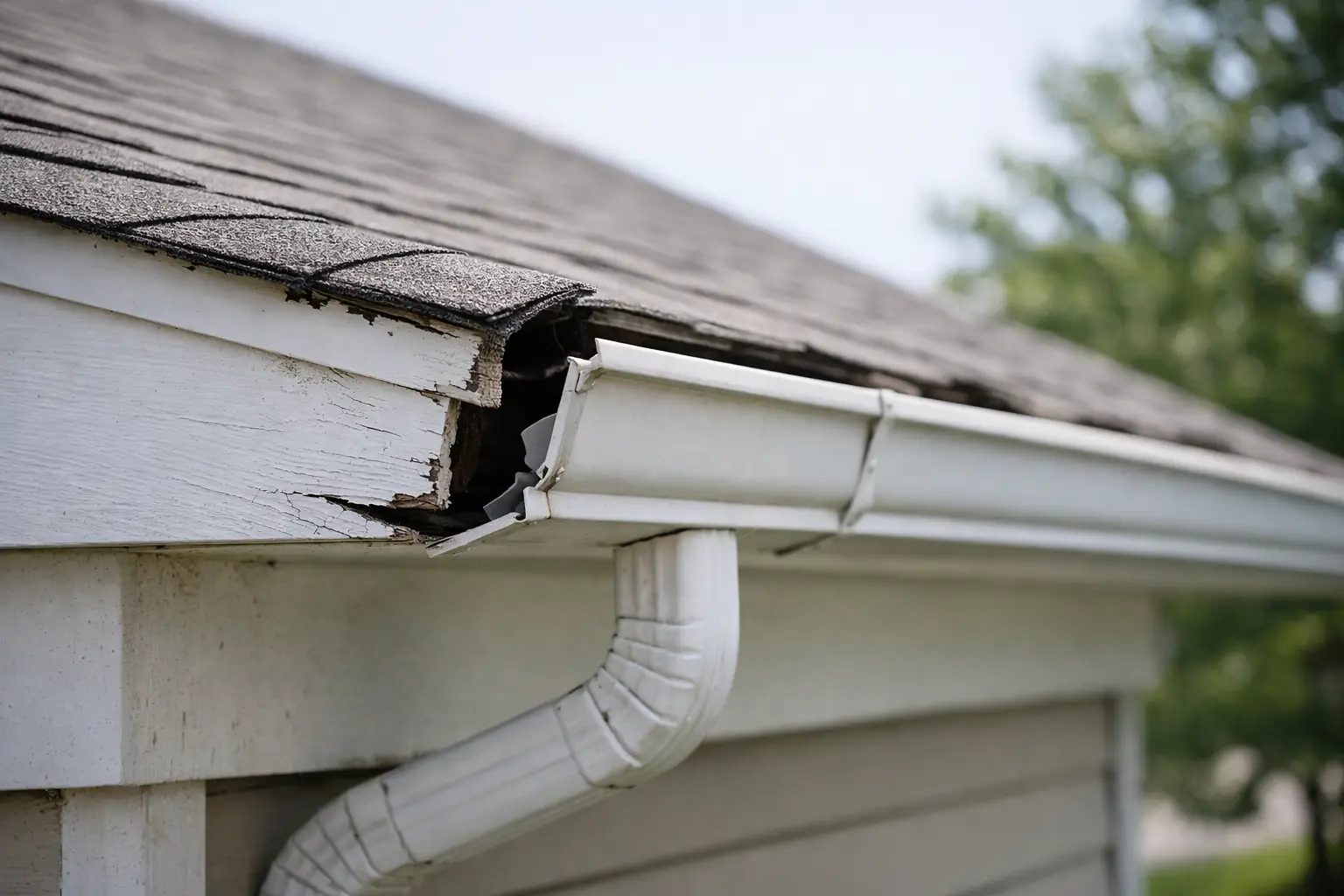
A gutter pulling away from the roofline is more than a cosmetic issue. If you are asking what causes gutters to separate, the short answer is usually a combination of water weight, failing fasteners, and damaged wood behind the gutter. In Orlando, frequent heavy rain, high humidity, and intense sun can make those problems show up faster.
When a gutter separates, rainwater can spill behind it instead of flowing to the downspout. That water may soak the fascia board, stain siding, rot roof-edge wood, and collect near the foundation. A small gap can become a larger repair if it is left through another storm season.
What Causes Gutters to Separate?
Gutters need a secure, stable mounting surface and enough support to carry the water moving through them. When either one fails, the gutter can sag, pull outward, or detach in sections. The visible gap is the symptom. Finding the reason behind it is what determines whether the right fix is a simple repair or a more involved replacement.
Loose, bent, or missing gutter fasteners
Most residential gutters are held in place with hidden hangers, screws, brackets, or spikes. Over time, these components can loosen under the repeated weight of rainwater and debris. Older spike-and-ferrule systems are especially prone to backing out of the fascia board, leaving the gutter unsupported.
A few loose fasteners may cause a low spot. If several fasteners have failed, an entire run can begin pulling away from the house. Tightening a screw may help in some cases, but it will not hold for long if the wood behind it is soft or rotted.
Rotted or weakened fascia boards
The fascia is the horizontal board along the roof edge where gutters are commonly mounted. It is one of the most common hidden reasons gutters separate from a house. Water that has overflowed, leaked at a joint, or backed up under roof shingles can slowly damage this wood.
Once fascia boards soften, gutter screws no longer have solid material to grip. The gutter may look secure after a quick adjustment, then pull away again during the next heavy rain. Repairing the gutter without addressing damaged fascia can create a temporary fix rather than a dependable one.
Debris buildup and standing water
Leaves, pine needles, seed pods, roof grit, and small branches can clog a gutter or downspout. When water cannot drain, it sits in the gutter and adds substantial weight. A full gutter can become much heavier than the hangers and fascia were designed to carry, particularly if the system was already aging or improperly supported.
This is a common concern for Central Florida homes during summer storms. One intense downpour can expose a partially clogged downspout or a gutter section that has not been cleaned in a while. Overflowing water is easy to notice, but the added stress on the mounting system may continue after the storm passes.
Improper installation or inadequate support
A gutter system must be installed with the correct slope, hanger spacing, and attachment method for the home. If hangers are spaced too far apart, sections can bow under normal water flow. If the gutter was fastened into weak material, attached poorly near corners, or installed without enough pitch toward the downspout, separation can develop sooner.
This does not always mean the entire gutter system must be replaced. A professional inspection can determine whether the issue is limited to one section or whether the support design is failing across the roofline. For some homes, reinforcing and reattaching a sound gutter is practical. For others, a custom-fit seamless replacement provides a cleaner, longer-lasting solution.
Storm damage, falling branches, and roof activity
Strong wind, wind-driven rain, and falling limbs can bend gutters or pull them away from their mounting points. Even a branch that does not fully crush a gutter can shift its alignment enough to loosen hangers and create gaps along the fascia.
Roof repairs, pressure washing, and other exterior work can also affect gutters if they are bumped, leaned on, or disconnected without being properly resecured. If separation appears suddenly after a storm or recent work around the roofline, inspect the area promptly. Avoid climbing ladders or pulling on a loose gutter yourself, especially when the wood behind it may be compromised.
Heat, expansion, and aging materials
Florida heat puts exterior materials through constant expansion and contraction. Aluminum gutters can move slightly as temperatures change, while sealant at joints and end caps can dry out over time. Heat alone rarely causes a properly installed gutter to detach, but it can add stress to an older system with loose fasteners, aging sealant, or weak fascia.
Age matters, too. A gutter that has served a home for many years may have several small issues at once: corroded screws, worn brackets, minor leaks, sagging sections, and recurring clogs. At that point, repeated spot repairs may cost more over time than correcting the system as a whole.
Signs the Separation Is Becoming a Water Damage Problem
A visible space between the gutter and fascia is the clearest warning sign, but it is not the only one. Water stains beneath the roof edge, peeling paint, dark or soft wood, and mildew around soffits can indicate that water is getting behind the gutter.
Watch what happens during a steady rain. Water pouring over the front of the gutter may point to a clog, an undersized system, or poor slope. Water running behind the gutter is more likely tied to separation, damaged drip edge, or fascia problems. Puddling near the home, mulch washing away, and erosion below downspouts are signs that water is not being directed far enough from the structure.
For rental properties, these issues are worth addressing quickly. A tenant may only report a leak or overflowing gutter after water has already affected trim, exterior walls, or landscaping. Routine exterior checks can catch a loose section before it becomes an urgent repair.
Can Separated Gutters Be Repaired?
It depends on the condition of the gutter and the surface it attaches to. A gutter that is straight, properly sized, and otherwise in good shape can often be resecured with new hangers and correctly placed fasteners. If the downspout is clogged or misaligned, adjusting drainage may also relieve the stress that caused the problem.
When fascia boards are rotted, the damaged wood should be repaired before the gutter is mounted again. Fastening into compromised wood only delays the next failure. If the gutter has major bends, repeated leaks at seams, widespread sagging, or multiple failing sections, replacement may be the more dependable option.
Seamless K-gutters are often a strong choice for Orlando homes because they are custom measured for the roofline and have fewer seams along long runs. Fewer seam points can reduce opportunities for leaks, while proper hanger spacing and pitch help move water efficiently toward the downspouts.
How to Help Prevent Gutters From Pulling Away
Regular cleaning is one of the simplest ways to reduce unnecessary weight in a gutter system. The right schedule depends on the trees around the property, roof debris, and whether the home has leaf guards. Even with guards, periodic checks are still useful because debris can collect at valleys, outlets, and downspout openings.
Keep an eye on water flow after major storms. You do not need to inspect from a ladder to spot trouble. Look for overflow, dripping behind the gutter, bent sections, loose downspouts, or sections that no longer follow a straight line along the roof edge. Addressing these signs early is usually less disruptive than waiting for a gutter to detach further.
Professional maintenance also gives you a chance to catch fascia damage and failing fasteners before they become visible from the ground. Precision K-Gutters can assess the gutter, downspouts, and mounting area, then provide a clear recommendation based on what the home actually needs.
A separated gutter should not be treated as a minor annoyance, especially before Central Florida’s next stretch of heavy rain. Getting the support, drainage, and roof-edge wood checked now can help keep water where it belongs: moving safely away from your home.