
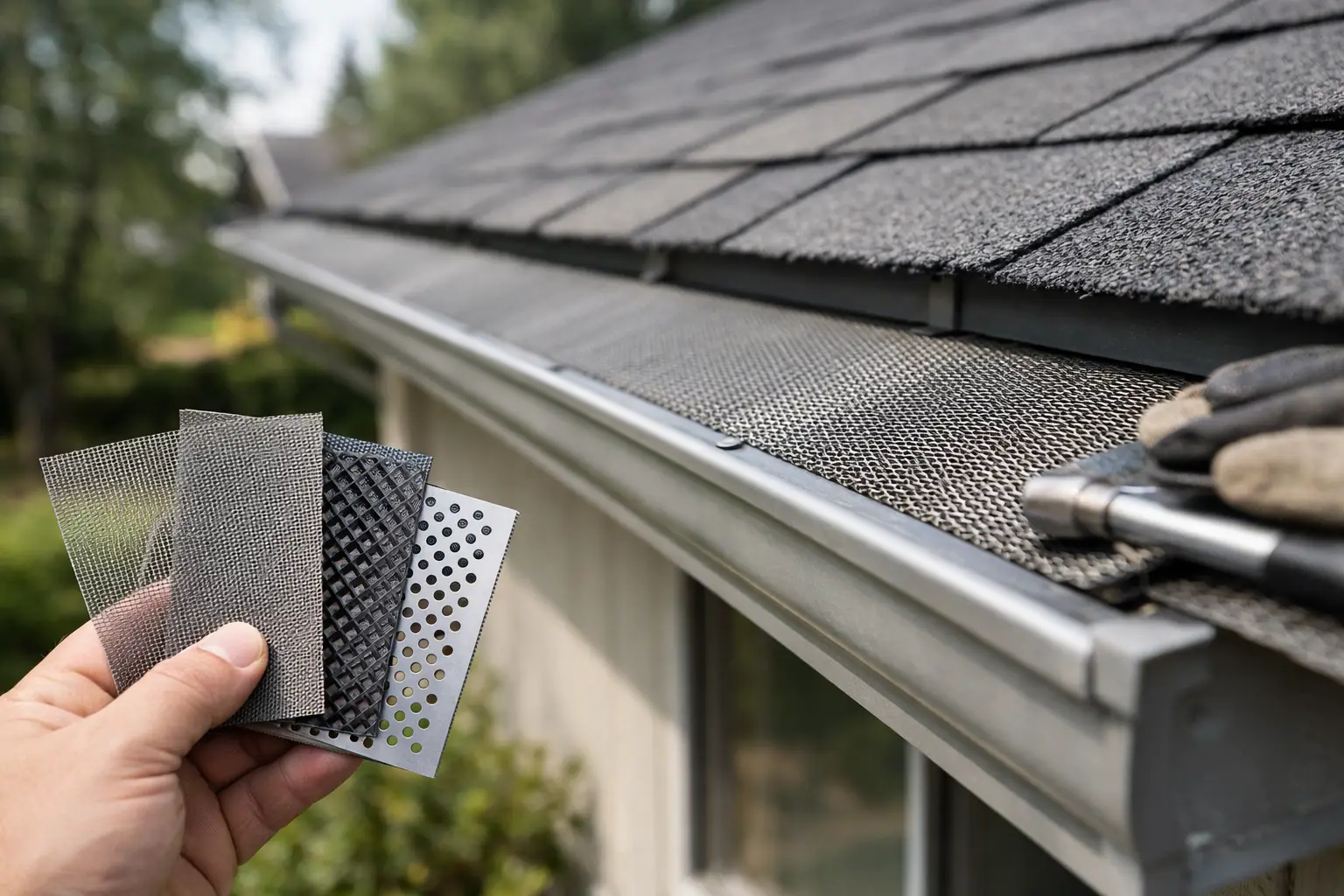
A gutter guard that looks fine in a showroom can still fail during an Orlando downpour. The wrong mesh may clog with roof grit, lift at the edges, or let water shoot over the gutter when heavy rain hits. Knowing how to choose gutter guard mesh comes down to matching the guard to your roof, debris, gutter condition, and the amount of rainfall your home handles.
Mesh guards can reduce routine cleaning and keep larger debris out of the system, but they are not all built the same. A good choice should protect water flow without creating a new maintenance problem on top of the gutter.
Start With the Debris Around Your Home
The material falling onto your roof is one of the best ways to narrow your options. Large oak leaves are very different from pine needles, seed pods, palm fronds, and roof shingle granules. A mesh opening that blocks leaves may still allow tiny debris through, while an extremely fine screen can hold debris on top if it is not installed at the right angle.
For homes with broad leaves and moderate tree cover, a quality micro-mesh guard often provides solid protection. Water passes through the screen while leaves shed off the surface. For properties with pine needles, fine seed pods, or heavy shingle grit, look for a tighter, corrosion-resistant mesh that will not deform over time.
Keep in mind that no gutter guard makes maintenance disappear entirely. Fine debris can collect on the top of any guard, especially under trees. The goal is to make cleaning less frequent and keep the gutter channel and downspouts clear enough to manage rainwater properly.
How to Choose Gutter Guard Mesh by Material
Mesh material affects durability, performance, and long-term value. Florida heat, humidity, wind-driven rain, and storm debris can expose weak materials quickly.
Stainless Steel Mesh
Stainless steel micro-mesh is usually the strongest choice for homeowners looking for fine debris protection and a long service life. It resists rust, holds its shape well, and can screen out small particles better than wider plastic or aluminum openings. It is commonly paired with an aluminum frame for support.
The trade-off is cost. Stainless steel mesh systems generally cost more than basic screens, but they are often a better fit for homes with frequent debris and homeowners who want fewer cleanings.
Aluminum Mesh and Screens
Aluminum guards are lightweight, rust-resistant, and often more affordable. They can work well where debris is mostly leaves and larger material. However, thin aluminum screens may bend under branches, ladders, or heavy storm debris, and larger openings may allow more fine material into the gutter.
A thicker aluminum frame with durable mesh can be a practical middle-ground option. The quality of the frame and installation matters as much as the metal itself.
Plastic or Vinyl Mesh
Plastic mesh guards are usually the lowest-cost option and may be suitable as a short-term solution. In Central Florida, however, direct sun and heat can make lower-quality plastic brittle over time. These guards can also shift, warp, or become difficult to clean after a few seasons.
They may make sense for a low-debris area or a temporary repair, but they are rarely the best choice for a home that regularly sees heavy rain and tree debris.
Make Sure the Mesh Can Handle Heavy Rain
Gutter protection is only useful if water enters the gutter instead of running over the edge. Orlando storms can deliver intense rainfall in a short period, so water handling should be a deciding factor.
Look for mesh that is supported by a rigid frame and installed at an angle that follows the roofline. This helps rain flow through the guard while encouraging leaves to move off the surface. Flat, loose, or poorly supported mesh can trap debris and slow water entry during a storm.
The gutter itself also needs enough capacity. If gutters are undersized, improperly pitched, or filled with old debris, adding mesh alone will not stop overflow. The same is true when downspouts are too small, poorly placed, or clogged below ground level. A guard should be part of a working drainage system, not a cover used to hide an existing problem.
Check Fit, Fastening, and Roof Compatibility
A gutter guard needs to fit securely without damaging the roof or interfering with water flow. Some guards slide beneath shingles, while others attach to the front lip of the gutter or fasten to the fascia area. The right method depends on the roof style, gutter profile, and condition of the existing system.
Avoid guards that are simply laid across the gutter with little support. They can shift during wind and may sag into the channel, allowing debris to collect. A professionally fitted guard should sit securely across the gutter opening and maintain a clean line along the roof edge.
This is especially important for seamless K-gutters. Custom-fit guards should match the width and shape of the gutter rather than leaving gaps at corners, end caps, or around downspout openings. Those small gaps are often where leaves find their way in.
If your shingles are older or the roof has unique details, do not assume every guard system is compatible. Forcing material under brittle shingles or fastening into deteriorated wood can create avoidable repair concerns. A clear assessment before installation protects both the roof and the gutter system.
Do Not Ignore the Condition of Existing Gutters
Installing mesh over damaged gutters is rarely money well spent. If gutters are pulling away from the fascia, leaking at seams, holding standing water, or overflowing from poor slope, those issues should be addressed first.
Before choosing a guard, inspect the system for loose hangers, damaged end caps, clogged downspouts, and areas where water spills near the foundation. The mesh can help prevent future buildup, but it cannot correct improper pitch or a downspout that sends water too close to the house.
For rental properties, this is worth checking carefully. A guard installation can reduce maintenance calls, but only after the base gutter system is secure and draining properly. Starting with repairs creates a better result and avoids covering up issues that will continue to worsen.
Consider Cleaning Access Before You Buy
The best mesh guard is not necessarily the one with the smallest holes. If a guard is difficult to access, has exposed fasteners that catch debris, or creates a flat surface where roof grit settles, it may require more service than expected.
Ask how the guard will be cleaned when needed and whether it can be removed without damaging the gutter. Fine micro-mesh often performs very well, but homes beneath pine trees or near heavy pollen may still need occasional brushing or rinsing. That is normal maintenance, not a failure of the product.
Be cautious about broad claims that a guard will never need cleaning. Every roof collects something. A reliable recommendation should explain what the guard blocks, what can still build up, and what maintenance is realistic for your property.
Balance Cost Against the Work It Prevents
Basic mesh guards can cost less upfront, while framed stainless steel micro-mesh systems usually cost more. The right decision depends on how often you currently clean gutters, the height and access of the home, the amount of surrounding debris, and the consequences of overflow.
For a single-story home with light tree cover, a simpler aluminum option may be enough. For a two-story home under mature oaks, with pine needles or recurring clogs near downspouts, a stronger micro-mesh system can be the better long-term investment.
Installation quality should remain part of the value calculation. A less expensive guard installed poorly can lead to overflow, loose sections, and more service calls. Precision K-Gutters evaluates the whole drainage setup so homeowners can choose a guard that fits the property rather than paying for features they do not need.
A practical gutter guard decision starts with an honest look at your roofline, the debris on your property, and how your gutters perform in a hard rain. Choose a mesh that fits securely, handles local weather, and works with a clean, properly pitched gutter system. That approach gives your home a better chance of staying protected when the next storm arrives.