
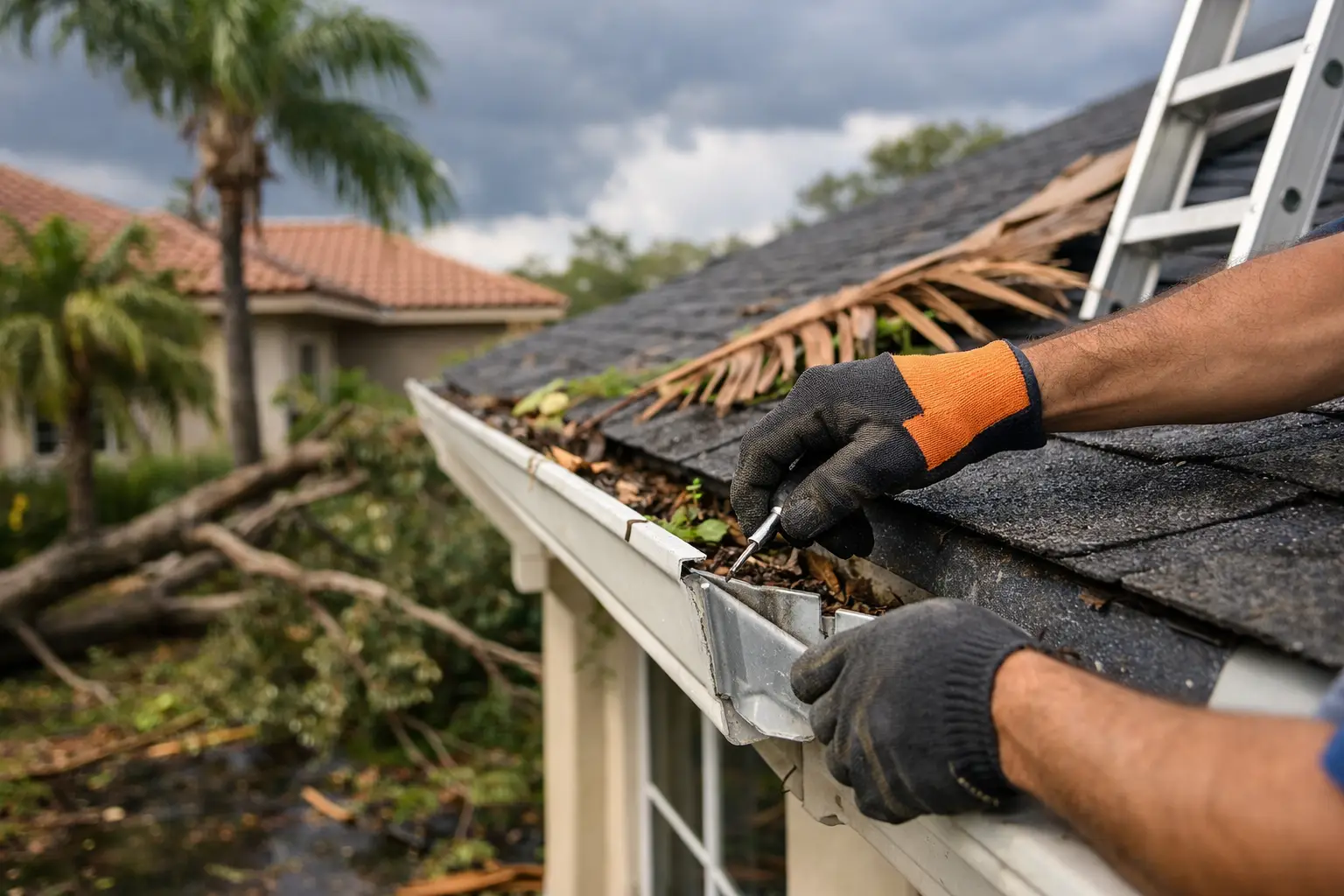
A hard Central Florida rain can show you exactly where your gutter system is falling short. Water spilling over the front edge, a downspout blasting mulch out of a bed, or staining along the soffit are not problems to ignore until the next season. The best gutter fixes after storms address the path of the water from the roofline to a safe discharge point away from your home.
For Orlando homeowners and property managers, the right repair depends on what the storm exposed. A simple debris clog may need cleaning. A loose section or persistent leak may require a targeted repair. If the system is undersized, improperly pitched, or full of seams that repeatedly fail, replacement can be the more practical long-term answer.
Start With a Safe Ground-Level Check
Do not climb a ladder while the roof, grass, or driveway is wet. Start from the ground once the weather has cleared, and look for obvious changes in how water moves around the house. Check the gutters, downspouts, siding, soffits, landscaping, and the soil near the foundation.
Pay close attention to these signs after a storm:
- Water pouring over the gutter edge instead of entering the downspout
- Gutters pulling away from the fascia or visibly sagging between hangers
- Drips at corners, end caps, seams, or beneath the gutter run
- Standing water near the foundation, entryways, patio, or pool deck
- Fresh mulch washout, eroded soil, or water stains on siding
A little rainwater on the ground is normal. Water that repeatedly collects against the home is not. In Florida, heavy rain can saturate soil quickly, so a drainage issue that seems minor during one storm can become a costly moisture problem over time.
Clear Clogs Before Assuming You Need a Repair
Leaves, pine needles, seed pods, roof grit, and windblown debris can block a gutter or downspout fast. When water overflows in one concentrated area, a clog is often the first thing to investigate. Debris may be sitting in the gutter trough, packed into a downspout opening, or lodged farther down the downspout where it cannot be seen from above.
Professional gutter cleaning is often the best first fix when the gutters are otherwise secure and properly aligned. Cleaning restores flow and makes it easier to see hidden cracks, loose fasteners, and failing sealant that debris may have concealed.
If clogs return after every major storm, cleaning alone may not solve the underlying issue. Nearby trees, roof valleys, and the shape of the roof all affect how much debris reaches the system. Leaf guard solutions can reduce routine buildup, but they still need to be matched to the roof and gutter design. Guards are most helpful when they allow water to enter freely while keeping larger debris from settling inside the gutter.
Repair Loose, Sagging, or Misaligned Gutters
A gutter should sit securely along the fascia and slope gradually toward the downspout. Storm winds and the weight of standing water can loosen hangers, pull fasteners from weakened fascia boards, and create low spots where water remains after rain ends.
Sagging gutters are more than a curb appeal issue. A low section collects water and debris, adding weight that can make the sag worse. It can also cause water to back up and spill over in the middle of the run, even when the downspout is clear.
The proper fix is not simply adding a screw wherever the gutter looks low. A technician should check the fascia condition, reset the pitch, secure the system with appropriate hangers, and confirm water can reach the downspout. If the fascia is soft or rotted, that wood damage needs attention before the gutter can be reliably secured.
Seal Leaks at Corners, End Caps, and Seams
Small drips can leave large clues. Look for dark streaks on the exterior wall, algae growth beneath a gutter corner, or wet spots directly below a joint after rainfall. These are common signs of leaking seams, end caps, mitered corners, or old sealant.
Targeted sealing and component repairs make sense when the gutter is in good condition overall. However, repeatedly sealing multiple seams can become a temporary cycle, especially on older sectional systems. Every joint is a potential leak point, and Florida heat, rain, and movement can wear sealant down over time.
For a system with widespread seam leaks or aging sections, seamless K-gutters may be the better investment. They are custom measured on-site to fit the home and have fewer joints along each gutter run. Fewer seams do not eliminate maintenance, but they reduce the number of places where water can escape.
Fix Downspouts That Dump Water Too Close to the House
A clear gutter cannot protect the home if the downspout sends water straight back to the foundation. After a storm, look at where water exits each downspout. If the ground stays muddy beside the house, mulch is washing away, or water flows toward a walkway or entry, the discharge point needs adjustment.
Sometimes the solution is as straightforward as reconnecting a loose downspout, replacing a damaged elbow, or adding an extension to carry water farther out. Other properties need a different downspout location because the current placement sends runoff toward a low area, driveway, patio, or neighboring structure.
The goal is controlled drainage, not simply moving water to the nearest spot. A professional assessment considers the roof area feeding each downspout, the grade around the home, and where water can safely disperse. This is especially useful for rental properties, where recurring drainage complaints can point to a system issue rather than a one-time storm event.
Check Whether the System Is Large Enough for Heavy Rain
Orlando storms can release intense rainfall in a short period. Even clean gutters may overflow when a system is too small for the roof area, has too few downspouts, or receives a concentrated rush of water from a roof valley.
If overflow happens in the same place during every heavy storm, despite clean gutters and clear downspouts, capacity may be the problem. Wider gutters, additional downspouts, or changes to the layout can improve water handling. The best choice depends on the roof design and where the runoff concentrates.
This is one reason a quick patch is not always the right answer. Adding sealant will not correct an undersized gutter, and extending a downspout will not solve a gutter that cannot capture water in the first place. A clear inspection helps separate a maintenance issue from a design issue.
Know When Replacement Is More Cost-Effective
Repairs are often the right call when damage is isolated. One loose hanger, a clogged downspout, or a leaking corner can usually be corrected without replacing the entire system. Replacement becomes more reasonable when there are repeated leaks, widespread corrosion, multiple sagging sections, damaged fascia connections, or gutters that consistently overflow in normal heavy rain.
A custom-fit seamless K-gutter system can provide a cleaner appearance and more dependable water flow for homes that have outgrown patch repairs. It also gives you an opportunity to improve downspout placement and address drainage concerns at the same time.
Precision K-Gutters approaches storm-related gutter problems with direct recommendations based on what the home needs, not a one-size-fits-all fix. Whether the answer is cleaning, repair, downspout adjustment, leaf protection, or replacement, the work should leave the property clean and the water moving where it belongs.
After the next heavy rain, take a few minutes to walk the perimeter once conditions are safe. The water marks, overflow points, and soft spots you see that day can help prevent wood rot, siding damage, and foundation concerns from becoming the next repair on your list.
Leave a Reply