
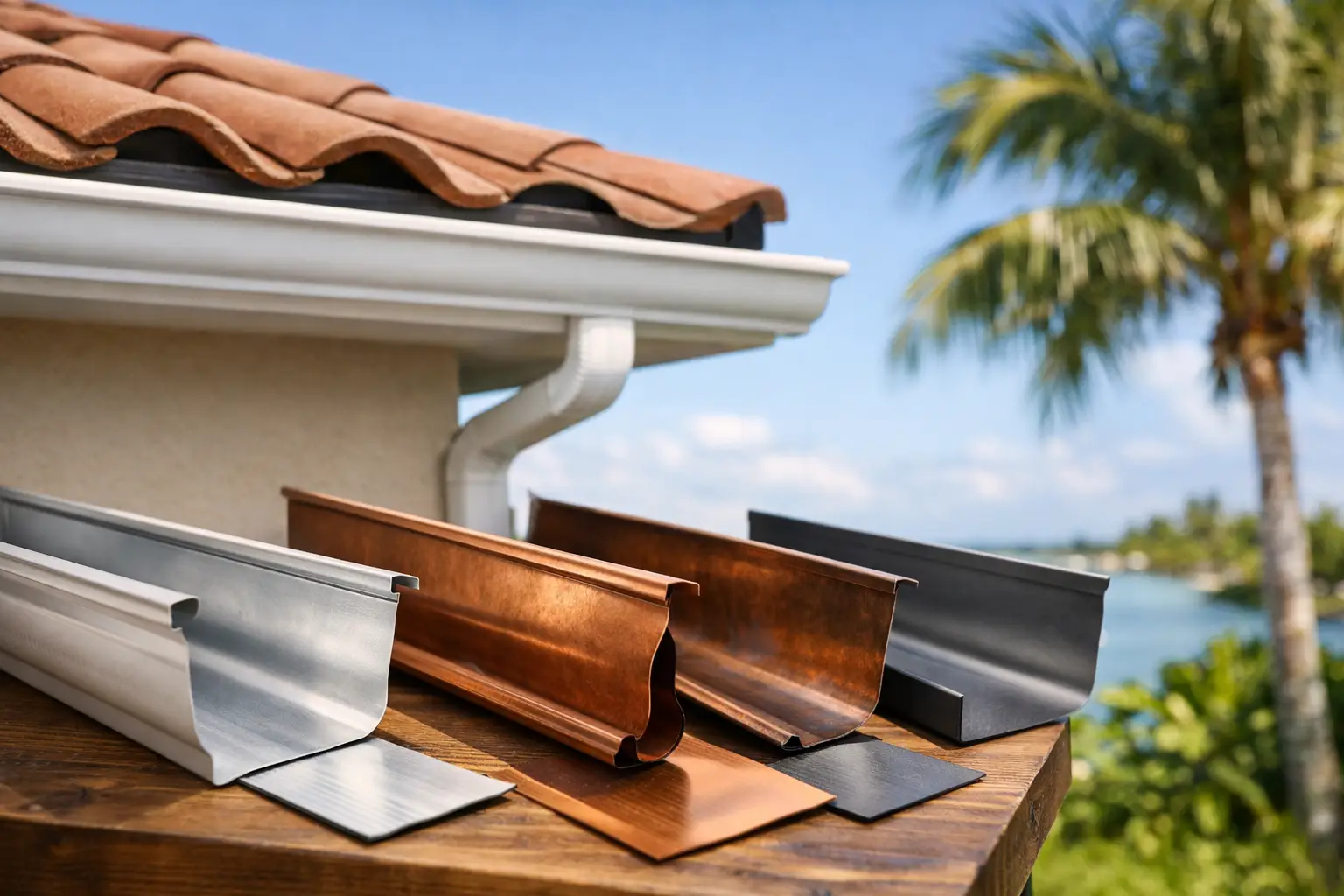
A gutter system that works fine in a mild climate can fail fast in Central Florida. Between heavy downpours, long humid seasons, strong sun, wind-driven storms, and in some areas salt in the air, the best gutter materials for Florida homes need to do more than just move water. They need to hold their shape, resist corrosion, and keep performing when rain comes hard and fast.
For most homeowners, the right choice comes down to a balance of durability, appearance, maintenance, and cost. Material matters, but so do gutter style, installation quality, pitch, downspout placement, and whether the system is seamless. A good-looking gutter made from the wrong material, or installed poorly, can still leave you with overflow, leaks, and water collecting around the foundation.
What Florida weather demands from gutter materials
Florida puts gutters under more stress than many other states. Summer storms can dump a lot of water in a short time, and that means the system has to carry runoff efficiently without sagging or pulling away from the home. Heat and UV exposure also matter. Materials expand, contract, fade, and age faster when they are exposed to strong sun for most of the year.
Humidity is another factor that homeowners sometimes underestimate. Constant moisture can speed up corrosion, especially in lower-grade metals or systems with weak protective coatings. If the home is near the coast, salt air adds another layer of wear. Even inland homes around Orlando still deal with frequent rain, organic debris, and the kind of weather that exposes weak spots quickly.
That is why material selection should be practical, not just based on the lowest bid or the color sample. The goal is simple: move water away from the house reliably and reduce future repairs.
Best gutter materials for Florida homes compared
Aluminum gutters
Aluminum is the most common answer when homeowners ask about the best gutter materials for Florida homes, and in many cases it is the right one. It is lightweight, rust-resistant, and cost-effective. It also works especially well in seamless systems, which reduce the number of joints where leaks usually start.
For most residential properties in Orlando and surrounding areas, aluminum gives a strong mix of performance and value. It handles normal Florida rain well when sized correctly, and it does not carry the same rust risk as steel. It also comes in a wide range of colors, which helps homeowners keep the exterior looking clean and consistent.
The trade-off is that aluminum can dent more easily than heavier materials. If a ladder is leaned against it carelessly, or if branches strike it during a storm, damage can happen. Thinner aluminum is more vulnerable, which is why gauge and installation quality matter. A properly installed seamless aluminum system is often the practical sweet spot for Florida homes.
Galvanized steel gutters
Steel gutters are stronger and more impact-resistant than aluminum. That added strength can appeal to homeowners who want a tougher system, especially on homes with heavy roof runoff or areas where falling limbs are a concern.
The issue in Florida is corrosion. Galvanized steel has a protective coating, but over time that coating can wear down. Once that happens, rust becomes a real concern, especially in humid conditions or anywhere exposed to salty air. Steel also tends to be heavier, which means installation needs to be precise and well-supported.
For some properties, steel can still make sense. But for many Florida homeowners, the long-term maintenance risk makes it less attractive than aluminum. If you are looking for a lower-maintenance option, steel usually is not the first recommendation.
Copper gutters
Copper is durable, long-lasting, and visually distinctive. It can perform very well in wet climates, and it does not rust like steel. Over time, it develops a patina that some homeowners specifically want, especially on higher-end or historic-style homes.
The main drawback is cost. Copper is significantly more expensive than aluminum, both in material and installation. It is also not the right fit for every home aesthetically. On a standard residential property, copper often goes beyond what is needed for functional water management.
If appearance is a major priority and the budget allows for it, copper can be an excellent premium choice. But if the goal is dependable performance at a practical price, most Florida homeowners will find better value elsewhere.
Vinyl gutters
Vinyl is usually the budget option. It is lightweight, easy to install, and not vulnerable to rust. On paper, that sounds appealing. In practice, Florida weather can be hard on vinyl.
Long-term sun exposure can make vinyl brittle, and heavy rain or storm conditions can expose weak joints or cause sections to warp. Vinyl systems are usually sectional rather than seamless, which means more connection points and more chances for leaks over time. In a state where gutters need to handle intense runoff, that is not ideal.
Vinyl may work as a short-term, low-cost solution on some homes, but it is generally not the strongest long-term investment for Florida. Homeowners who want fewer problems down the line usually move toward metal systems.
Zinc gutters
Zinc is less common in residential work, but it offers strong durability and a long lifespan. It resists corrosion well and can perform reliably in wet conditions. Like copper, it tends to be chosen more often for upscale homes or specialty projects.
The downside is price and availability. Zinc costs more than aluminum and usually requires an installer with specific experience. For most homes in Central Florida, it is more material than the average property needs.
Why seamless aluminum is often the best fit
If the question is not just what material is available but what actually makes sense for a Florida home, seamless aluminum usually rises to the top. It is practical, durable, and cost-conscious without being cheap. It resists rust, looks clean, and works well with the kind of custom on-site fabrication many professional installers use.
Seamless systems also solve one of the most common gutter problems: leakage at joints. Traditional sectional gutters have more seams, and each seam is a potential failure point. In Florida, where one strong storm can expose every weakness in the system, fewer joints usually means fewer headaches.
That is one reason many local homeowners choose custom seamless K-gutters. They provide a clean exterior look while improving water control around the roofline, fascia, and foundation. When measured and installed correctly, they can handle Florida rain much more effectively than off-the-shelf sectional options.
Material is only part of the decision
Even the best gutter material can underperform if the system is undersized, pitched incorrectly, or clogged with debris. Florida homes often need more than a basic material comparison. Roof size, roof pitch, tree coverage, drainage layout, and the placement of downspouts all affect how well the system handles rainfall.
A house under heavy oak coverage may need a different maintenance plan than a newer home in an open subdivision. A property with pooling near one corner may need downspout adjustments, not just new gutters. Coastal homes may need more attention to corrosion resistance than homes farther inland. This is where a local installer adds value. The recommendation should fit the property, not just the catalog.
Homeowners should also think about maintenance. Aluminum and copper generally require less corrosion-related upkeep than steel. Seamless systems reduce leak points. Leaf protection can help in debris-heavy areas, but only if the underlying gutter system is sized and installed correctly first.
How to choose the right gutter material for your home
Start with the basics: how long you plan to stay in the home, how much maintenance you want to deal with, and what kind of weather exposure the property gets. If you want a dependable option that fits most Florida homes, aluminum is usually the strongest answer. If you are focused on premium appearance and long-term investment, copper may be worth a look. If the budget is the main concern, vinyl may seem attractive, but it usually comes with more trade-offs in Florida conditions.
It also helps to think beyond material alone. Ask whether the system will be seamless, what gauge metal is being used, how the downspouts will be placed, and whether the installer is accounting for heavy storm runoff. Those details have a direct impact on how the gutters perform.
For homeowners in the Orlando area, a straightforward recommendation is often the best one. In most cases, a professionally installed seamless aluminum K-gutter system gives the right balance of durability, appearance, leak reduction, and value. That is why it remains the go-to option for many local installations, including the kind of work handled by Precision K-Gutters.
The right gutter material should make your home easier to protect, not harder to manage. If your current system is rusting, separating, overflowing, or just not keeping up with Florida rain, it may be time to choose a material built for the way this climate actually behaves.