
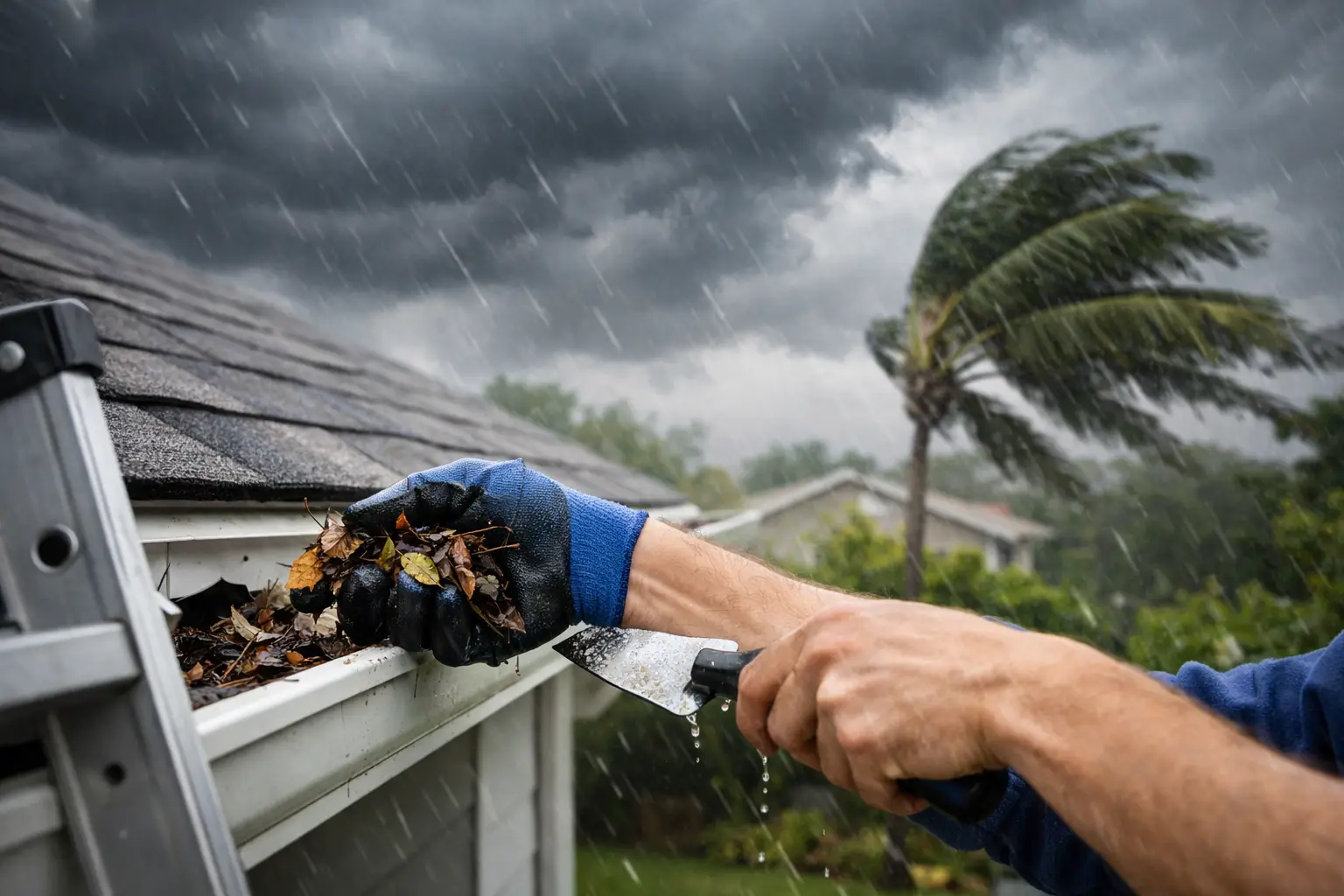
A lot of hurricane prep starts with windows, roofing, and supplies inside the house. Gutters usually get attention later, if they get attention at all. But if you want to know how to prepare gutters for hurricane season, start before the first major storm warning shows up. Once heavy rain bands hit Orlando, clogged or loose gutters can turn a manageable storm into water around the foundation, fascia damage, and overflow at every corner.
Your gutter system has one job during a storm – move a lot of water off the roof quickly and send it away from the home. Hurricane season puts that system under real pressure. Strong wind can pack gutters with leaves and twigs, sudden downpours can expose low spots or clogs, and loose fasteners can fail when they are needed most. The good news is that most of these problems can be found early and fixed before weather gets worse.
Why gutter prep matters before hurricane season
In Central Florida, heavy rain is not unusual. What changes during hurricane season is the volume and the force. A gutter that seems to be doing fine during a normal afternoon storm may not keep up when rainfall becomes constant and wind-driven.
That is where small maintenance issues become expensive ones. A minor leak can send water behind the gutter and into the fascia board. A downspout that drains too close to the house can leave water pooling near the slab. A sagging section can hold debris, which slows flow and causes overflow right where you do not want it. Preparing early gives you time to correct those weak spots instead of reacting after damage is already done.
How to prepare gutters for hurricane season step by step
The first step is a full cleaning. Gutters need to be cleared of leaves, seed pods, shingle grit, and any compacted debris that blocks water flow. Downspouts need to be checked too, not just the horizontal runs. A gutter can look clear from above and still have a clog packed inside the downspout.
If you are cleaning them yourself, use a stable ladder, gloves, and a hose to confirm water is moving freely. Flush each section and watch how quickly it drains. Slow drainage usually points to buildup, an improper slope, or a downspout blockage. If your home has second-story gutters or steep rooflines, it is usually safer to have a professional handle the work.
After cleaning, inspect the system closely. Look for seams pulling apart, corners leaking, spikes or hangers loosening, and sections that appear to dip or twist. Check the fascia behind the gutter for soft spots, staining, or peeling paint. Those signs often mean water has been escaping for longer than expected.
Next, test drainage around the home. During a strong rinse with a hose, watch where the water exits. Downspouts should discharge far enough from the house that water is not collecting near the foundation, walkway edges, or planting beds against the wall. If water dumps right at the base of the home, the gutter may be doing only half its job.
Pay attention to the downspouts
Homeowners often focus on the gutters themselves and miss the downspouts. That is a mistake during hurricane season because downspouts control the final direction of the runoff. If they are too short, crushed, disconnected, or clogged, water still ends up where it can cause trouble.
A good downspout setup moves water away from the house in a controlled path. In some homes, that means extending the discharge point farther out. In others, it means adjusting elbows, reconnecting loose sections, or correcting placement so water is not washing back toward the structure. What works depends on your lot, grading, and roof layout.
This is also where property managers should be careful. A rental home may have gutters that technically function, but if one downspout drains onto a walkway or causes washout in one corner of the property, you are still looking at a maintenance issue. Storm prep is not just about keeping water off the roof. It is about controlling where it goes next.
Check for repairs before storms are in the forecast
If your gutters are leaking, sagging, or pulling away from the house, hurricane season is the wrong time to put repairs off. High winds and intense rainfall will make those defects worse fast. Even a small gap can turn into repeated overflow behind the system when rainfall becomes heavy enough.
Seamless K-gutters can be a strong option for homes in Orlando because they reduce the number of joints where leaks typically start. That does not mean they are maintenance-free, but fewer seam points usually means fewer weak spots under pressure. If your current gutter system is older, patched in multiple places, or no longer draining evenly, a repair may only be a short-term fix.
There is always a trade-off here. If the problem is isolated to one corner, one downspout, or one damaged run, a targeted repair may be the right move. If the system has widespread sagging, repeated leaks, or poor water control across several elevations, replacement can make more financial sense over time.
Consider leaf guards, but be realistic
Leaf guards can help reduce routine debris buildup, especially in areas with overhanging trees. For some homes, they make storm prep easier because less material settles into the gutter between cleanings. That can improve flow when summer rain ramps up.
Still, leaf guards are not a cure-all. Fine debris, roof grit, and smaller organic material can still collect over time. Some guard styles also perform better than others depending on roof pitch, surrounding trees, and the amount of rainfall hitting the system. They reduce maintenance, but they do not remove the need for inspection.
For homeowners trying to decide whether guards are worth it before hurricane season, the right question is not whether they eliminate cleaning forever. The better question is whether they help your specific property stay clearer during the months when gutters need to perform at their best.
Watch for signs your system is already struggling
If you are not sure whether your gutters are ready, the house will usually give you a few clues. Water spilling over the front edge during rain is the obvious one, but it is not the only one. You may also notice dark streaks on the gutter face, soil erosion below roof edges, mildew near the base of exterior walls, or puddling around the perimeter after storms.
Inside the home, the signs are less direct but just as serious. Moisture near windows, staining on exterior-adjacent ceilings, or recurring fascia and soffit issues can all trace back to uncontrolled roof runoff. Gutters do not need to be completely detached to cause damage. They only need to fail in one repeated area.
Timing matters in Central Florida
The best time to handle gutter prep is before the weather pattern becomes active, not after the first named storm enters the forecast. Once local schedules fill up and supply chains tighten, even simple repairs can take longer to complete. Waiting also leaves you exposed during the early storms of the season, which are often enough to reveal hidden drainage problems.
For many Orlando-area homes, a pre-season inspection and cleaning in late spring or early summer makes sense. Homes with heavy tree coverage may need another check during the season, especially after major wind events. The right schedule depends on how quickly your property collects debris and whether your current system has a history of clogging or overflow.
When to bring in a professional
Some gutter prep is straightforward. Cleaning a single-story section with easy access may be manageable for a homeowner who has the right equipment and takes ladder safety seriously. But storm prep becomes more complicated when you are dealing with steep roofs, taller elevations, hidden leaks, drainage concerns, or signs of wood rot.
That is where professional service helps. A trained crew can identify whether the problem is a clog, a slope issue, a failing attachment point, or a system that is undersized for the roof area. They can also tell you whether a repair is enough or whether replacement would give you better protection before peak storm activity. For homeowners in the Orlando area, Precision K-Gutters handles this kind of work with a focus on clean installs, direct recommendations, and practical solutions.
Hurricane prep does not have to mean overcomplicating everything around your home. Sometimes the smart move is simply making sure the water has a clear path off your roof and away from the house before the next storm tests every weak point.