
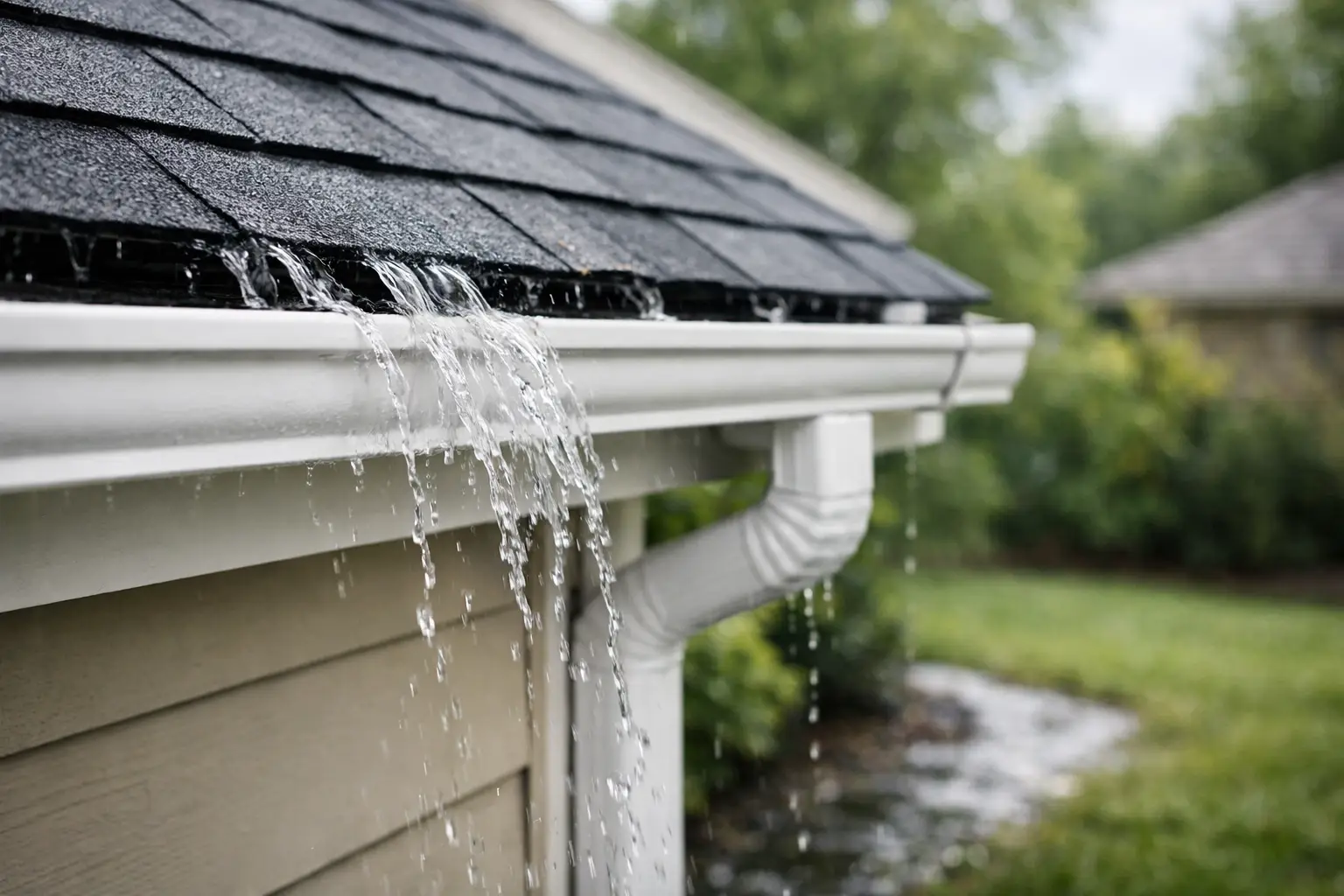
A hard Florida rain can dump a lot of water on your roof in a short time. If that runoff is not controlled, it does not just disappear – it spills over edges, soaks fascia boards, stains siding, floods planting beds, and pools around the base of your home. That is exactly how gutters protect your home from water damage: they collect roof runoff and move it to a safer place before it can create expensive problems.
For many homeowners, gutters are easy to ignore until something overflows. The trouble is that water damage often starts quietly. A small leak at a gutter joint, a clogged downspout, or a section pulling away from the house can lead to wood rot, mildew, erosion, and foundation stress over time. In Central Florida, where heavy rain and storms are part of the routine, a working gutter system is not a cosmetic extra. It is basic protection for the home.
How gutters protect your home from water damage at the roofline
Your roof is built to shed water, but it needs a controlled path for that water once it reaches the edge. Without gutters, runoff falls straight down and can splash back onto roof edges, soffits, fascia, and exterior walls. Over time, that repeated exposure can wear down paint, soften wood, and create entry points for moisture.
A properly installed gutter system catches water along the roof edge and channels it into downspouts. That sounds simple, but it matters. When gutters are pitched correctly and sized for the roof area, they reduce the chance of standing water at the roofline and help prevent overflow during normal rain events.
This is also where condition matters. Gutters that are cracked, sagging, or packed with debris cannot do the job they were installed to do. Instead of guiding water away, they let it sit, spill, or leak in the wrong places. In other words, having gutters is only half the equation. They also need to be clean, secure, and draining properly.
Siding, trim, and wood rot are often the next targets
When water pours off a roof edge with no control, the home’s exterior takes the hit. Siding may develop stains or streaking. Trim boards and fascia can stay wet long enough to begin rotting. Around windows and doors, repeated moisture exposure can eventually affect seals and caulking.
This is one reason seamless systems are often a smart choice for residential homes. Fewer joints mean fewer common leak points along the run. A custom-fit gutter system also tends to look cleaner and perform more consistently than sectional pieces pieced together off the shelf.
That does not mean every home needs the same setup. The right gutter size, downspout placement, and guard options depend on roof design, tree coverage, slope, and how water already behaves around the property. A single-story home with open exposure may have different needs than a heavily shaded property that deals with constant debris and clogging.
The biggest risk is often at ground level
Most homeowners notice gutter problems when they see overflow above, but some of the most expensive damage happens below. If downspouts dump water too close to the house, that water collects near the foundation. Over time, saturated soil can contribute to settling, cracking, and moisture intrusion.
In Orlando-area conditions, where downpours can be intense, that risk goes up fast when gutters are undersized, clogged, or not draining far enough away. Water pooling near the slab, washing out mulch beds, or cutting channels through soil are all signs that runoff is not being managed correctly.
Why downspouts matter as much as the gutters themselves
A gutter system is only as effective as its drainage path. Gutters collect the water, but downspouts are what move it away from the structure. If downspouts are blocked, too few in number, or discharging in the wrong place, the system can still fail even if the gutter troughs look fine.
That is why downspout adjustments are often part of solving water issues. Sometimes the fix is not a full replacement. It may be relocating discharge points, correcting slope, adding extensions, or increasing capacity in problem areas.
Homeowners sometimes assume any overflow means they need new gutters. Sometimes they do, especially if the system is damaged or poorly sized. But in other cases, the real issue is maintenance or drainage layout. A direct inspection usually tells the story faster than guessing from the ground.
How clogs turn a protective system into a problem
Leaves, pine needles, shingle grit, and roof debris can build up faster than people expect, especially after storms. Once that material starts blocking flow, water backs up in the gutter channel. That extra weight can pull gutters away from the fascia, loosen fasteners, and create low spots where more water collects.
Then the cycle gets worse. Standing water attracts more debris. Overflow sends water over the front and back edges. In some cases, water can even work behind the gutter and affect the wood it is mounted to.
Regular cleaning helps prevent that chain reaction. For homes with recurring debris issues, leaf guard solutions can reduce buildup and lower the frequency of cleanouts. They are not a perfect fit for every property, and no guard makes maintenance disappear completely, but they can be a practical upgrade where clogging is a repeated problem.
Signs your gutters may not be protecting the home properly
Some warning signs are obvious, like water spilling over during a storm. Others are easier to miss until damage has already started. If you notice peeling paint near the roofline, mildew on exterior walls, damp soil near the foundation, sagging gutter sections, or small waterfalls coming from seams, the system may not be doing its job.
You might also see erosion in flower beds, puddles near entryways, or dark staining on fascia boards. Property managers should pay attention to tenant reports about dripping near doorways or recurring wet spots around the perimeter. Those complaints can point to drainage issues that get more expensive if they are left alone.
The key is to look at the full path of the water. Where is it starting, where is it overflowing, and where is it ending up? Good gutter service is not just about attaching metal to the roof edge. It is about controlling runoff from top to bottom.
Why professional installation and repair make a difference
Gutters look simple, but performance depends on details. The pitch has to be right. Hangers need to be secure. Corners and outlets need to be sealed properly. Downspouts need to discharge in a way that protects the home instead of just moving water a few inches over.
That is where professional work pays off. A system that is custom measured on-site and fitted to the house will usually perform better than one forced into place with too many seams and compromises. Clean installation also matters for appearance, especially on front elevations where sloppy lines stand out.
Repairs matter too. A leaking joint, detached section, or crushed downspout may look minor, but small failures can create major runoff problems during the next heavy storm. Addressing those issues early is usually far less expensive than repairing rotted wood or foundation-related damage later.
For homeowners in this area, that practical approach matters. Precision K-Gutters works with the kinds of drainage issues that show up in real Florida weather, from overflow and clogs to custom seamless installs that improve water control and reduce leak points.
What homeowners should do before the next heavy rain
If your gutters have not been checked in a while, now is the time. You do not need to wait for visible damage. A quick inspection can reveal clogs, loose sections, poor drainage, or downspout issues before the next storm exposes them the hard way.
If the system is older, patched together, or constantly giving you trouble, it may be worth comparing the cost of repeated repairs with the value of replacing it with a better-fit seamless system. If it is mostly sound, a cleaning, minor repair, or downspout adjustment may be enough to restore proper performance.
The main point is simple. Water will always take the easiest path off your roof. Your gutter system decides whether that path protects your home or works against it. Keeping that system in good shape is one of the most practical ways to avoid preventable water damage.