
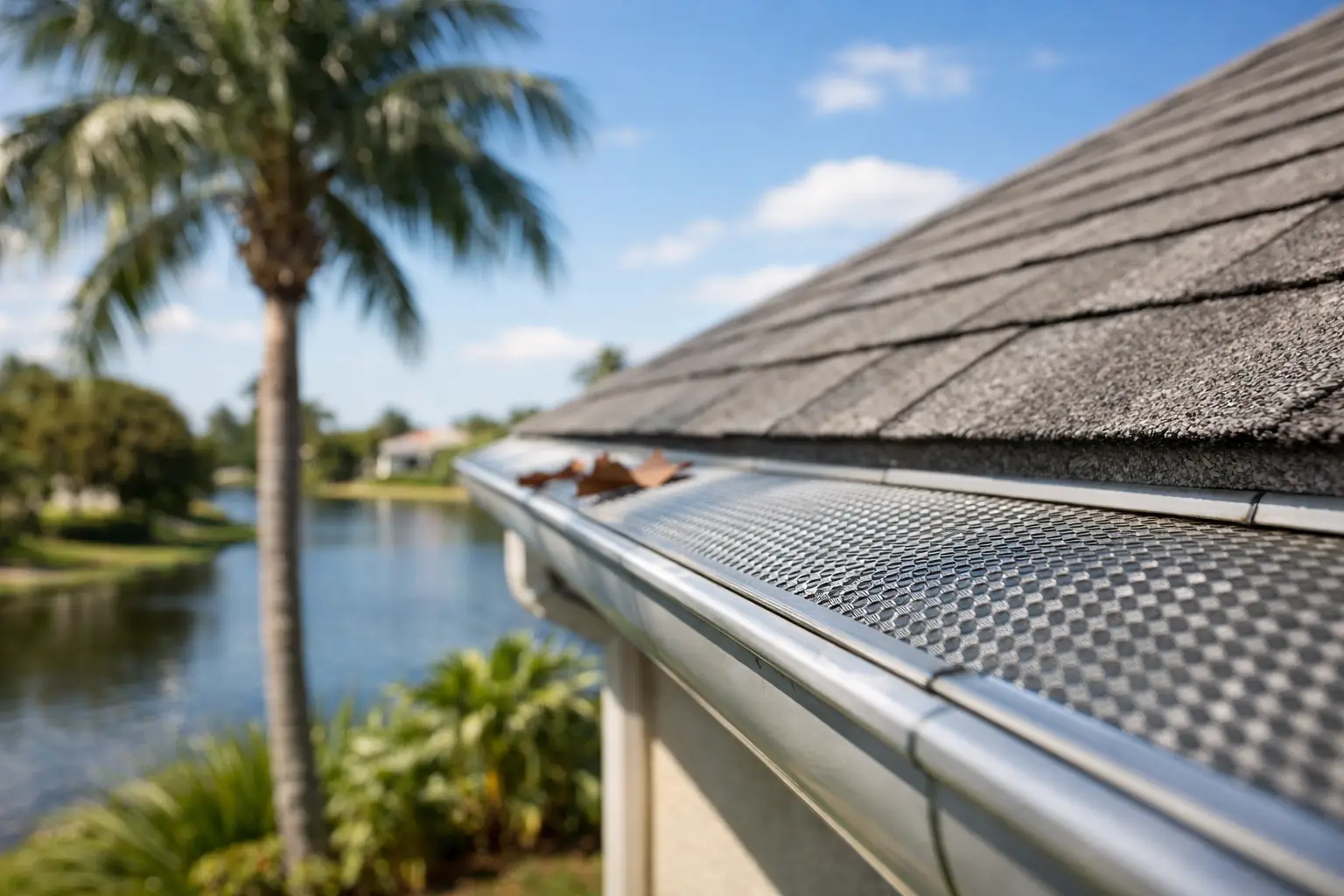
One summer storm is usually enough to make homeowners ask the question: are gutter guards worth it in Florida? If your gutters overflow during a hard rain, fill up with oak leaves, or turn into a mess of pine needles and roof grit, the answer is not the same for every home. In Central Florida, gutter guards can be a smart upgrade, but only when the system matches the tree cover, roofline, and rainfall your property actually deals with.
Are gutter guards worth it in Florida homes?
For many Florida homes, yes – but not because gutter guards make gutters maintenance-free. They are worth it when they reduce the kind of buildup that leads to overflow, standing water, fascia damage, and frequent cleanings. They are less worth it when they are installed on a poorly pitched gutter system, paired with undersized downspouts, or sold as a one-time fix for a drainage problem that really needs repair.
That distinction matters in Orlando. Florida rain is fast, heavy, and often wind-driven. Gutters do not just have to catch a steady drizzle. They have to move a lot of water quickly without backing up. Add in leaves, seed pods, pollen, shingle grit, and small twigs, and a standard open gutter can clog faster than many homeowners expect.
A well-chosen guard can cut down on debris entering the trough and help water keep moving. That saves time and lowers the chance of overflow. But guards are not magic. Some perform better than others in Florida conditions, and some homes benefit more than others.
Why Florida changes the equation
In other parts of the country, gutter guards are often marketed around fall leaves. In Florida, the issue is broader. You may have live oaks dropping leaves for long stretches, pine needles collecting in corners, palms shedding fibrous debris, and roof grit washing down during storms. On top of that, the volume of rain can expose weak spots fast.
A home with no tree cover may only need occasional cleaning and may not see a strong return from guards. A home under oak limbs or near pine trees is a different story. If your gutters are filling up several times a year, or if you have second-story sections that are harder to access, guards start to make more practical and financial sense.
Florida humidity also matters. Wet debris sitting in gutters is not just annoying. It can create extra weight, hold moisture against fascia boards, and contribute to deterioration over time. The less organic buildup sitting in the gutter system, the better.
What gutter guards do well
The biggest benefit is simple: they reduce how much debris gets into the gutter. That means less cleaning, fewer clogs, and better water flow during storms. For many homeowners, the real value is not avoiding all maintenance. It is lowering the frequency and severity of gutter problems.
Guards can also help with consistency. An open gutter may work fine after a cleaning, then slowly lose performance as debris builds. A guarded system tends to hold up better between service visits. If you manage a rental property or just do not want to keep thinking about gutter upkeep, that reliability matters.
Another advantage is safety. If your current routine involves climbing a ladder several times a year, reducing that need has value. For two-story homes especially, fewer cleanings can be a worthwhile upgrade even if occasional service is still needed.
Where gutter guards fall short
The biggest misconception is that once guards are installed, the job is done for good. In reality, most gutter guard systems still need periodic inspection and maintenance. Debris can collect on top of the guard, wash into corners, or build up around downspout openings over time.
Some guard styles also struggle with certain debris types. Fine roof grit can still enter. Pine needles may catch along the surface. In heavy storms, lower-quality products may let water overshoot the gutter edge or fail to keep up with roof runoff. That is why the right fit matters more than the sales pitch.
There is also the issue of installation quality. Even a good guard product will not solve sagging gutters, improper pitch, loose fasteners, or poor downspout placement. If water is already spilling because the system is undersized or pulling away from the fascia, guards alone will not fix it.
When gutter guards are worth the investment
They tend to be worth it when your home has recurring debris problems, hard-to-reach rooflines, or signs that clogged gutters are already affecting drainage. If you have paid for multiple cleanings a year, noticed overflow near entryways, or seen water pooling near the foundation after storms, guards can reduce future headaches.
They also make sense when paired with a properly functioning seamless gutter system. A custom-fit gutter with the correct slope and well-placed downspouts gives guards a solid foundation to work from. That combination is usually more effective than adding guards to an older system that already has alignment or leak issues.
For Orlando-area property owners, another good use case is preventative maintenance. If you know your lot gets hit with regular leaf drop and storm runoff, a leaf guard system can help you stay ahead of the problem rather than reacting after every major rain.
When they may not be worth it
If your roofline has minimal tree exposure and your gutters are easy to clean, a guard system may not offer enough benefit to justify the cost. The same goes for homes where the real issue is drainage design, not debris.
For example, if water is dumping near the foundation because downspouts are too short or poorly placed, gutter guards will not change that. If the gutter size is wrong for the roof area, guards will not increase capacity. And if the existing gutters are old, leaking at seams, or pulling loose, it often makes more sense to address those basics first.
In those cases, homeowners are usually better served by repair, replacement, or downspout adjustment before considering guards.
Which type works best in Florida?
There is no single best option for every house, but quality matters. Florida homes generally do better with professionally installed guard systems designed to handle heavy rainfall while filtering out common local debris. Products that look fine in a showroom may not perform well when a summer downpour hits a steep roof.
This is where local experience matters. A contractor familiar with Orlando conditions can look at your roof pitch, tree cover, gutter size, and drainage pattern and recommend whether a leaf guard system makes sense at all. In some cases, the right answer is a guard. In others, it is a gutter cleaning, a repair, or a new seamless system first.
That kind of direct recommendation is usually more useful than a blanket yes or no.
How to decide if gutter guards are worth it in Florida for your home
Start with your actual maintenance history. If your gutters clog once every few years, guards may be optional. If they clog multiple times a year, overflow during storms, or constantly collect debris, that points toward a stronger return.
Next, look at access and risk. A one-story home with easy ladder access is one thing. A two-story home over landscaping, a screen enclosure, or uneven ground is another. Reduced ladder use alone can be a practical benefit.
Finally, consider the condition of the existing system. Guards work best when installed on gutters that are secure, properly sloped, and sized for the home. If the system needs work first, handle that before expecting guards to solve everything.
For homeowners who want a straightforward answer, the best next step is an honest evaluation from a local gutter specialist. A company like Precision K-Gutters can look at the full picture and tell you whether guards are a smart addition, or whether your money is better spent on cleaning, repairs, or a custom seamless replacement.
The right gutter upgrade is the one that actually keeps water moving away from your home when Florida weather gets rough. That is the standard worth paying for.