
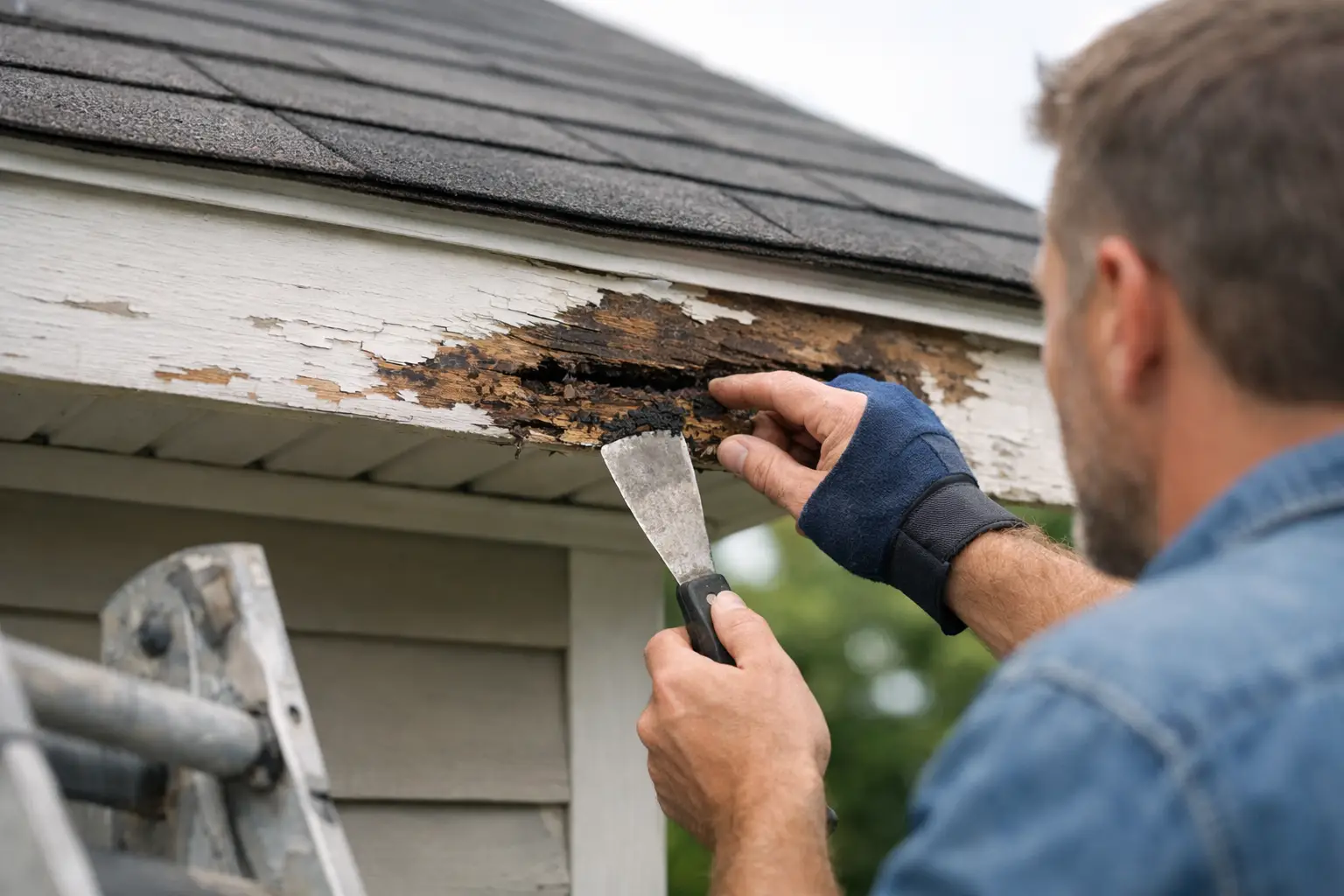
A lot of fascia rot starts the same way – not with a major storm, but with a small drainage problem that gets ignored for too long. If you are looking up how to prevent fascia rot, the good news is that most of the damage can be avoided with regular gutter care, fast repairs, and better water control around the roofline.
In Central Florida, fascia boards take a beating. Heavy rain, high humidity, clogged gutters, and wind-driven moisture can all keep wood damp longer than it should be. Once that moisture sits in the same spot over and over, paint begins to fail, wood softens, and rot starts spreading behind the trim where homeowners may not notice it right away.
What fascia rot is and why it happens
Fascia is the long board that runs along the edge of your roof, just behind the gutters. It helps support the gutter system and gives the roofline a clean finished look. When fascia stays wet, the wood starts to break down. That is fascia rot.
The most common cause is poor gutter performance. If gutters overflow, leak at seams, pull away from the house, or hold standing debris, water can run directly onto the fascia instead of moving safely to the downspouts. Roof issues can also play a role, especially if shingles, drip edge, or flashing are not directing water where they should.
Rot is rarely caused by one big event. More often, it comes from repeated exposure. A little overflow during every storm may not seem serious at first, but over a season of Florida rain, that steady moisture adds up.
How to prevent fascia rot before it starts
The best way to prevent fascia rot is to keep water moving away from the roof edge quickly and consistently. That means paying attention to gutters, downspouts, roof drainage, and the condition of the fascia itself.
Clean gutters are the first line of defense. When leaves, seed pods, roof grit, and other debris build up, water cannot flow freely. It backs up, spills over the front or rear edge, and soaks the fascia. Even a partial clog can create overflow in one section while the rest of the system seems fine.
Gutter pitch matters too. If a gutter is not sloped correctly toward the downspout, water can sit in the trough after rain. Standing water adds weight, encourages corrosion in some materials, and keeps nearby wood damp. A professional adjustment can make a big difference if you notice water pooling instead of draining out.
Seamless gutters can help reduce risk because they have fewer joints where leaks can develop. That does not mean they never need maintenance, but they usually create fewer trouble spots than sectional systems. For homeowners in Orlando, that matters during long rainy stretches when even small leaks can keep fascia wet week after week.
The gutter problems that usually lead to rot
If you want to know how to prevent fascia rot, it helps to know what usually causes it in the first place. In most homes, the warning signs start at the gutter line.
Overflow is one of the biggest red flags. When water pours over the side during normal rain, not just extreme weather, the system is telling you something is wrong. It may be clogged, undersized for the runoff, pitched incorrectly, or draining too slowly through the downspouts.
Loose or sagging gutters are another issue. When fasteners pull away from the fascia, the gutter no longer sits tight against the roof edge. Water can slip behind it and soak the board. In some cases, the sagging itself is caused by rotted fascia no longer holding the hardware securely, so the gutter problem and wood damage feed into each other.
Leaky gutter seams also deserve attention. A small drip at a joint might not seem urgent, but if it lands in the same spot every storm, it can wear through paint and keep the wood surface damp for months.
Downspout problems matter too. If the downspouts are clogged, undersized, or not placed well for the roof area they serve, water may back up into the gutter system. What looks like a fascia issue can actually start with poor drainage farther down the line.
Signs your fascia may already be at risk
Early action is cheaper than replacing long sections of trim and gutter attachment points. If you notice peeling paint, dark staining, soft spots, mildew near the roof edge, or gutters pulling loose, the fascia may already be taking on water.
You may also see signs after storms. Water marks on the siding, drips from behind the gutter, or puddling near one side of the home can point to roofline drainage problems. In some cases, pests find their way into softened wood, which creates another layer of repair.
Not all fascia damage is visible from the ground. That is why routine inspection matters, especially on two-story homes or properties with tree cover. A board can look fine from below while moisture is building behind the paint.
Maintenance steps that make a real difference
The most practical approach is simple: keep the system clean, fix small issues quickly, and do not wait for visible rot before taking action. For many homes, regular gutter cleaning is enough to prevent the moisture conditions that lead to fascia damage.
Leaf guards can also help, but they are not a cure-all. They reduce the amount of debris entering the gutter, which can lower maintenance needs and improve flow. Still, some systems work better than others depending on roof type, nearby trees, and how much fine debris your property gets. They should be seen as part of a prevention plan, not a reason to ignore inspections.
It also helps to check that water is being discharged far enough from the house. If downspouts dump water too close to the foundation, you may solve one moisture problem while creating another. Good drainage should protect both the roofline and the base of the home.
Paint and sealing matter as well, but they are not enough on their own. A well-painted fascia board can resist moisture longer, but if water is constantly overflowing behind the gutter, coating alone will not stop rot. The drainage issue has to be fixed first.
When repair is enough and when replacement makes more sense
Sometimes fascia can be saved with limited repairs. If damage is caught early and only one area has minor softness or surface deterioration, replacing a short section and correcting the drainage problem may be enough.
If rot is widespread, though, patchwork repairs usually do not hold up well. The gutter system needs a solid mounting surface. If the wood behind multiple sections is soft or compromised, full fascia replacement may be the safer and more cost-effective option over time.
This is especially true if the gutters themselves are old, leaking at multiple points, or not handling rainfall well. In that case, replacing damaged fascia without addressing the gutter system can lead to the same problem all over again.
For Orlando-area homes, prevention is often about timing. Waiting through another rainy season with known overflow, sagging sections, or clogged downspouts increases the odds that a small correction turns into a larger exterior repair.
Why local conditions matter in Central Florida
Florida homes deal with a combination that is rough on exterior wood – frequent rain, heat, humidity, and sudden storms that test every weak point in the drainage system. A gutter setup that barely works in a drier climate may fail much faster here.
Tree debris is another factor. Oak leaves, pine needles, palm debris, and roof grit can collect quickly, especially in valleys and gutter corners. Even homes that looked clear a month ago can develop clogs that redirect water toward the fascia.
That is why local service matters. A gutter plan should fit the rainfall patterns, roof layout, and debris load of the property. Precision K-Gutters works with homeowners who need practical solutions that hold up under real Florida weather, not generic fixes that look good for a week and fail in the next downpour.
A smart routine for preventing fascia rot
Most homeowners do not need a complicated checklist. They need a consistent routine. Inspect gutters and roof edges regularly, especially before and during the rainy season. Clean out debris before it creates overflow. Repair loose sections, leaking joints, and drainage issues promptly. If your current gutters are aging out or underperforming, consider whether a properly fitted seamless system would reduce ongoing problems.
If there is one thing to remember, it is this: fascia rot is usually a water-management problem before it becomes a wood-repair problem. Keep water moving where it should, and your roofline has a much better chance of staying solid, clean, and protected for the long run.