
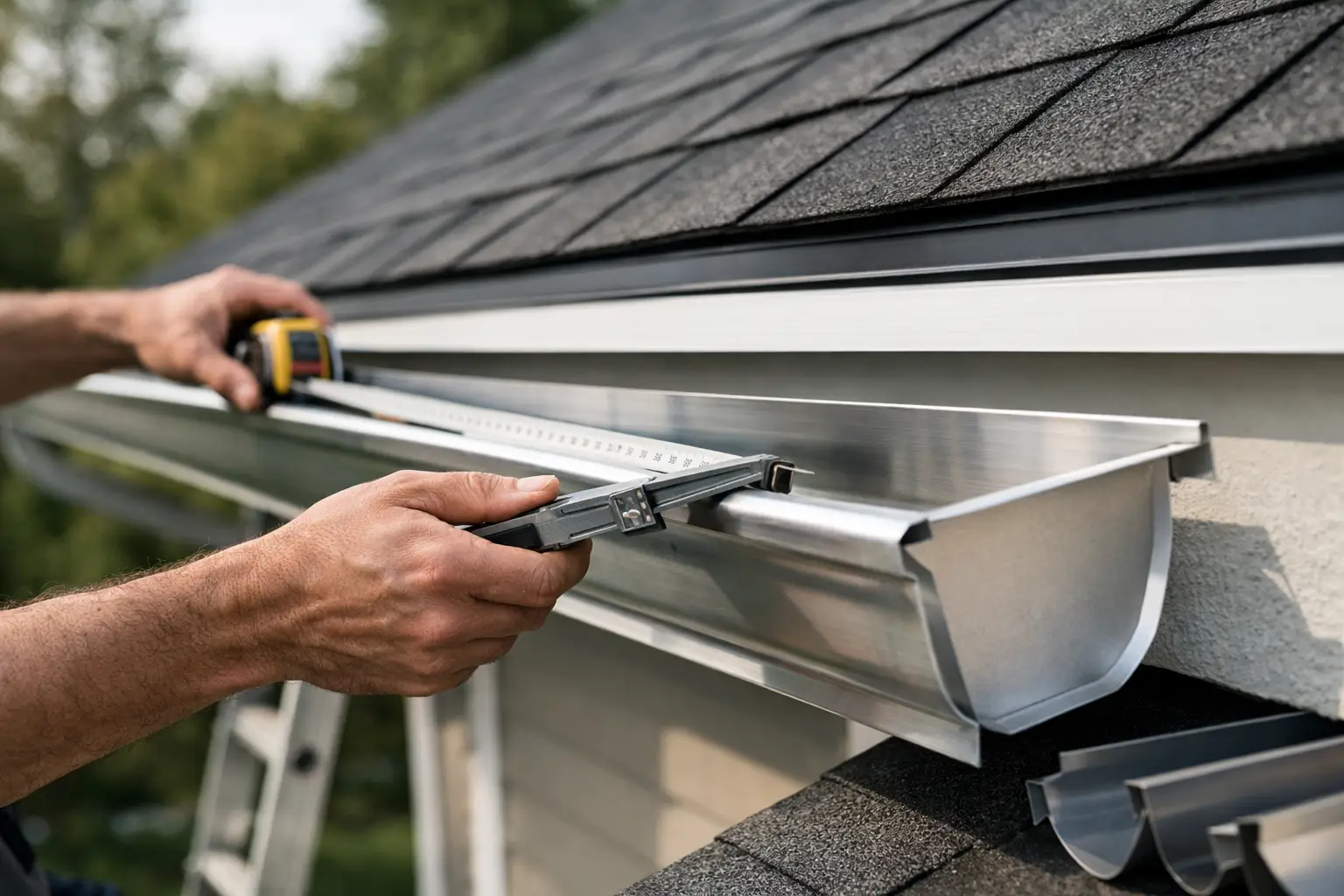
A gutter system that is even slightly off can create expensive problems fast. In Central Florida, where hard rain can hit with little warning, custom measured gutters give homeowners a better fit, cleaner appearance, and more reliable water control than stock sections pieced together on a guess.
Most gutter issues do not start with a dramatic failure. They start with water overshooting the edge, dripping from seams, pooling near the slab, or backing up where the slope is wrong. Those small signs often point to a system that was not fitted carefully to the house in the first place.
What custom measured gutters actually mean
Custom measured gutters are made to match the exact dimensions of your roofline and drainage layout. Instead of relying on pre-cut pieces that need more joints and more adjustment on site, the installer measures each run and forms the gutter to fit the home.
That matters for both appearance and performance. A gutter that follows the fascia correctly sits cleaner against the house, carries water more evenly, and has fewer weak points where leaks can develop. On homes with long roof runs, corners, varied elevations, or patio additions, precision is not a nice extra. It is the difference between a system that manages rain and one that struggles every storm season.
For many Orlando-area homes, seamless K-style systems are the practical choice because they handle water well and look right on most residential exteriors. When those gutters are custom measured on site, the result is a more tailored installation from the start.
Why fit matters more than homeowners think
A lot of people assume gutters are simple. Water goes in, water goes out. But gutter performance depends on several small details working together, and fit affects almost all of them.
The first is pitch. Gutters need a slight slope so water moves toward the downspouts without sitting in the trough. Too much slope looks off and can reduce capacity. Too little causes standing water, debris buildup, and overflow. Proper measurement helps the installer plan the run correctly instead of forcing a standard piece into a space it was never meant to fit.
The second is drainage placement. Downspouts should be located where they can move water away efficiently without creating congestion at corners or roof valleys. On a custom layout, placement is based on the home’s actual runoff needs, not just where it is easiest to attach a section.
The third is structural stability. A gutter run that is too short, too long, or poorly aligned can pull away from the fascia over time. In Florida heat and rain, those weaknesses show up quickly. A precise fit helps the system stay secure and maintain its shape.
The problem with too many seams
One of the biggest benefits of custom measured gutters is fewer seams. Every seam is a potential leak point. Sealants break down, expansion and contraction put stress on connections, and debris tends to catch where sections join together.
That does not mean every seam is bad. Corners, end caps, and downspout outlets still require connections. But reducing unnecessary joints across straight runs gives the system fewer places to fail.
For homeowners, that usually means less dripping during storms, less staining on siding, and fewer repair calls over time. It also creates a cleaner look from the street, which matters more than people expect when gutters run across the full front elevation of a house.
Why custom measured gutters make sense in Florida
In a drier climate, a mediocre gutter system may go unnoticed for a while. In Orlando, heavy rain exposes every mistake. Water comes off the roof quickly, and when the gutters are undersized, poorly pitched, or loosely fitted, the overflow often ends up right where you do not want it – around landscaping beds, entryways, soffits, or the foundation line.
Humidity also adds another layer. Damp areas around the house do not dry out as quickly, which can contribute to wood rot, mildew, and staining. If water regularly spills behind the gutter because the run is not sitting correctly against the fascia, the damage can stay hidden until repairs become more involved.
This is why a custom approach is usually worth it. Homes in storm-prone areas need gutter systems designed around real rainfall conditions, roof shape, and drainage paths. A one-size-fits-all solution may cost less at first, but it often creates more maintenance later.
Installation quality still matters
Even the best measurement does not fix poor workmanship. Custom measured gutters perform well when they are installed by a crew that pays attention to hanger spacing, outlet placement, pitch, fastening, and cleanup.
This is where homeowners should be practical. Ask how the runs are measured. Ask whether the gutters are formed on site. Ask how the downspouts will direct water away from the home. Ask what happens if sections are sagging already or if fascia damage is found during removal.
A good installer should answer clearly without turning the conversation into a sales pitch. The goal is direct solutions, not pressure.
Repairs versus replacement
Not every home needs a full new system. Sometimes a few targeted repairs, resealing joints, rehanging loose sections, or adjusting downspouts are enough. But if the existing gutters were poorly fitted from the start, repeated patching can become a cycle.
That is often the turning point for replacement. If the seams keep leaking, the sections are separating, or the drainage layout never handled water correctly, custom measured gutters may be the more cost-effective fix long term.
For property managers, this trade-off matters even more. Ongoing minor repairs across multiple homes add up fast, especially when tenant complaints start after every major storm. A properly fitted system reduces repeat issues and makes maintenance easier to schedule.
How leaf buildup changes the equation
Fit is only part of the story. Even custom measured gutters need maintenance. In neighborhoods with oak trees, palms, and seasonal debris, buildup can choke the system and cause overflow no matter how well it was installed.
That is why homeowners should think about gutter cleaning and leaf guard options at the same time they think about new installation. A custom-fit system works best when water can actually reach the downspouts. If the trough is packed with leaves and shingle grit, the benefits of precision installation get buried under preventable clogging.
Leaf protection can help, but it depends on the property. Some homes benefit from guards right away, while others do well with regular cleaning and inspection. The right choice usually comes down to tree coverage, roof design, and how often debris collects.
What to look for when comparing estimates
If you are getting quotes for custom measured gutters, focus on more than price. Look at what is being proposed and whether it fits the home’s needs.
Material quality matters, but so do the details of the layout. Are the downspouts positioned well? Is the estimate based on actual measurement, not a rough visual guess? Is the scope limited to installation, or does it address problem drainage areas that have already been causing issues?
It also helps to notice how the company communicates. Clear answers, realistic recommendations, and a clean job-site approach usually say a lot about what the installation experience will be like. For local homeowners, that reliability matters almost as much as the product itself.
A better fit usually means fewer surprises
The biggest advantage of custom measured gutters is simple. They are built for your house, not adapted to it after the fact. That reduces the chance of leaks, improves drainage, and gives the system a cleaner finished look.
For homes in the Orlando area, that precision is especially valuable because the weather does not leave much room for error. Strong rain tests every weak spot. A custom-fit gutter system helps remove those weak spots before they turn into repairs.
At Precision K-Gutters, that practical mindset is the point. Measure carefully, install cleanly, and make sure the water goes where it should. When gutters are fitted correctly from the start, the whole house is easier to protect.
If you have been dealing with overflow, sagging sections, or water collecting too close to the home, it may not be a maintenance problem alone. Sometimes the real fix is a gutter system measured to fit the way it should have from day one.