
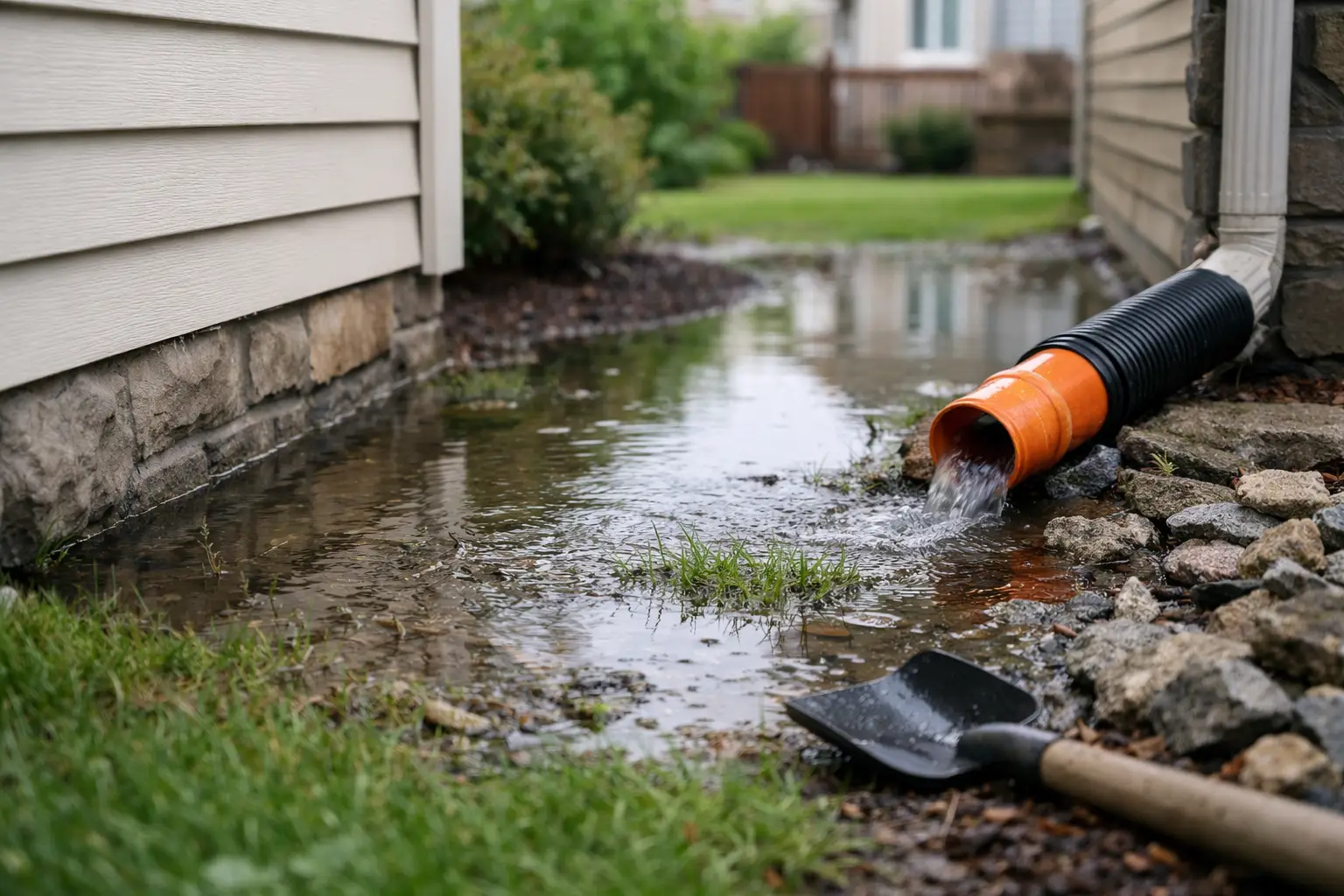
A puddle beside the house after an Orlando downpour may look harmless, especially if it disappears by the next day. But repeated water pooling near house can mean rainwater is not being carried far enough from the roofline and foundation. Over time, that extra moisture can contribute to soil erosion, stained exterior walls, wood rot, pest activity, and foundation concerns.
The right fix depends on where the water starts, how long it remains, and whether the problem happens during every storm or only the heaviest rain. In many cases, the solution begins with the gutter system – not with a major landscaping project.
Why Water Pools Near a House
Rain should move in a clear path: off the roof, into the gutters, through the downspouts, and away from the home. When one part of that path is blocked, undersized, damaged, or pointed in the wrong direction, water can collect at the base of the exterior wall.
In Central Florida, intense rainfall can expose small drainage problems quickly. A system that handles a light shower may overflow during a summer storm, dumping a concentrated sheet of water directly beside the foundation. Flat yards, compacted soil, heavy mulch, and low spots in the landscape can make the issue worse.
Clogged or Overflowing Gutters
Leaves, pine needles, roof grit, and nesting debris can block gutter channels or downspout openings. Once water cannot move freely, it rises and spills over the gutter edge. That overflow often lands in the same narrow strip of soil along the house, creating trenches, mulch washout, and standing water.
Look for water marks on the fascia, streaking on siding, or a waterfall effect along the gutter during rain. These signs usually point to a cleaning need, but they can also indicate a gutter that is not pitched correctly toward the downspout.
Downspouts That Empty Too Close to the Foundation
A working downspout can still create a problem if it releases water at the base of the house. Every section of roof sends a significant amount of water into the gutter system during a storm. If that water exits within a foot or two of the wall, the ground may not absorb it fast enough.
Downspout extensions, splash blocks, buried drainage piping, or a revised discharge direction can help move water to a more suitable area. The best option depends on the lot layout, nearby walkways, landscaping, and local drainage conditions. Water should not be redirected toward a neighbor’s property or a spot that creates a new pooling problem.
Damaged, Sagging, or Improperly Sized Gutters
Gutters need a consistent slope so water reaches the downspouts instead of sitting in low sections. Sagging hangers, separated seams, loose fasteners, and bent sections can interrupt that flow. Leaks may also drip steadily in one area, saturating the soil below even when the rest of the system appears to work.
Older sectional gutters tend to have more joints where leaks can develop. Custom-measured seamless K-gutters reduce the number of leak points along the run and provide a cleaner, more controlled path for roof runoff. They are not a cure for every drainage issue, but they are often a practical upgrade when an aging system repeatedly overflows or leaks.
Grading and Landscape Low Spots
Sometimes the gutters are doing their job, but the yard is not. Soil should generally slope away from the home so surface water has a path away from the foundation. Settling soil, landscape borders, decorative edging, and thick mulch can create a low pocket that traps water beside the house.
This is where a gutter inspection and a grading review should work together. Extending a downspout may solve the immediate source of water, while minor regrading may be needed to keep rain moving away after it reaches the ground.
How to Check Water Pooling Near House
You do not need to climb onto the roof to identify many common drainage issues. Walk around the home during a moderate rain if it is safe to do so, or inspect the area soon after the storm passes. Watch where water leaves the roofline and where it travels once it reaches the ground.
Pay attention to whether water is overflowing from the gutter, leaking from a seam, backing up at a downspout, or pouring out too close to the wall. Also look for soil that has washed away, exposed roots, damp mulch against the siding, or puddles that remain long after nearby areas have dried.
Inside the home, be alert for musty smells, damp spots near exterior walls, peeling paint, or changes around doors and windows. These signs do not always come from exterior drainage, but they are worth addressing promptly when water is regularly collecting near the foundation.
Fixes That Match the Cause
The most effective repair is the one that addresses the source of the water rather than just covering up the puddle. For example, adding gravel over a low spot may improve appearance, but it will not stop a clogged gutter from overflowing above it.
A professional gutter cleaning is often the right starting point when debris is visible or water spills over the front edge. Cleaning should include the gutter channels and downspouts, since a blockage lower in the system can cause water to back up even when the gutter looks clear from the ground.
If the downspouts discharge too close to the house, an adjustment or extension may be enough. This is a straightforward fix when there is a clear route for the water. On smaller lots or around patios, pool decks, and walkways, the discharge plan may need more care to avoid creating slippery areas or directing runoff where it does not belong.
For recurring leaks, loose sections, or poor slope, gutter repairs can restore proper drainage. If the system is undersized, heavily deteriorated, or pieced together with repeated repairs, replacement may be the better long-term value. A properly installed seamless system should be measured for the roofline and designed with sufficient downspout placement for the amount of water it needs to handle.
Leaf guards can reduce the amount of debris that enters the gutter, particularly around tree-covered properties. They are a maintenance tool, not a reason to ignore the system forever. Guards still need occasional inspection, and the right type should allow water to enter reliably during heavy Florida rain.
When Pooling Becomes More Urgent
A small puddle that dries within a few hours may be a minor landscape issue. Repeated standing water against the house, however, deserves prompt attention. The concern increases when you see water entering a garage, crawlspace, or interior area; soil pulling away from the foundation; persistent gutter overflow; or visible rot near fascia boards and exterior trim.
Property managers should also act quickly when pooling occurs at rentals. Drainage problems can become tenant complaints, slip hazards, and more expensive maintenance work if left through multiple storm seasons. Documenting the issue after rain and addressing the gutter or downspout source early helps protect both the property and the maintenance budget.
A Clear Path for Rainwater
The goal is simple: keep roof runoff controlled and move it away from the home before it has time to collect. Precision K-Gutters helps Orlando-area homeowners identify gutter clogs, leaks, sagging sections, and downspout problems with practical recommendations and clean workmanship.
After the next heavy rain, take a few minutes to look at the path your water is taking. A visible puddle near the house is useful information – and fixing the reason it formed now can prevent a much bigger repair later.