
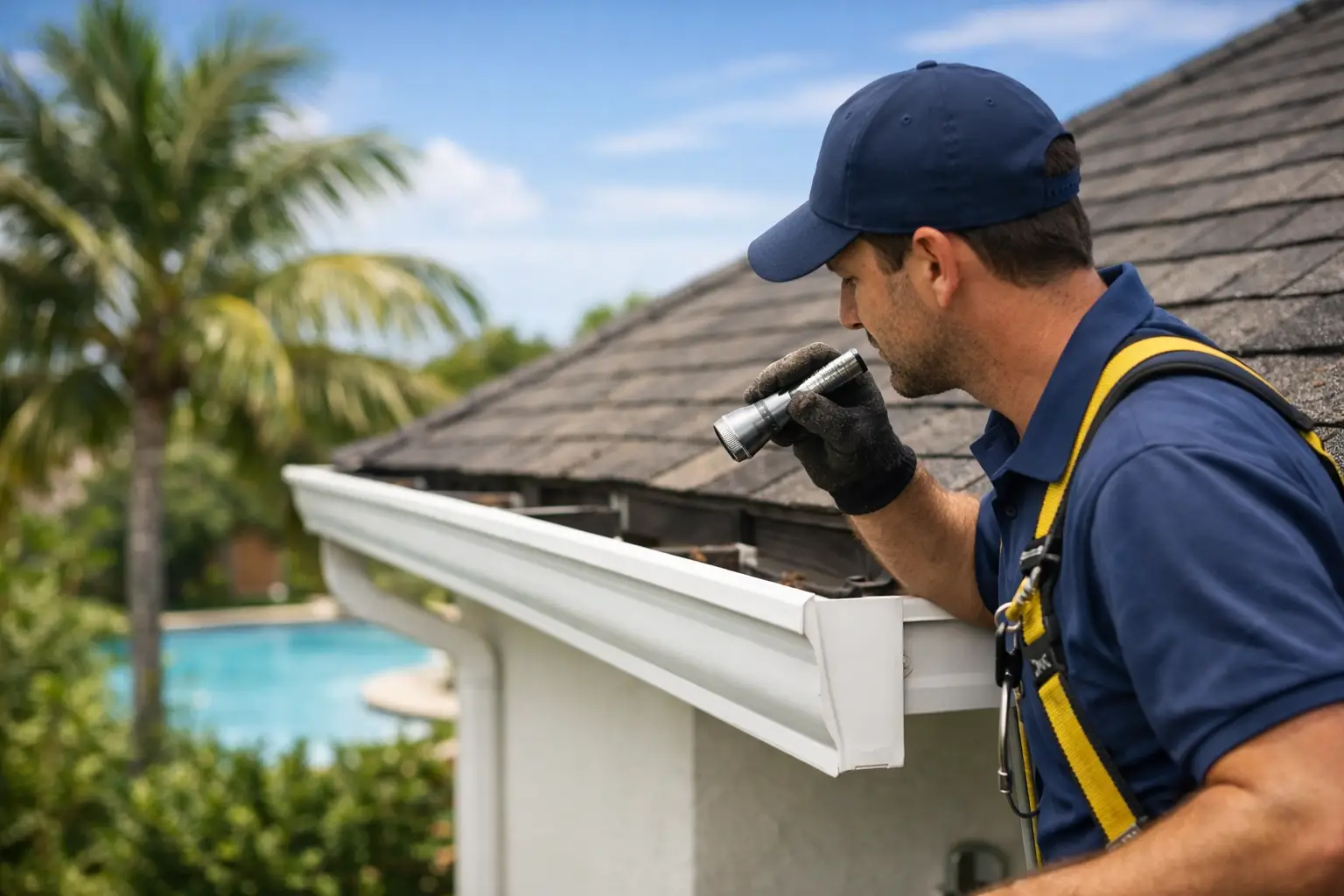
A Central Florida downpour can fill a gutter system in minutes. If water cannot move freely through the gutters and downspouts, it can spill over roof edges, soak fascia boards, wash out landscaping, and collect near the foundation. So, how often should gutters be inspected? For most Orlando homes, a professional inspection at least twice a year is a practical baseline, with additional checks after major storms.
Gutters do not need to look obviously damaged to have a drainage problem. A small clog, loose fastener, shifted downspout, or low section can turn into an overflow issue when heavy rain arrives. Regular inspections help catch those concerns while the repair is usually straightforward.
How Often Should Gutters Be Inspected in Orlando?
Most homeowners should inspect their gutters twice per year: once before the wetter summer storm season and again after the busiest part of hurricane season. In Orlando, that timing matters more than a calendar routine used in cooler or drier parts of the country. Heat, frequent rain, windblown leaves, pine needles, and sudden storms put steady pressure on a gutter system.
A spring inspection helps make sure gutters and downspouts are ready to handle regular summer rainfall. A fall inspection checks for debris and storm-related damage that may have developed over the previous few months. If your home sits beneath mature trees, has a steep roof, or regularly collects leaves and roof grit, inspections may be needed every three to four months instead.
Property managers should also consider the condition and layout of each property. A rental home with heavy tree cover or recurring drainage issues may need more frequent service than a newer home in an open neighborhood. The right schedule is based on what reaches the roof, where water drains, and how the system performs in a hard rain.
Inspect Gutters After Severe Weather
Twice-yearly inspections are a baseline, not a reason to ignore the gutters after a major weather event. Central Florida storms can bring strong wind, heavy rain, branches, and debris in a short period of time. After a tropical storm, hurricane, or unusually intense thunderstorm, take a look from the ground for visible changes.
Watch for gutters pulling away from the roofline, sections that appear bent, downspouts that have shifted, or water stains on the exterior walls. You may also notice leaves piled at the roof edge or a splash of mulch and soil moved away from the foundation. These are signs that water may not be draining where it should.
There is no need to climb a ladder during or immediately after a storm. Wet roofs and unstable ground create unnecessary risk. A visual check from below can tell you whether it is time to schedule professional gutter cleaning, repair, or an inspection.
Gutter Inspection and Gutter Cleaning Are Not the Same
Cleaning removes leaves, twigs, roof grit, and other debris from the system. An inspection looks at whether the system itself is working correctly. Both services protect the home, but one does not automatically replace the other.
During an inspection, a gutter professional should look for clogs, standing water, loose hangers, leaking seams, improper slope, damaged end caps, and downspouts that discharge too close to the home. They should also check the fascia area for signs of water exposure and confirm that water has a clear path away from the foundation.
A gutter may look clean from the ground while still holding water because it has settled out of position. Likewise, a downspout may appear intact but be clogged underground or at the elbow. These problems are easy to miss until the next heavy rain sends water over the side of the gutter.
Signs You Should Schedule an Inspection Sooner
Do not wait for your next scheduled service if your home is showing signs of poor drainage. Overflow during rain is the most obvious warning, but it is not the only one. Staining on siding, peeling paint near the roofline, mildew around exterior walls, or damp areas near the foundation can all point to gutter or downspout issues.
Sagging gutters are another concern. Gutters are designed to carry water, not the weight of packed leaves, wet debris, and standing water. When a section starts to sag, it can lose the proper pitch needed for drainage and place added stress on the fascia board behind it.
Pay attention to where downspouts release water as well. If runoff lands directly beside the foundation, pools on walkways, or washes out a planting bed, the gutter system may need an adjustment or extension. A working gutter system should move water away from the home in a controlled direction.
Homes That Need More Frequent Gutter Checks
Some homes need more than two inspections per year. Large oak trees, palms, pine trees, and nearby wooded areas can keep gutters full of organic debris even when there has not been a major storm. Roof valleys can concentrate leaves in one section, and screened pool enclosures or roof transitions can create spots where debris collects.
Consider quarterly inspections if your property has any of these conditions:
- Heavy tree cover close to the roof
- Frequent gutter overflow or recurring clogs
- A history of leaks, loose sections, or fascia damage
- Multiple rooflines, valleys, or hard-to-reach gutter runs
- Rental properties that need dependable preventative maintenance
Leaf guards can reduce the amount of debris that enters the gutter, but they are not a reason to stop inspections. Fine debris, roof grit, and material that collects on top of the guard can still affect water flow. The benefit is less frequent cleaning and easier upkeep, not a maintenance-free system.
What a Professional Gutter Inspection Can Catch
A thorough inspection is about more than spotting leaves. It helps identify small installation or wear issues before they lead to more expensive exterior repairs. This is especially useful for seamless K-gutter systems, where proper slope, secure mounting, and correctly placed downspouts all affect performance.
Professionals can check whether water is flowing toward each downspout rather than settling in the middle of a run. They can also identify loose brackets, separated joints, damaged outlets, and areas where the gutter has pulled away from the fascia. If a repair is needed, addressing it early can help prevent wood rot, paint damage, and water intrusion around the roofline.
The inspection should also consider the entire drainage path. A clean gutter will still overflow if the downspout is blocked, crushed, poorly positioned, or unable to move water away from the house. Good drainage is a system, not just a gutter channel along the roof edge.
A Simple Maintenance Schedule for Orlando Homeowners
For most homes, schedule an inspection and cleaning before the summer rainy season, then schedule another after the most active storm months. Check the system from the ground after any significant storm, especially if you see branches or large amounts of debris on the roof.
If you notice water spilling over during rain, do not assume it is only a cleaning issue. The cause could be a clog, but it could also be an undersized downspout, an improper gutter pitch, a damaged section, or water that is overshooting the gutter due to roof design. A direct inspection provides a clearer answer than repeated guesswork.
Precision K-Gutters helps Orlando homeowners and property managers keep gutter systems clean, secure, and ready for heavy rain. Whether the issue is debris buildup, a leaking seam, a sagging section, or a downspout that needs adjustment, prompt service can help protect the exterior before a small drainage problem becomes a larger repair.
A gutter inspection is a small part of home maintenance, but it has a direct effect on how your property handles the next hard rain. Keeping a regular schedule gives water one clear place to go: away from your roofline, walls, and foundation.