
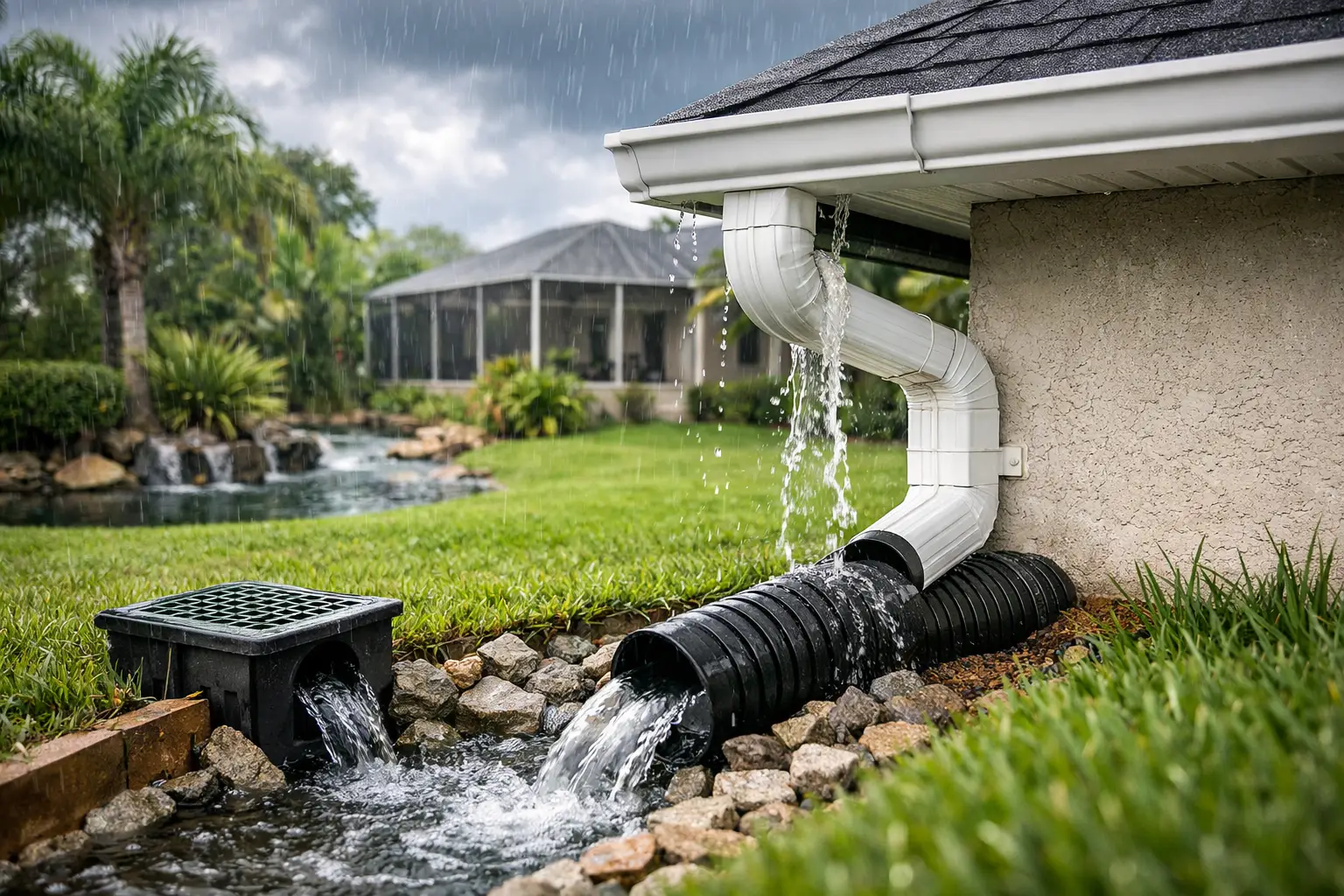
A heavy Orlando rainstorm can show you exactly where your drainage system is falling short. Water spilling over gutter edges, pouring behind a downspout, or pooling beside the home is more than an inconvenience. The right rain gutter drainage solutions help move roof runoff where it belongs, protecting your fascia, soffits, siding, landscaping, and foundation from repeated water exposure.
For many homeowners, the issue is not one dramatic failure. It is a small problem that worsens with every storm: a clogged outlet, a loose gutter section, a downspout that ends too close to the house, or a roofline without enough drainage capacity. Addressing the cause early is usually simpler and more affordable than repairing the damage water can leave behind.
Why gutter drainage matters in Central Florida
Orlando homes deal with intense rainfall, wind-driven storms, falling leaves, pine needles, and year-round debris. A gutter system needs to collect that volume of water, carry it through the downspouts, and discharge it away from vulnerable areas. If any part of that path is restricted or poorly positioned, water can back up and overflow.
Overflow often runs over the front edge of the gutter, but it can also spill behind the system. Water that gets behind gutters may wet fascia boards and soffits, creating conditions for wood rot and staining. On the ground, repeated runoff near the foundation can wash away mulch, erode soil, create muddy walkways, and leave low areas saturated after every storm.
Not every wet spot is a gutter problem. Poor yard grading, irrigation leaks, and low-lying lots can also contribute to standing water. Still, gutters and downspouts are the first place to look when the problem appears immediately after rain falls on the roof.
Rain gutter drainage solutions start at the roofline
A drainage system works as a complete path, not as a collection of separate parts. Before adding extensions or changing landscaping, make sure the gutter itself can do its job.
Keep gutters and outlets clear
Debris is one of the most common reasons for overflow. Leaves, seed pods, roof grit, and pine needles can collect inside the gutter and settle at the downspout outlet. Even when a gutter looks clear from the ground, a compacted blockage near the outlet can stop water from draining.
Professional gutter cleaning removes loose debris and checks that water can move through the full system. This is especially useful before and during the rainy season, or for homes beneath mature trees. Cleaning also makes it easier to spot loose hangers, seam leaks, standing water, and sections that have started to pull away from the fascia.
Leaf guards can reduce the amount of debris entering a gutter, but they are not a replacement for a properly sized and properly pitched system. The best option depends on the roof, surrounding trees, and the type of debris your property collects. A guard that works well against large leaves may not handle fine roof grit or pine needles the same way.
Repair sagging, leaking, and misaligned sections
Gutters need a slight slope toward each downspout. If a section sags, water may sit in the channel instead of draining. Standing water adds weight, invites corrosion in older systems, and can eventually cause more sagging.
Loose fasteners, leaking joints, damaged end caps, and bent sections deserve attention as well. Small leaks can create concentrated drips that damage a specific area of fascia or landscaping over time. A targeted repair may be enough when the rest of the system is in good condition. If leaks and separation appear in several places, replacement can be the more practical long-term answer.
Use downspouts to move water away from the home
The downspout is where roof runoff leaves the gutter system. Its location, size, and discharge point have a major effect on drainage performance.
A downspout should send water away from the foundation rather than dumping it into a narrow bed beside the wall. In many cases, a properly installed extension or splash block helps carry water farther into an area that can accept the flow. The goal is controlled discharge, not simply moving the water from one problem spot to another.
For example, directing water across a walkway can create a slippery surface, while directing it into a neighbor’s property can cause a different set of issues. On a small lot, there may be limited space to extend drainage above ground. In those situations, an underground drain may be worth considering, provided it has a suitable outlet and will not trap water or clog with debris.
Downspout adjustments are also useful when a system technically works but sends water to the wrong place. A change in direction, outlet location, or extension length can make a noticeable difference around entryways, pool decks, patios, and planting beds.
Match the solution to your property
There is no single drainage fix that fits every Orlando home. The best approach depends on roof size, roof shape, gutter layout, lot grading, and where water naturally collects after a storm.
A home with a large roof plane may need additional downspouts or larger gutter capacity to manage fast, heavy rainfall. A smaller home may have adequate gutter capacity but need better discharge points. A property with mature oak trees may benefit most from routine cleaning and carefully selected leaf protection, while a newer home with few trees may need repairs or downspout extensions instead.
These are common rain gutter drainage solutions homeowners may consider:
- Gutter cleaning to remove debris and restore flow through outlets and downspouts.
- Gutter repairs for leaks, sagging sections, loose hangers, and damaged components.
- Downspout extensions or adjustments to direct water away from foundations and high-traffic areas.
- Leaf guard installation to reduce recurring debris buildup in suitable gutter systems.
- Seamless K-gutter replacement when an aging or undersized system has widespread issues.
The condition of the existing system matters. Adding an extension to a clogged or sagging gutter will not solve overflow at the roofline. Likewise, replacing gutters without addressing poor discharge locations may leave water pooling near the home. Looking at the whole route from roof edge to yard is what leads to a lasting fix.
When seamless K-gutters make sense
Older sectional gutters have joints along their runs, and every joint is a potential point for leaks over time. Seamless K-gutters are custom measured and formed for the home, reducing the number of seams and creating a cleaner appearance along the roofline.
For a home with repeated leaks, frequent separation, undersized gutters, or an awkward drainage layout, a new seamless system can provide a more dependable starting point. Proper installation includes secure fastening, correct pitch, appropriately placed downspouts, and clean connections at corners and outlets.
Replacement is not always necessary. If the gutters are structurally sound and the issue is limited to debris, a small leak, or a poorly directed downspout, maintenance or repair may be the better choice. A straightforward inspection should identify whether a focused fix will solve the problem or whether the system is nearing the end of its useful life.
Watch for signs that drainage needs attention
You do not need to climb a ladder to notice many warning signs. During or shortly after rain, look for water running over gutter edges, water pouring from seams, downspouts that barely discharge, or puddles that form beside the foundation. Streaks on siding, peeling paint near the roofline, washed-out mulch, and sagging gutters are also worth addressing.
Property managers should pay close attention to recurring drainage complaints at the same units or buildings. A temporary cleanup may resolve one storm’s overflow, but repeated issues often point to a damaged section, an undersized system, or an outlet that needs to be moved.
A clean, well-positioned gutter system does quiet work during every storm. If water is collecting where it should not, a professional evaluation can identify the direct fix before the next hard rain turns a manageable drainage issue into a repair project.