
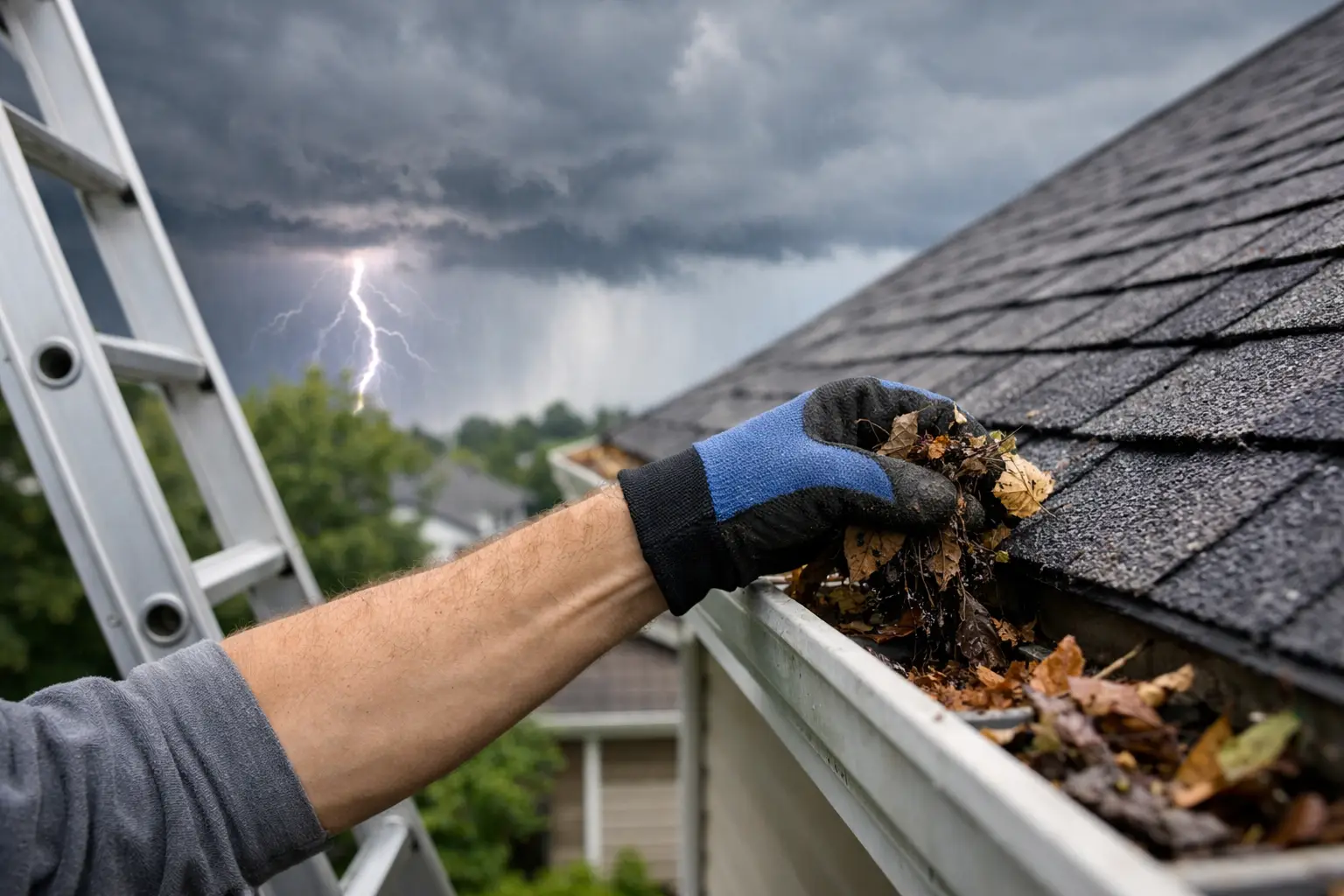
A Central Florida downpour can fill a gutter system in minutes. When leaves, pine needles, roof grit, or nesting material are already blocking the channel or downspout, that water has nowhere to go except over the edge. So, should gutters be cleaned before storms? In most cases, yes. A clean, free-flowing gutter system is one of the simplest ways to direct heavy rain away from your home when it matters most.
For Orlando homeowners and property managers, this is not just a seasonal chore. Frequent afternoon storms, tropical weather, and wind-blown debris can turn a small clog into a costly water problem quickly.
Why Clean Gutters Matter Before a Storm
Gutters are designed to collect roof runoff and move it through downspouts to a safe discharge area. When that route is clear, water stays controlled. When it is blocked, water can spill over the front or back of the gutter, saturate landscaping, run down exterior walls, and collect around the home.
Overflow is often the first problem homeowners notice, but it is rarely the only one. Repeated water overflow can stain siding, damage fascia boards, contribute to wood rot, and loosen gutter hangers. Water that repeatedly falls near the base of the house can also create erosion, standing water, and drainage concerns around the foundation.
A storm can expose an existing issue that was easy to overlook during dry weather. A gutter may appear fine from the ground, yet a compacted layer of leaves can stop water from reaching the downspout. One blocked elbow or buried downspout outlet can have the same effect.
Cleaning before storms gives the system its best chance to do its job. It also gives you an opportunity to spot loose sections, leaking seams, sagging runs, or downspouts that discharge too close to the house before heavy rain puts them under pressure.
Should Gutters Be Cleaned Before Storms Are Forecast?
Yes, provided it can be done safely and with enough time before conditions worsen. The best time to clean gutters is well before a storm is approaching, not while the sky is darkening or winds are picking up. Wet roofs, wet ladders, lightning, and gusty weather create unnecessary risks.
If a major rain event is in the forecast for later in the week, inspect the gutters as soon as possible. Look for visible debris at the roofline, plants growing from the gutter, water marks beneath the gutter, or downspouts that appear crushed or disconnected. If you have recently seen water pouring over the sides during rain, treat that as a clear sign that service is needed.
There is a practical trade-off when a storm is only hours away. A quick, safe ground-level check of downspout outlets may help, but this is not the time for an inexperienced homeowner to climb a ladder. If debris is packed into the system or repairs are needed, professional gutter service is the safer choice. The goal is to protect the home without creating a ladder accident.
What Happens When Gutters Are Clogged During Heavy Rain?
A clogged gutter does not simply hold water. It can become heavy enough to strain the fasteners and pull away from the fascia. In severe cases, standing water and debris accelerate wear on the gutter itself, particularly at seams, corners, and areas with poor slope.
Water can also back up beneath the roof edge. Depending on the condition of the roof, flashing, and fascia, that backup may contribute to moisture problems where they are hardest to see. Even when it does not enter the home, water repeatedly running behind the gutter can damage the wood that supports it.
Downspouts deserve just as much attention as the open gutter channel. A system can look clean from above but still overflow because the downspout is clogged halfway down, the bottom elbow is packed with debris, or the outlet is obstructed by mulch and leaves. Water needs a complete path from the roof to a suitable drainage area.
For rental properties, this type of issue can become more complicated after a storm. A tenant may report water near an entryway, a soaked planting bed, or a gutter pulling away from the roofline. Preventative cleaning helps reduce urgent calls and makes it easier to identify repair needs on a planned schedule.
A Pre-Storm Gutter Check for Orlando Homes
A full cleaning is the most reliable option when debris is present, but a simple inspection can help you decide how urgent the work is. From the ground, check whether gutters are visibly sagging, whether there are dark streaks on the exterior walls, and whether downspouts are attached securely. Look at where downspouts release water as well. The outlet should direct water away from the house, not toward a walkway, patio edge, or low spot beside the foundation.
If it is safe to inspect closer, look for leaves, seed pods, palm debris, shingle grit, and roof moss buildup. Central Florida homes can collect debris year-round, especially after windy weather. A single branch or palm frond may be easy to remove, but packed organic material usually requires a more thorough cleaning and a flush of the downspouts.
Watch for these four signs that gutter cleaning should not wait:
- Water spills over the gutter during ordinary rain.
- Plants, leaves, or roof granules are visible above the gutter edge.
- A downspout drains slowly or releases little water during a storm.
- Gutters sag, separate at joints, or pull away from the fascia.
These conditions may point to more than a cleaning need. Sagging can indicate excess weight, loose hangers, incorrect pitch, or damaged fascia. A leaking corner may need resealing or replacement. Cleaning clears the way for an accurate assessment, but it does not correct damaged components on its own.
How Often Should Gutters Be Cleaned in Central Florida?
There is no single schedule that fits every home. Homes beneath oak trees, pines, palms, or other heavy vegetation often need more frequent attention than homes with open rooflines. Properties near construction activity may also collect more roof grit and wind-blown debris.
For many Orlando-area homes, checking gutters at least twice a year is a reasonable starting point. One visit before the wetter part of the year and another after periods of heavy leaf drop or storm activity can prevent many common clogs. Homes with substantial tree cover may need cleaning every few months.
Storm season is also a reason to inspect after severe weather, not only before it. Wind can blow new debris into a clean system, loosen a downspout, or shift branches onto the roof. If the home experienced a storm with strong gusts and heavy rainfall, a quick post-storm look can catch issues before the next round of rain.
Do Leaf Guards Eliminate Pre-Storm Cleaning?
Leaf guards can reduce the amount of large debris entering gutters, but they do not make maintenance unnecessary. Fine roof grit, small seeds, pine needles, and organic residue can still collect on top of guards or move into the system over time. Water flow can also be affected if the guards are poorly fitted, damaged, or covered with debris.
The right leaf guard solution depends on the roof, surrounding trees, gutter condition, and the type of debris the property receives. A properly installed system can reduce cleaning frequency and help keep gutters flowing, but it should still be inspected before peak storm periods.
If gutters are already leaking, undersized, badly pitched, or pulling away from the home, adding guards without correcting those issues may not solve the underlying drainage problem. Clean gutters, secure hangers, functional downspouts, and proper water discharge work together.
When Professional Gutter Service Makes Sense
Professional service is especially helpful when the home is two stories, the roofline is steep, debris is heavy, or water has already caused overflow. It is also a practical option for property managers who need dependable scheduling and a clear report on what was found.
A thorough service should address the gutter channels, downspouts, elbows, outlet areas, and visible condition of the system. If a repair is needed, it is better to identify it before the next major storm than to wait until water is spilling over the roof edge.
Precision K-Gutters provides straightforward gutter cleaning, repair, downspout adjustment, and seamless gutter solutions for homeowners who want water managed where it belongs – away from the home. A clean, properly functioning system is a small maintenance step that can prevent much larger headaches when Florida weather moves in.