
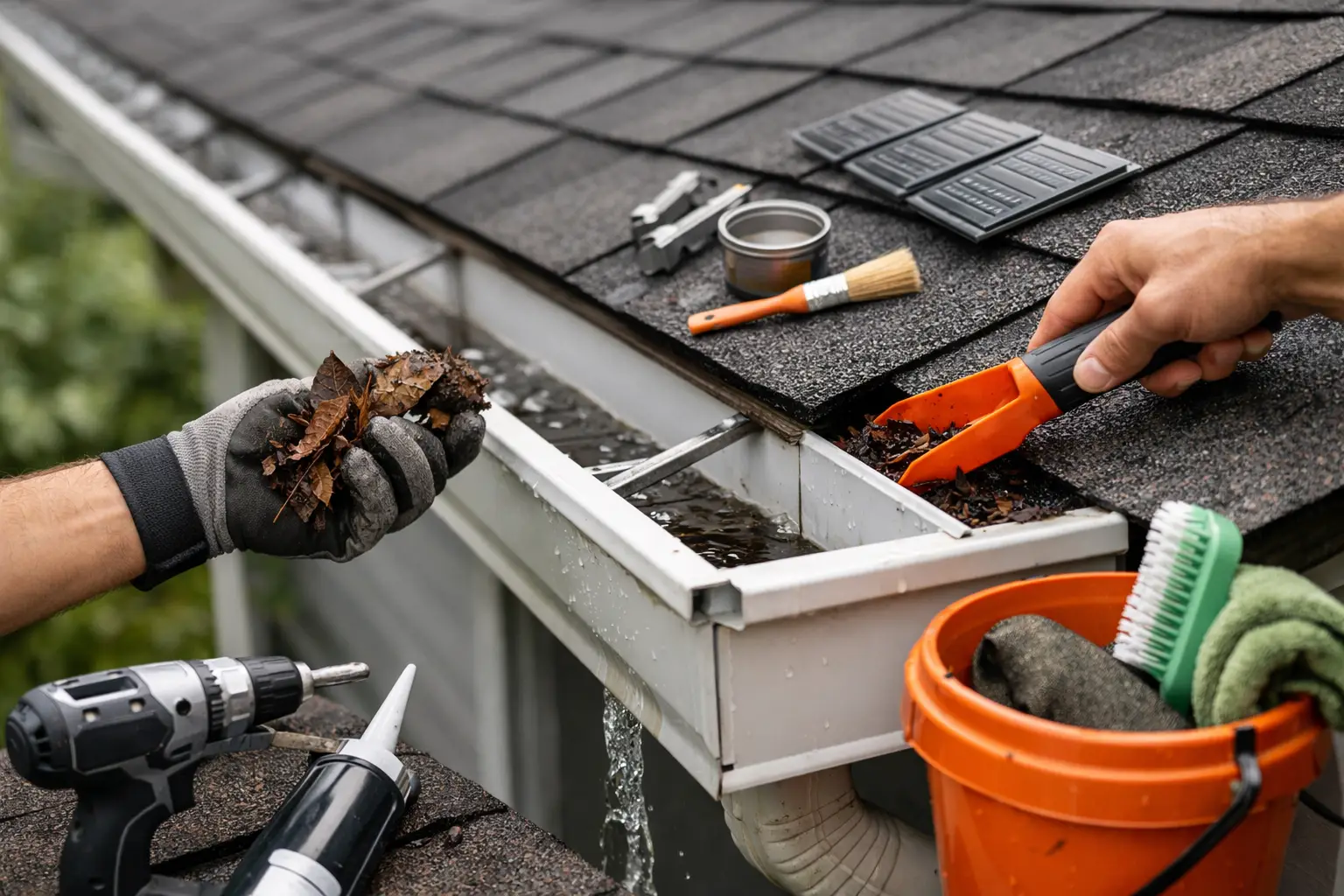
A Central Florida downpour can expose a gutter problem in minutes. Water spills over the front edge, runs behind the fascia, or pools near the foundation while the rain is still coming down. The best ways to extend gutter life are usually simple, consistent maintenance steps that keep water moving where it belongs before small issues become expensive exterior repairs.
For Orlando homeowners and property managers, gutters work hard through summer storms, windblown debris, humidity, and year-round leaf drop. A quality gutter system can last for many years, but only if it stays clear, properly supported, and correctly drained.
1. Keep Gutters and Downspouts Clear
Clogs are one of the fastest ways to shorten the life of a gutter system. Leaves, oak tassels, pine needles, roof grit, and small branches hold moisture inside the channel. That standing water adds weight, encourages corrosion on vulnerable metal components, and can cause sections to pull away from the home.
Cleaning should include more than removing visible debris from the gutter trough. Downspouts need to be checked as well. A downspout can look clear at the top while a packed clog sits at an elbow or near the bottom outlet. If water does not move freely through the full system, it will eventually back up and overflow.
In Orlando, cleaning is often needed at least twice a year, with additional service after major storms or during periods of heavy leaf drop. Homes beneath mature trees may need more frequent attention. Waiting until you see water pouring over the gutter is usually waiting too long.
2. Fix Leaks While They Are Still Small
A drip at a seam, end cap, outlet, or corner may not seem urgent on a dry day. During a heavy rain, however, that small leak can send a steady stream of water onto siding, soffit, trim, landscaping, or walkways. Over time, repeated exposure can lead to wood rot, staining, and damage around the roofline.
Check for water marks beneath gutter joints, dark streaks on the fascia, peeling paint, and damp areas near the home after rain. These are common signs that water is escaping where it should not. Prompt gutter repair is generally less involved than replacing a damaged fascia board or correcting a section that has begun to sag.
Seamless K-gutters reduce the number of joints along long runs, which means fewer potential leak points than sectional systems. They still have corners, end caps, and outlets that need occasional inspection. No gutter system is maintenance-free, but fewer seams can make long-term upkeep more manageable.
3. Keep the Gutter Properly Secured and Sloped
Gutters need a slight, controlled slope toward each downspout. If the pitch is off, water may sit in one section instead of draining. Standing water is hard on gutters and hangers, especially when debris settles into the low spot and creates a stubborn clog.
Look up from the ground after a storm. A gutter line that appears wavy, pulled away from the fascia, or visibly low in the middle deserves attention. You may also notice water spilling over in one specific area even when the rest of the system seems clear. Loose fasteners, overloaded debris, or improper installation can all contribute to sagging.
This is not always a do-it-yourself adjustment. Fasteners need to anchor into sound material, and changing the pitch without correcting the underlying issue can create a new drainage problem. A professional can determine whether the solution is re-securing the section, replacing damaged hangers, repairing fascia, or adjusting the downspout location.
4. Make Sure Downspouts Carry Water Away
A gutter system is only as effective as its drainage path. Downspouts should deliver water away from the home, not dump it next to the foundation, patio edge, or garage slab. In Florida’s intense rainfall, even a properly sized gutter can cause trouble if the discharge point is too close to the structure.
Check where water lands during a normal rain. If it creates a trench in mulch, splashes against exterior walls, or forms a puddle that remains after the storm, the downspout may need an extension or adjustment. Grading also matters. Water should continue moving away from the home after it leaves the downspout.
Property managers should pay close attention to drainage at entryways, sidewalks, and tenant parking areas. Poor discharge can create slippery surfaces and recurring landscape washout. A small downspout change can often prevent a larger maintenance headache.
5. Consider Leaf Guards for the Right Home
Leaf guards can reduce the amount of debris entering the gutter and cut down on cleaning frequency. They are especially useful for homes surrounded by trees that drop leaves, seed pods, or needles throughout the year. Less buildup means less standing water, less added weight, and fewer overflow events.
The trade-off is that leaf guards are not a reason to ignore the gutter system. Fine debris, roof grit, and material that collects on top of the guard can still affect performance. The gutter and downspouts should still be inspected periodically, particularly after severe weather.
The right guard depends on the roof, tree coverage, gutter style, and the type of debris around the property. A poorly fitted product can interfere with water flow or become difficult to maintain. A professional recommendation should focus on how your home actually sheds water, not a one-size-fits-all solution.
6. Trim Back Branches and Watch the Roof
Overhanging branches drop debris directly into gutters and can scrape or dent them during high winds. Keeping limbs trimmed back reduces clogging and lowers the chance of a branch damaging the gutter, roof edge, or downspout during a storm.
Your roof condition also affects gutter life. Granules from aging shingles can collect in the gutter channel and create a gritty layer that slows drainage. Damaged flashing, loose shingles, or roof runoff that shoots over the gutter can make it seem like the gutters are failing when the roof edge is part of the problem.
After a strong storm, take a ground-level look for branches, bent downspouts, separated joints, or sections that appear out of alignment. Avoid climbing a ladder during wet conditions or attempting repairs near power lines. A quick inspection from the ground can tell you when it is time to schedule service.
7. Do Not Put Off Professional Maintenance
Regular maintenance protects more than the gutters themselves. It helps protect the fascia, soffit, siding, landscaping, foundation area, and walkways around the house. The goal is not to wait for a dramatic leak. It is to identify the loose hanger, clogged outlet, or poor drainage point before it creates water damage.
A professional gutter visit is particularly useful when you notice recurring overflow, water behind the gutter, persistent standing water, or a downspout that never seems to keep up. These issues may require more than cleaning. The system may need repair, better drainage, added capacity, or a custom-fit replacement section.
For older sectional gutters with frequent leaks, replacement can sometimes be the more cost-effective choice than repeated patching. Custom-measured seamless K-gutters provide a clean appearance and eliminate many of the joints that commonly fail along long gutter runs. The best option depends on the condition of the existing system, not simply its age.
A Simple Schedule Helps Extend Gutter Life
The best ways to extend gutter life work best when they become routine. Check the system after major storms, clear debris before it compacts, and address leaks or loose sections early. If your property has heavy tree cover or recurring drainage concerns, plan maintenance around those conditions rather than relying on a calendar alone.
A gutter system should be easy to forget because it is doing its job quietly. If you are seeing overflow, stains, sagging, or water near the home, that is your signal to act before the next Florida storm turns a manageable repair into a larger one.