
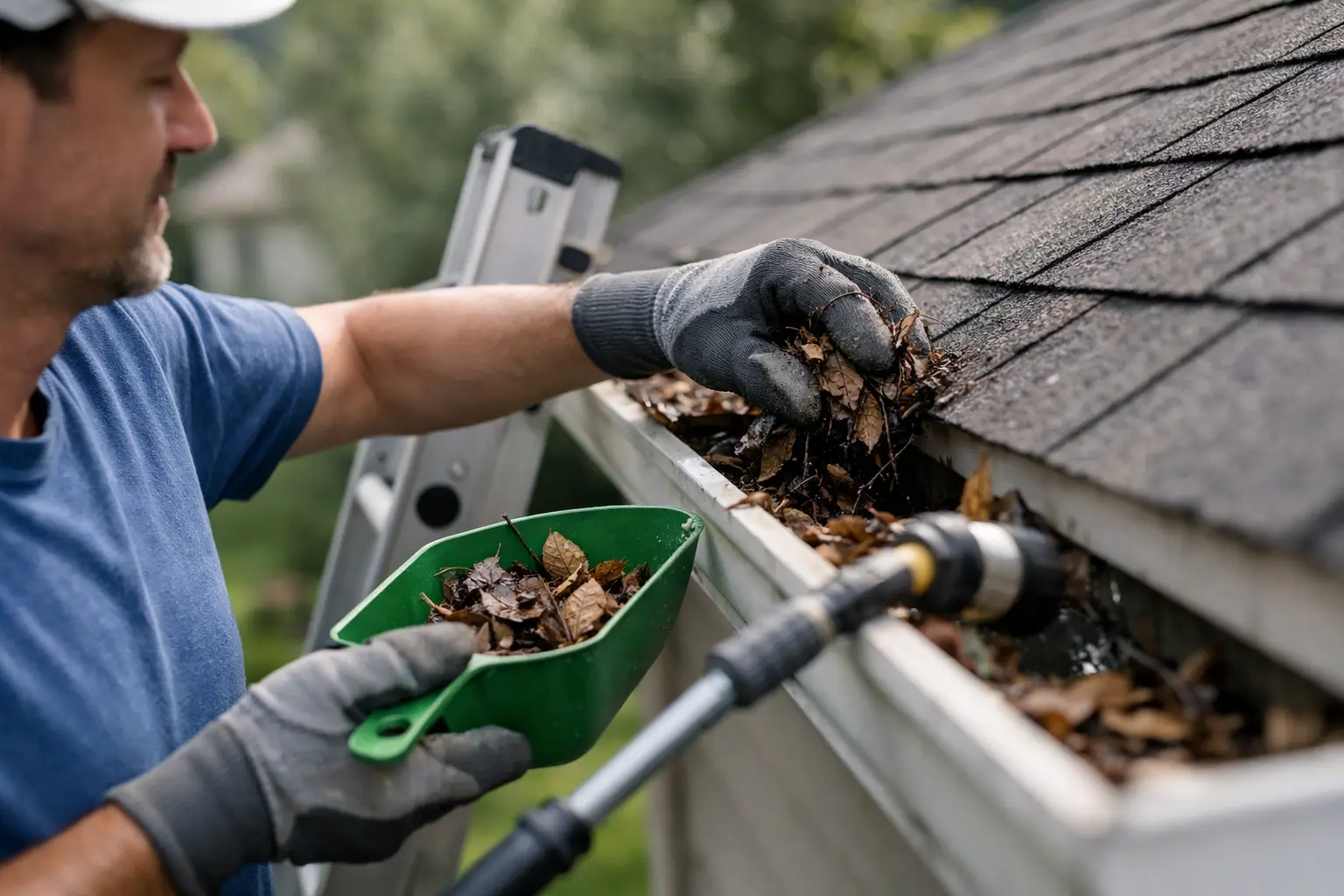
The first sign you need to know how to clean rain gutters usually shows up during a hard Florida rain. Water spills over the edge, runs down the siding, and starts pooling near the house instead of moving through the downspouts the way it should. That overflow is more than a mess. Over time, it can stain surfaces, rot fascia boards, erode soil, and push water too close to the foundation.
Gutter cleaning is one of those jobs that seems simple until you are on a ladder with wet debris in one hand and a hose in the other. The good news is that with the right setup, most homeowners can handle basic cleaning safely. The key is knowing when a routine cleanup is enough and when the condition of the gutter system points to a bigger repair issue.
How to clean rain gutters without making a bigger mess
Start by choosing a dry day with mild weather. Avoid cleaning right after a storm, because packed debris is heavier, slicker, and harder to remove. You also do not want to work on a ladder in windy conditions or while the roof edge is still wet.
Set up a sturdy extension ladder on level ground and use a ladder stabilizer if possible. That gives you better balance and helps protect the gutter from being bent by direct ladder pressure. Wear work gloves and eye protection. Gutter debris often contains sharp grit from shingles, small branches, roofing granules, insects, and muddy buildup that you do not want in your eyes or on your hands.
Before you start scooping, place a tarp below the work area. That keeps cleanup manageable and protects landscaping. A small plastic scoop, gutter tool, or even a gloved hand can be used to remove leaves, seed pods, and mud. Drop the debris onto the tarp or into a bucket attached to the ladder. Trying to throw debris as you work usually creates a bigger cleanup around the property.
Work in short sections. Remove the bulk debris first, then move on to flushing the gutter with a garden hose. Start at the end opposite the downspout and rinse toward it. If water backs up instead of draining out, the downspout likely has a clog. In many cases, a strong stream from the hose will clear it. If not, you may need to feed a plumber’s snake up from the bottom of the downspout or disconnect a lower elbow to remove the blockage.
Once the water is moving, pay attention to how the gutter performs. If standing water remains after flushing, the issue may not be debris. It could be an improper pitch, a sagging section, or fasteners pulling loose from the fascia. Cleaning helps you spot those problems early.
The tools that actually help
You do not need a garage full of specialty equipment to clean gutters well. Most homeowners can get the job done with a stable ladder, gloves, a scoop, a hose, and a bucket or tarp. Some people prefer a wet-dry vacuum attachment or extension wand, but those tools work best for light debris and can be less effective when gutters are packed with wet sludge.
If your home has one story and good ground access, telescoping tools can reduce ladder time. Still, they are not a perfect substitute for seeing the gutters up close. If you cannot clearly inspect joints, seams, hangers, and downspouts, you may miss leaks or damage that a simple rinse will not solve.
For two-story homes or homes with difficult rooflines, the trade-off changes. The cleaning itself may still be straightforward, but the safety risk goes up. That is often the point where professional service makes more sense than trying to save time or money with a DIY approach.
What to check while the gutters are clear
A clean gutter gives you a clear look at the condition of the whole system. Check for loose spikes or hangers, separated joints, rust spots, cracks, and areas where the gutter has pulled away from the house. Also look at the fascia board behind the gutter. Soft wood, peeling paint, or dark staining can point to repeated overflow or hidden leaks.
Downspouts matter just as much as the gutter trough itself. Make sure each downspout is firmly attached and directing water away from the home. If the outlet dumps too close to the foundation, you may still have drainage problems even after a full cleaning. In Central Florida, where heavy rain can hit fast, proper discharge is a major part of protecting the property.
You should also look for shingle grit collecting in the gutters. A small amount is normal over time, but heavy granule loss can signal roof wear. Gutter cleaning sometimes reveals issues that are technically not gutter problems at all, but they still affect how water moves off the home.
How often should gutters be cleaned?
That depends on the trees around the property, the type of roof, and how your home handles wind-driven debris. In many neighborhoods, cleaning twice a year is enough. In others, especially where oak, pine, or palm debris collects quickly, more frequent service may be needed.
Orlando-area homes often deal with a mix of leaves, seed pods, roof grit, and storm debris. A house with overhanging trees may need attention before the summer rainy season and again after fall leaf drop. If your gutters have a history of overflow, waiting for a set calendar date is not always the best plan. It is smarter to inspect them after major storms and clean them when buildup starts to affect flow.
Property managers often benefit from a regular maintenance schedule because it reduces emergency calls during heavy rain. Homeowners usually notice problems only after the overflow starts, but by then the water may already be affecting mulch beds, soffits, siding, or entry areas.
When cleaning is not enough
Sometimes people search for how to clean rain gutters when the real issue is not dirt or leaves. If gutters are sagging, leaking at seams, separating from the fascia, or draining poorly even when clear, cleaning alone will not fix the problem. You may be dealing with improper slope, worn hardware, failing joints, or sections that need repair or replacement.
Older sectional gutters are especially prone to leaks because they have more connection points. Seamless systems reduce those trouble spots and tend to give a cleaner appearance as well. That does not mean seamless gutters never need maintenance. They still need to be cleared and checked, but they often have fewer weak points where water can escape.
Leaf guards can also help, but they are not a cure-all. They reduce the amount of debris that enters the gutter, which can cut down on maintenance, but some systems still allow fine material to collect over time. The right option depends on the roofline, nearby trees, and how often clogs happen at your home.
When to call a professional
If the ladder setup feels unsafe, the roofline is steep, or the gutters are on a second story, bringing in a professional is usually the better decision. The same goes for homes with recurring clogs, visible leaks, or water pooling near the foundation after the system has already been cleaned.
A professional service does more than remove debris. It can identify drainage problems, loose sections, downspout issues, and signs that the gutter system is undersized or wearing out. For homeowners who want the job handled cleanly and correctly, that extra level of inspection is often worth it.
At Precision K-Gutters, that practical approach is what matters most. Some homes just need a straightforward cleaning. Others need repairs, downspout adjustments, or a better long-term solution to stop overflow from coming back every time the weather turns.
A few mistakes to avoid
The most common mistake is leaning a ladder directly against the gutter and crushing the front edge. Another is trying to rush the job with a leaf blower without checking where the debris is going or whether the downspouts are actually clear. Cleaning only the visible section near the ladder is also a problem, because clogs often sit deeper in the run or inside the downspout itself.
It is also easy to focus on the gutter and ignore what happens at the ground. If water exits the downspout and immediately settles next to the home, the system is still falling short. Good drainage is the goal, not just a clean gutter channel.
A clean gutter system does its job quietly. Water moves where it should, siding stays drier, landscaping holds up better, and the house is less exposed to preventable moisture problems. If you are going to take on the work yourself, do it carefully, inspect what you find, and treat gutter cleaning as part of a larger plan to protect the home.