
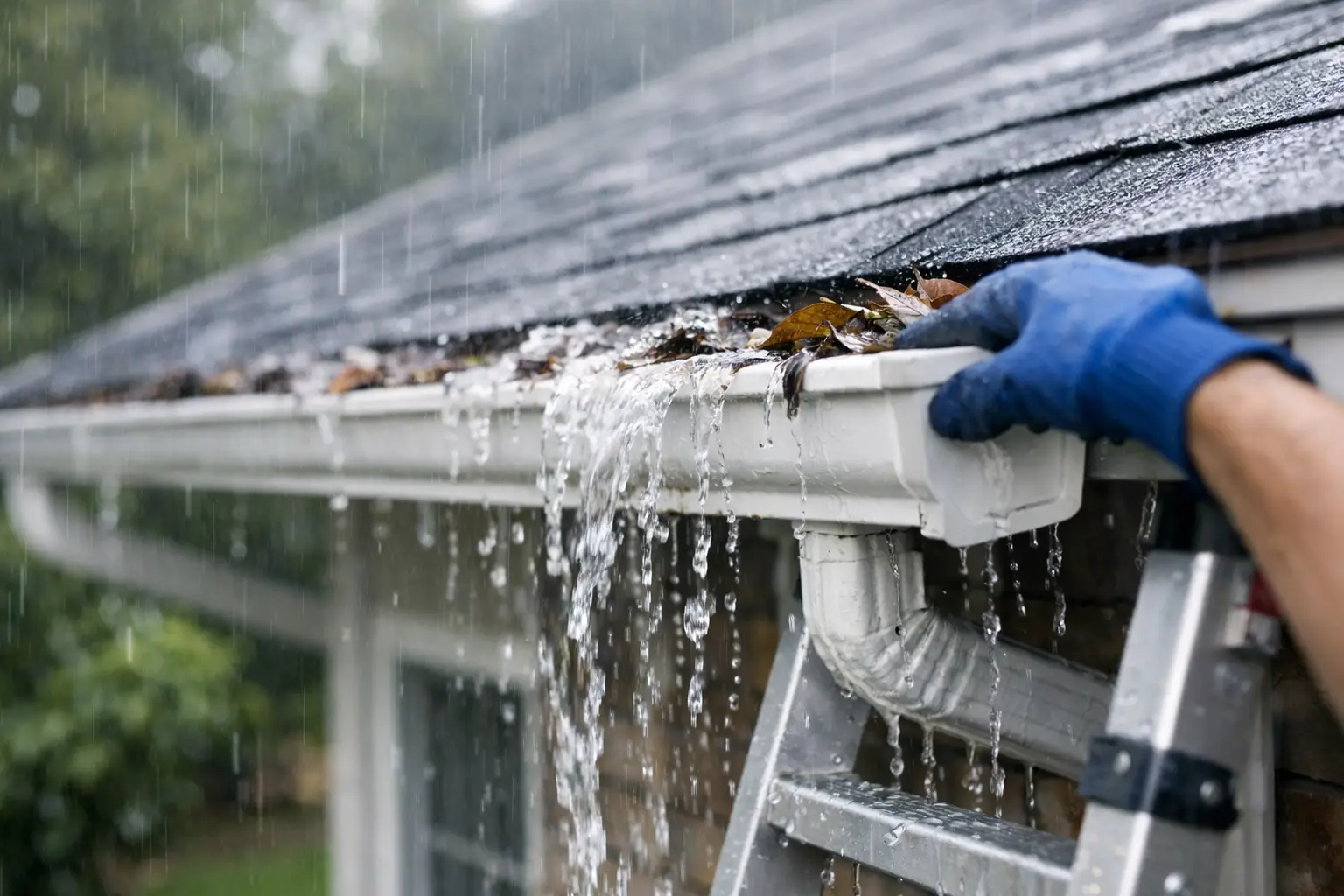
A gutter that spills water over the edge during a Florida downpour is not just annoying. It is a warning sign that your drainage system is falling behind when your home needs it most. If you are wondering how to prevent gutter overflow, the answer usually comes down to a few practical issues: buildup, poor pitch, undersized drainage, or damaged components that stop water from moving where it should.
In Orlando and across Central Florida, heavy rain can expose gutter problems fast. A system may look fine on a dry day, then overflow at the corners, behind the gutter, or near the downspouts as soon as a storm hits. When that happens repeatedly, the risk goes beyond the gutter itself. Water can soak fascia boards, stain siding, erode landscaping, and collect too close to the foundation.
Why gutters overflow in the first place
Most overflow problems are not caused by one issue alone. More often, two or three small problems build up until the system can no longer keep up with rainfall.
The most common cause is debris. Leaves, pine needles, roof grit, and small twigs collect in the trough and slow the flow of water. Even a partial blockage can create a backup during a hard rain. In a place like Orlando, where fast-moving storms are common, that backup can turn into spillover in minutes.
Pitch also matters. Gutters need a slight slope so water moves steadily toward the downspouts. If a section is sagging or was installed with poor alignment, water can pool instead of draining. Once standing water meets new rainfall, overflow becomes much more likely.
Downspouts are another frequent issue. A gutter may be clear, but if the downspout is clogged or too small for the volume of water, the whole system slows down. Water then backs up into the gutter channel and spills over the front or rear edge.
There is also the simple question of capacity. Some older systems or builder-grade gutters are not sized well for the roof area they serve. That matters even more on larger roof sections and steeper slopes that move rainwater quickly.
How to prevent gutter overflow with routine maintenance
The most reliable way to prevent overflow is to keep the system clean and check it before problems get worse. For most homes, that means regular gutter cleaning and visual inspections throughout the year, especially before the peak rainy season.
If you already know your property collects leaves, seed pods, or roof granules, waiting until water starts pouring over the sides is too late. By that point, debris has usually been building for a while. Cleaning out the troughs and flushing the downspouts gives water a clear path and helps you spot hidden issues, such as loose fasteners or standing water.
A simple ground-level check after a storm can tell you a lot. If water is sheeting over the edge, dripping behind the gutter, or pouring from one corner while the rest of the system looks quiet, something is off. Those signs usually point to a clog, an alignment problem, or a weak connection between sections.
For homeowners and property managers, consistency matters more than guesswork. A one-time cleaning can help, but properties surrounded by trees or exposed to frequent storms often need ongoing upkeep.
Check for the repairs that actually stop overflow
Cleaning is only part of the solution. If the gutter is loose, bent, or pulling away from the fascia, even a clean system can overflow.
Look closely at sections that appear to sag. Water always seeks the lowest point, and if that low point is not a downspout, the gutter will hold water where it should not. Over time, that extra weight can make the sagging worse. Re-securing hangers and correcting the slope can restore proper flow.
Seams and corners deserve attention too. Leaks at joints may not cause classic overflow, but they still let water escape in the wrong places. On older sectional systems, those leak points add up. This is one reason seamless K-gutters are a practical upgrade for many homes. With fewer joints, there are fewer places for leaks and weak spots to develop.
If water is slipping behind the gutter instead of entering it cleanly, the issue may be with the drip edge or the way the gutter sits against the roofline. That is not a cleaning problem. It is an installation or positioning problem that needs to be corrected if you want the system to perform properly in heavy rain.
How to prevent gutter overflow during heavy Florida rain
Central Florida storms are hard on gutter systems because rainfall can be intense and sudden. A setup that handles light rain may still struggle during a summer storm if the drainage path is too narrow or too slow.
This is where downspout performance becomes important. If water reaches the outlet faster than it can move down and away, the gutter backs up. Sometimes the fix is clearing a blockage. Other times it means adding a downspout, adjusting the location, or increasing drainage capacity in a problem area.
Roof design also plays a role. Long roof runs, steep pitches, and valleys can dump a lot of water into one section of gutter. If one area overflows while the rest of the home drains normally, that section may need a more targeted solution. It could require a larger downspout outlet, a re-pitched run, or a better-sized gutter system.
There is no one-size-fits-all answer here. Some homes need simple maintenance. Others need a design correction. The right fix depends on how the roof sheds water and how the existing gutter system was installed.
Do gutter guards help?
They can, but only when they match the property and are installed correctly.
Gutter guards are helpful because they reduce the amount of debris entering the gutter channel. That can lower the frequency of cleanings and improve water flow during storms. For homes with recurring leaf and pine needle buildup, guards can make a noticeable difference.
That said, guards are not a cure-all. They still need occasional inspection, and some lower-quality options can create new problems by slowing intake or allowing debris to collect on top. If the gutter has pitch issues, loose sections, or clogged downspouts, adding guards alone will not solve the overflow.
The best results come when guards are part of a broader solution. A clean, properly pitched, well-secured gutter system with functioning downspouts is the foundation. Once that is in place, leaf guard protection can help reduce future buildup.
When replacement makes more sense than repair
There comes a point when patching one issue after another is no longer the best use of your money. If the system has repeated leaks, separated joints, visible sagging, or chronic overflow in multiple areas, replacement may be the more practical route.
This is especially true when the existing gutters are older sectional units with several seam failures. Seamless K-gutters offer a cleaner appearance and fewer leak points, but the bigger benefit is performance. A custom-measured system fits the home more accurately and manages water more effectively when installed with the right pitch and downspout layout.
For Orlando-area homes, that matters. Stormwater is not forgiving, and small installation flaws show up quickly under heavy rainfall. Precision K-Gutters often sees overflow issues tied not just to debris, but to systems that were never set up correctly to begin with.
What homeowners should watch for
If you want to catch problems early, pay attention to what happens during and after a storm. Overflow at the front edge is the obvious sign, but it is not the only one. Water marks on siding, mulch washout below one corner, peeling paint near the fascia, or puddling near the foundation all point to drainage issues.
You may also hear the problem before you see it. Loud dripping behind the gutter, water hammering one downspout, or constant splashing near entryways can signal that water is escaping where it should not.
The earlier you address these signs, the simpler the fix tends to be. Waiting usually turns a maintenance issue into a repair issue, and a repair issue into possible damage to trim, soffit, landscaping, or masonry.
A practical approach that works
If your goal is to prevent gutter overflow, focus on the basics first. Keep the system clean, make sure water can reach and move through the downspouts, and correct any sagging or alignment problems before the next major storm. If overflow keeps happening, the issue is probably not just debris. It may be the layout, sizing, or condition of the system itself.
A good gutter system should do its job quietly. When rain is heavy, you should see water moving through the downspouts and away from the home, not pouring over edges or collecting around the foundation. If your gutters are telling you otherwise, it is worth addressing now, while the fix is still straightforward.