
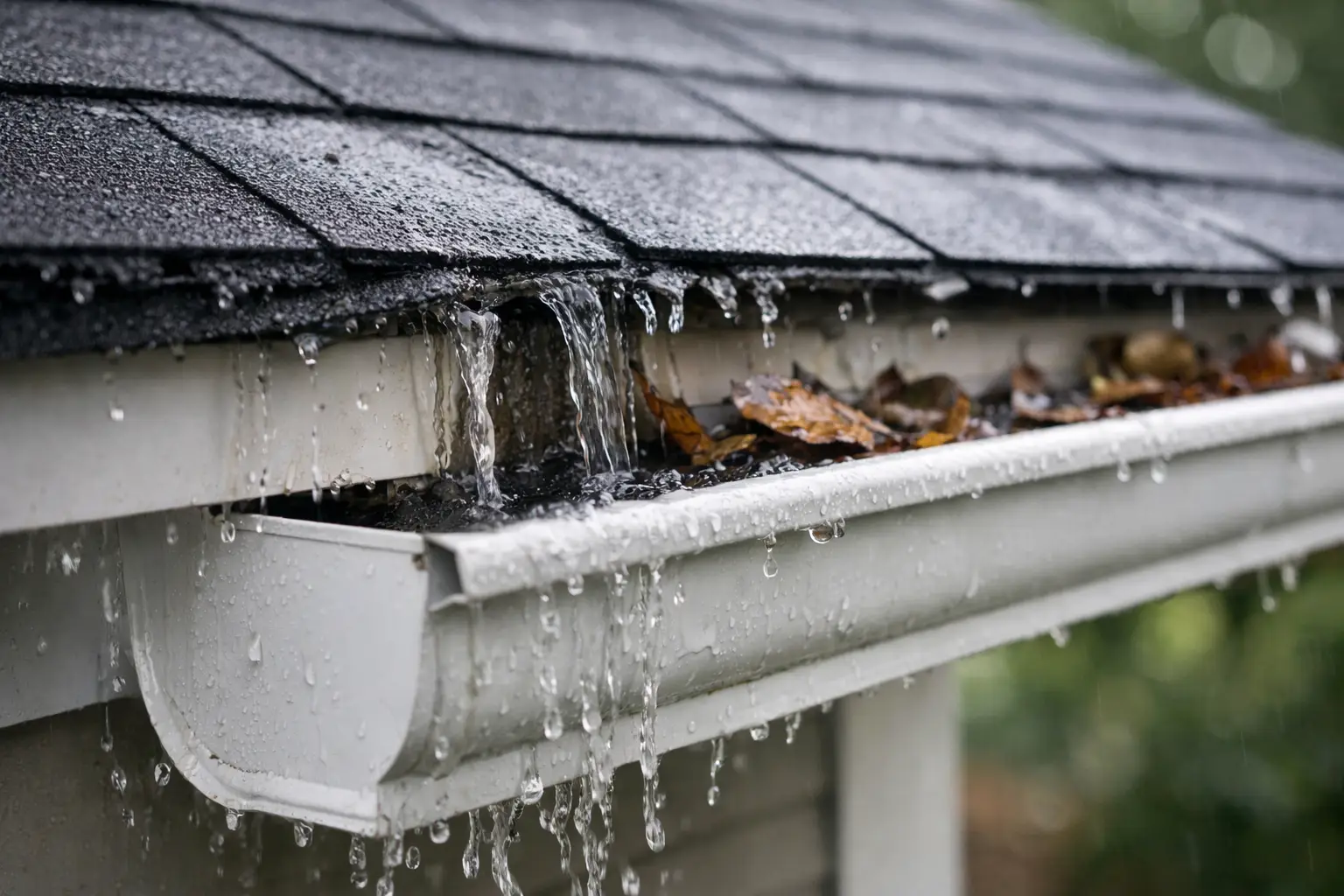
A gutter can look fine from the ground and still let water run behind it every time it rains. If you are asking what causes water behind gutters, the answer is usually not one single issue. It is often a mix of clogs, poor pitch, installation problems, or worn roofing components that keep rainwater from dropping cleanly into the gutter where it belongs.
In Central Florida, this problem tends to show up fast. A short, heavy storm can push a weak gutter system past its limit in minutes. When water slips behind the gutter instead of through it, it can stain fascia boards, rot wood, damage soffits, and leave moisture around the foundation. The longer it goes untreated, the more expensive it usually becomes.
What causes water behind gutters most often?
The most common cause is simple overflow. When gutters fill with leaves, shingle grit, seed pods, and roof runoff debris, water cannot move to the downspouts fast enough. Instead of draining forward and away from the house, it spills over the back edge and runs down the fascia.
That said, overflow is only part of the story. Water can also get behind gutters when the gutter is installed too low, too far from the roof edge, or with the wrong slope. In some homes, the gutter itself is not the main problem at all. The issue may be with the drip edge, roof shingles, or fascia board behind it.
The reason this matters is straightforward. Water behind the gutter does not just disappear. It usually ends up soaking materials that were never meant to stay wet.
Clogs and overflow during heavy rain
A clogged gutter is still the first thing most professionals check, and for good reason. Even a partial blockage can slow the system enough to create backup during a Florida downpour. If the front edge of the gutter is full and the back edge is lower than the water line, rain will roll behind it.
This can happen even if the gutter does not look packed solid. Wet debris gets heavy and compresses into the bottom of the trough, leaving just enough space to fool a homeowner into thinking water should still pass through. In reality, the flow is restricted, especially near downspout openings.
If one section overflows only during hard rain, the gutter may be undersized for the roof area feeding it. That is less common than a clog, but it does happen. A larger roof plane can dump a surprising volume of water into one short run of gutter.
Improper gutter pitch or sagging sections
Gutters need a slight slope so water moves toward the downspouts. If that pitch is off, water slows down, pools, and eventually spills in places it should not. A section that is level or back-pitched can send water toward the fascia instead of the outlet.
Sagging makes the problem worse. Fasteners loosen over time, especially on older systems or gutters attached to wood that has started to soften. Once the gutter begins to pull away or dip in the middle, water collects in the low spot and often finds the easiest path behind the gutter.
This is one of those problems that can look minor until a storm hits. A slight sag may not stand out from the yard, but under a heavy roof runoff load, it changes how the whole section performs.
Why spacing and support matter
A gutter system needs enough hangers and secure attachment points to stay tight against the home. If supports are spaced too far apart, the gutter can flex under the weight of standing water and debris. Over time, that movement opens gaps and changes the pitch.
On homes with fascia damage, a contractor may tighten the gutter temporarily, but if the wood behind it is compromised, the repair will not hold for long. In that case, the structure behind the gutter has to be addressed, not just the metal on the outside.
Missing or poorly installed drip edge
A drip edge is the metal flashing that helps guide roof water into the gutter. When it is missing, too short, or tucked incorrectly, water can cling to the roof deck and run behind the gutter by surface tension. Homeowners often assume the gutter is failing when the real issue is how the roof edge handles runoff.
This is especially common on older homes or homes that have had roof work and gutter work done at different times by different crews. If the roof edge and gutter placement do not line up properly, rain can slip behind the system even when the gutters are clean.
In practical terms, this means a new gutter alone may not solve the problem. If the drip edge is wrong, the water path is wrong. The system has to work together.
Gutters installed too far from the roof edge
Placement matters more than many people realize. If there is too much gap between the shingles and the back of the gutter, water can overshoot the trough or fall into the space behind it. That becomes more likely during wind-driven rain, which is common in Orlando-area storms.
A gutter can also be installed too low. In that setup, water coming off the roof may not drop deep enough into the channel before momentum carries it past the back wall or over the edge. On steep roofs, this becomes even more noticeable.
This is why custom-measured seamless systems usually perform better than one-size-fits-all sections. Proper fit is not just about appearance. It directly affects how water is captured and moved away from the house.
Roofing issues that look like gutter problems
Sometimes homeowners see staining behind a gutter and assume the gutter itself is the cause. That is not always true. Damaged shingles, deteriorated underlayment, and roof edge wear can let water escape before it ever reaches the gutter line correctly.
Shingle overhang matters too. If shingles extend too far past the roof edge, water may curl back underneath instead of dropping straight off. If they do not extend far enough, water can run onto the fascia area. Both conditions can create signs that look like gutter failure.
This is one of those it-depends situations. The gutter may still need repair, but if the roofing edge is part of the problem, treating only the gutter leaves the root cause in place.
Damaged fascia and soffit can make it worse
Once water starts getting behind gutters, the fascia board often takes the hit. As wood absorbs repeated moisture, it can swell, soften, and begin to rot. When that happens, the gutter loses a stable mounting surface and starts to pull away even more.
That creates a cycle. Water gets behind the gutter, the fascia weakens, the gutter separates from the house, and then even more water escapes where it should not. By the time paint peels or soffits show stains, the problem may have been active for a while.
For property managers, this is where delayed maintenance gets expensive. What starts as a drainage issue can turn into trim repair, repainting, soffit work, and pest exposure if openings develop.
How to tell whether it needs cleaning, repair, or replacement
If the problem happens only in one area and the gutter is full of debris, cleaning may be enough. If the gutter is clean but still leaks behind the back edge, the next step is usually checking pitch, hanger security, outlet flow, and roof-edge alignment.
Repairs make sense when the system is structurally sound overall but has isolated trouble spots. That might mean re-securing sections, correcting slope, adjusting downspouts, or addressing a gap at the roof edge. Replacement is more likely when the gutter has widespread sagging, repeated leaking seams, rust, or poor original layout.
For many Orlando homeowners, the biggest mistake is assuming every water issue means they need all new gutters. Sometimes they do. Sometimes they need a focused repair and a proper cleaning schedule. A good inspection should separate those two honestly.
Why fast action matters in Florida
Florida weather is not gentle on exterior systems. Frequent storms, wind-driven rain, high humidity, and fast debris buildup put gutters under steady pressure. A small drainage problem in a dry climate may stay manageable for months. Here, it can turn into active wood damage much faster.
That is why routine service matters. Clean gutters, secure mounting, correct slope, and proper water discharge all work together. If one part is off, the rest of the system has to compensate, and that rarely holds up for long.
At Precision K-Gutters, this is exactly why gutter work is approached as water management, not just metal attached to a roofline. The goal is simple: keep rain moving where it should, and keep it away from the parts of your home that are expensive to repair.
If you notice staining on fascia, drips behind the gutter, peeling paint, or water collecting below roof edges after a storm, do not wait for obvious rot to confirm there is a problem. Catching it early usually means a cleaner fix, a lower cost, and a lot less stress the next time the sky opens up.