
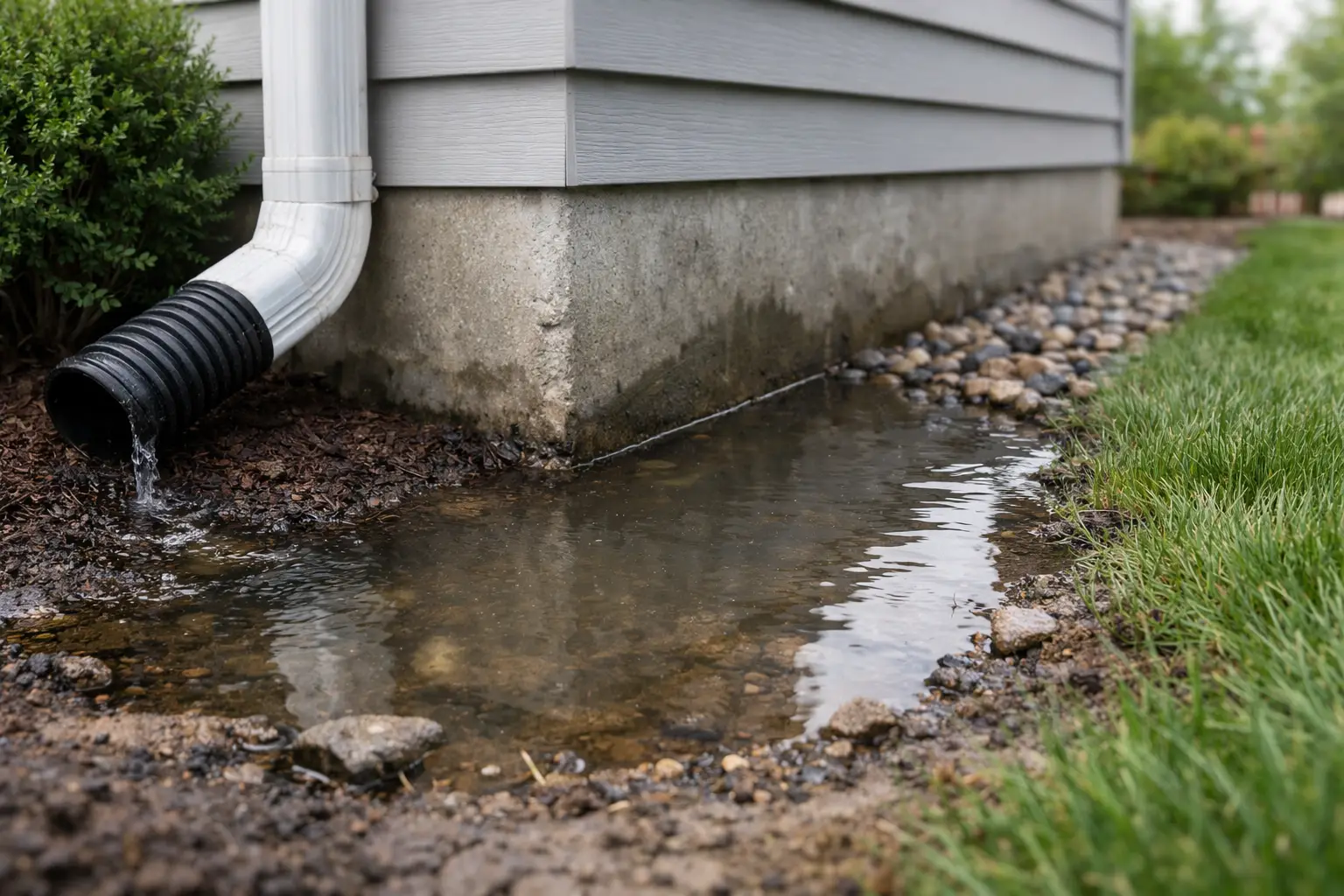
A hard Florida rain can tell you a lot about your house in just ten minutes. If water starts collecting along the base of the walls, running off the roof in sheets, or sitting near corners after the storm passes, that is not just a drainage nuisance. It is a warning sign. The fastest way to prevent foundation water pooling is to control where roof runoff goes and make sure the ground around your home sheds water instead of holding it.
For many homeowners, the problem starts overhead. Gutters clog, downspouts dump too close to the house, or sections pitch the wrong way and overflow during heavier storms. In Central Florida, where sudden downpours are common, even a small drainage issue can turn into repeated saturation around the foundation.
Why water pools around a foundation
Water pooling near a foundation usually comes from one of three places – roof runoff, poor grading, or drainage bottlenecks in the yard. Sometimes it is one issue. More often, it is a combination.
When gutters are undersized, clogged, loose, or leaking at the seams, rainwater spills straight down next to the home. If the downspouts end too close to the slab, all that roof water is concentrated in one spot. Over time, that repeated soaking can lead to erosion, staining, settlement concerns, and moisture problems around the perimeter.
Grading matters just as much. Even if the gutter system is working, water can still collect if the soil slopes toward the house or has low spots near the foundation. In newer neighborhoods and homes with landscaping beds, this is common. Decorative edging, mulch buildup, and settled soil can accidentally trap water where it should never sit.
There is also the Florida factor. Sandy soil can drain quickly in some areas, but compacted fill, clay pockets, and flat lots can hold water longer than people expect. What works on one property may not be enough on the next.
Start with the gutter system
If you want to prevent foundation water pooling, gutters and downspouts are usually the first place to look. They are your home’s first line of water control, and when they are doing their job, they move a large volume of rain safely away from the structure.
A proper gutter system should catch roof runoff without frequent overflow, carry it through the channel efficiently, and direct it away from the home through correctly placed downspouts. If any part of that chain breaks down, water ends up at the base of the house.
Seamless gutter systems can help because they reduce the number of joints where leaks often start. They also give a cleaner finish and tend to perform better over time when sized and pitched correctly. That does not mean every home needs a full replacement, but if you are dealing with recurring overflow or visible leaks at multiple seams, repairs may only buy limited time.
Gutter cleaning is just as important. A system full of leaves, roof grit, and shingle debris cannot move water the way it should. During a summer storm, clogged sections fill up fast and spill over the front edge. That overflow often lands in the exact areas where homeowners later notice standing water.
Downspouts matter more than most homeowners think
A working gutter system still falls short if the downspouts discharge too close to the house. This is one of the most common reasons water gathers near foundations.
Downspouts should carry water far enough away that it cannot immediately flow back toward the slab. In many cases, extensions or adjustments are enough to make a major difference. On other properties, especially where the lot is flat, a buried drain line or a more defined drainage path may be the better answer.
Placement matters too. If several roof sections feed into one corner, that corner may be getting more water than the current setup can handle. You may need additional downspouts or a better distribution plan instead of simply adding a longer elbow at the bottom.
This is where a direct inspection helps. The issue is not just whether water leaves the gutter. It is where that water goes next.
Check the slope around the home
Even with good gutters, poor grading can keep the problem going. The ground around your home should slope away from the foundation so water naturally moves outward instead of settling at the base.
You do not always need major regrading to improve this. In some cases, adding soil to low areas and correcting settled spots near the perimeter is enough. The key is to create a consistent path away from the house, not just build up one patch and hope it solves everything.
Landscaping features can interfere here. Flower bed borders, decorative stone, tree roots, and compacted mulch can all slow drainage or create small basins. A yard can look neat and still move water poorly. If pooling keeps happening in the same place, the shape of the ground needs as much attention as the gutter line above it.
Signs you have a drainage problem, not just a rain problem
Some homes only show drainage issues during the heaviest storms, but there are usually clues before that. Water marks on the exterior, muddy splashback, algae near the base of walls, washed-out mulch, and eroded trench lines under roof edges all point to runoff landing where it should not.
Inside the home, musty odors, damp garage edges, minor cracking, or moisture around baseboards can also suggest outside water is not being managed well. Those signs do not always mean structural damage, but they do mean the problem should be addressed before it gets more expensive.
If one area stays wet long after the rest of the yard dries out, that is another red flag. Standing water that lingers is rarely harmless around a foundation.
The most effective ways to prevent foundation water pooling
The right fix depends on what is causing the buildup, but most solutions fall into a few practical categories. Clean the gutters if blockage is part of the problem. Repair leaks, sagging sections, or bad pitch if water is escaping before it reaches the downspouts. Extend or redirect downspouts if discharge is too close to the house. Correct the grading if water naturally runs back toward the structure.
Sometimes homeowners focus on one fix when they really need two. For example, longer downspouts help, but not much if the yard immediately slopes back toward the foundation. Regrading helps, but it will not solve overflow caused by clogged gutters during every storm. Good water management works as a system.
Leaf protection can also help reduce repeat clogging, especially in areas with heavy tree cover. It is not a cure-all, and performance depends on the roofline and debris type, but it can reduce the maintenance burden and keep water moving more consistently between cleanings.
When a simple fix is enough – and when it is not
Not every drainage issue calls for major work. If the gutters are solid and the problem is limited to short downspouts or one low spot in the soil, a targeted correction may be all you need. That is the best-case scenario.
But if you have recurring overflow, multiple leak points, rusted sections, separated joints, or undersized gutters on larger roof areas, patching the symptoms may not last. The same goes for homes where water problems show up in several corners at once. In that case, it makes sense to look at the entire runoff system instead of chasing one wet spot after another.
For homeowners in Orlando, this matters because storms are not occasional stress tests. They are routine. A gutter system that barely manages average rain will usually struggle when the real downpours hit.
A smarter approach before the next storm
The best time to address pooling is before you see standing water again. Walk the property after a moderate rain if you can do so safely. Watch where the roof water exits, where it lands, and whether it keeps moving. If it does not, that is your starting point.
A professional gutter and drainage assessment can usually identify the issue quickly. Sometimes the answer is maintenance. Sometimes it is a repair. Sometimes the home needs a better gutter layout altogether. Precision K-Gutters works with homeowners who want that kind of direct, practical solution – no guesswork, just clear recommendations based on how the property actually handles water.
Water near your foundation is one of those problems that looks minor until it repeats often enough. If you fix the path water takes now, you give your home a better chance of staying dry, stable, and easier to maintain through the next round of Florida rain.