
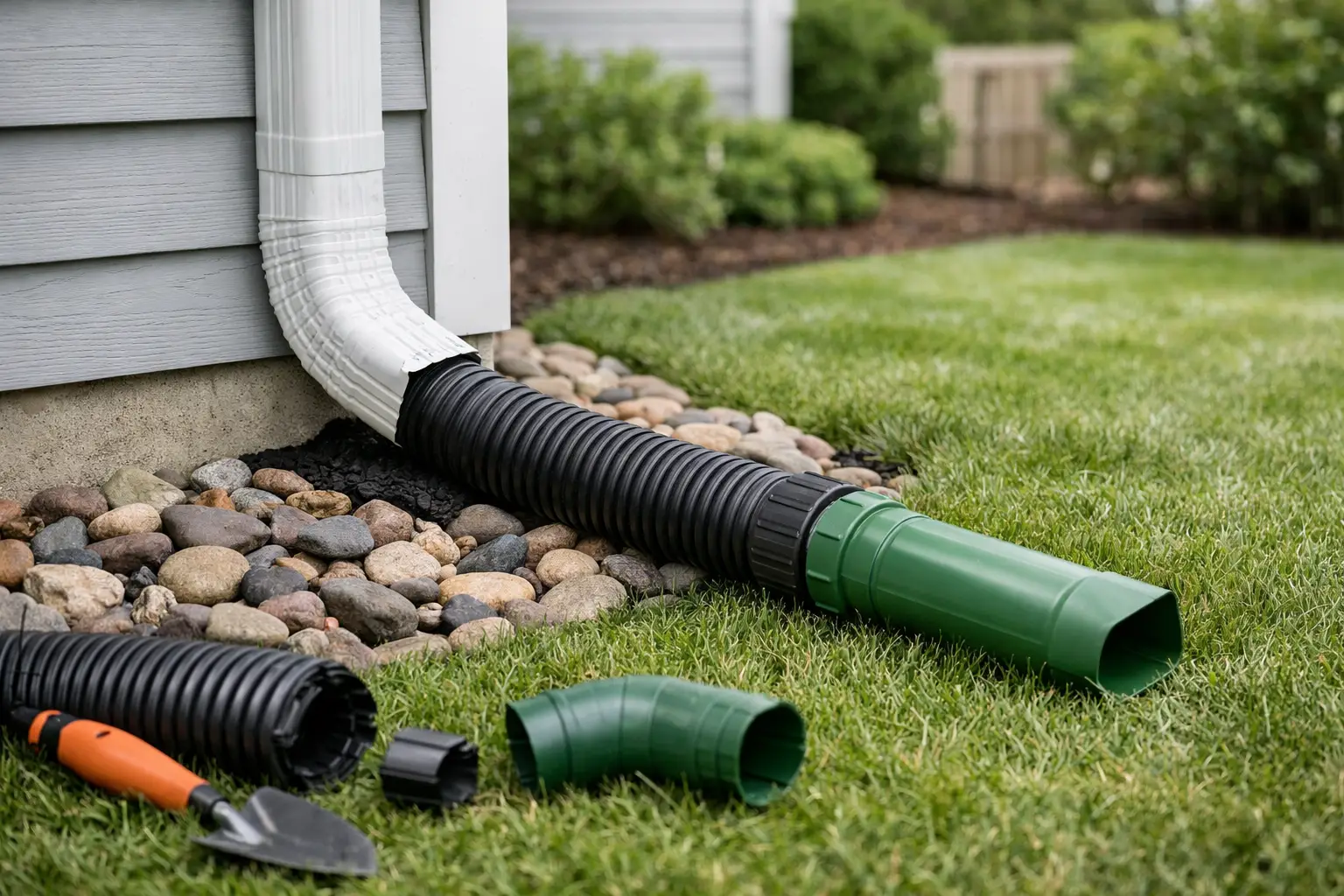
A downspout that dumps water a foot from the house is not doing enough in a Florida rain. When a storm drops heavy water fast, that short discharge point can leave you with muddy beds, washouts, siding stains, and water collecting near the foundation. If you are wondering how to extend downspouts, the goal is simple: move roof runoff farther away from the home in a controlled way.
That sounds straightforward, but the best setup depends on your yard, your drainage pattern, and how much water your gutter system handles during a typical storm. A quick extension can solve the problem in some cases. In others, the wrong extension creates a new one, like water running onto a walkway, pooling near an AC pad, or backing up at the elbow.
Why extending downspouts matters
Your gutters collect a large volume of water and send it to a few concentrated exit points. If those downspouts release too close to the house, the soil next to the foundation gets saturated over and over. Over time, that can contribute to settlement issues, staining, rot around lower trim, mulch washout, and standing water that never quite dries.
In Central Florida, this matters even more because storms can be intense and frequent. A downspout extension helps spread that water farther from the home so it has a better chance to drain away instead of soaking the same perimeter area every week.
A proper extension also protects the gutter system itself. When water cannot move away cleanly, you often see splashback, erosion under the outlet, and muddy buildup that makes the whole area harder to maintain.
How to extend downspouts based on your yard
There is no single best extension for every property. The right choice depends on grade, landscaping, hardscape, mowing needs, and how visible you want the solution to be.
The simplest option is an above-ground extension attached to the bottom elbow. These are common because they are affordable, quick to install, and easy to inspect. If your yard slopes away from the house and you have a clear discharge area, this can work well.
A low-profile extension is often better when a standard piece sticks out too far into a walkway, planting bed, or lawn area. It keeps water moving while reducing the trip hazard and making the run less obvious.
Buried drain pipe is another option when you want a cleaner look or need to carry water farther across the yard. This approach can work very well, but only if the pipe has the right slope and discharges to a suitable location. If buried drainage is poorly pitched or clogged with debris, it tends to fail out of sight until you notice overflow at the house.
Start by checking the current drainage problem
Before you buy parts, watch what happens during a hard rain. You want to know whether the issue is only the downspout outlet or if the gutter system also has clogs, poor pitch, leaks, or undersized drainage.
Look at where the water lands now. If it is pooling immediately, washing a trench in the soil, or running back toward the slab, an extension is likely needed. Also check whether the gutter above that downspout is overflowing. If it is, adding an extension alone will not fix the full problem.
It also helps to measure how far the water should be moved. Many homes benefit from carrying discharge at least several feet away from the foundation, but the exact distance depends on the slope of the yard and where the water can safely go. Farther is not automatically better if it means sending runoff toward a neighbor’s lot line, a sidewalk, or a low spot that already holds water.
Materials and fitting basics
Most residential downspout extensions connect to either aluminum or vinyl downspout components. The extension should match the size and shape of the existing downspout so water flow is not reduced at the transition.
If you are using a rigid extension, secure connections matter. Loose joints separate over time, especially during heavy flow or after lawn work. If you are using a flexible extension, make sure it does not kink or sag. Those low points collect debris and slow drainage.
A splash block can still be useful at the end of an extension, especially where the soil is soft. It helps spread the discharge and reduce erosion. Just do not rely on a splash block alone if the outlet is still too close to the house.
Installation details that make a difference
When homeowners ask how to extend downspouts, the biggest mistake is treating it like a one-size-fits-all add-on. Placement matters just as much as the extension itself.
Keep the run as direct as possible. Every extra bend creates more resistance and another place for debris to catch. If the extension crosses a path people use often, choose a lower-profile approach or reroute it. Convenience matters because anything that becomes a mowing obstacle or trip hazard often gets moved, crushed, or removed later.
Pay attention to slope. Water needs a continuous path away from the home. If an extension runs flat or uphill even slightly, performance drops fast during heavier rain. That is especially true with buried pipe, where a bad slope is harder to notice.
Discharge location is another common issue. You want the water to end in an area that can actually handle runoff. That might be a sloped lawn area, a drainage swale, or another approved drainage point on the property. It should not empty into a bed that already stays wet, against a fence line, or into a spot that sends water right back across the driveway.
Common problems after extending downspouts
A new extension is not always the end of the job. Sometimes it reveals another drainage problem that was already there.
If water still pools near the house, the grading may be wrong. A downspout extension can help, but it cannot overcome soil that slopes back toward the foundation. If the outlet floods during storms, the yard may need drainage improvements beyond the gutter system.
If the extension keeps clogging, look higher up. Shingle grit, leaf debris, and roof runoff can carry enough material to block elbows and low spots. This is one reason routine gutter cleaning matters. Clean gutters and clear downspouts give any extension a better chance of working properly.
You may also notice the extension gets knocked loose. That usually means it needs better fastening, a different route, or a more durable material for the area. A setup that works on paper still has to hold up to mowing, foot traffic, and regular weather.
When a buried extension makes sense
Buried downspout drains are popular because they keep the yard cleaner-looking and remove surface obstacles. For some homes, they are the best long-term choice. But they need to be planned carefully.
The pipe needs proper pitch from start to finish, and the outlet must remain clear and accessible. If the outlet disappears into thick grass or mulch, it may clog without being noticed. In flat lots, buried drainage sometimes needs more design work than homeowners expect.
This is also where local conditions matter. In parts of Orlando, sandy soil can drain well, but flat grading and sudden storm volume still create trouble. If a property already struggles with standing water, simply burying the extension may not solve the larger drainage pattern.
Signs it is time to call a professional
If the project is simple and your drainage path is clear, extending a downspout can be a practical DIY fix. But not every home has a simple runoff pattern.
Professional help is worth it when gutters overflow during storms, multiple downspouts drain into the same low area, buried lines may be involved, or the yard has grading issues. The same goes for homes with recurring erosion, staining, or water intrusion around the base of the structure.
A professional can also tell you whether the downspout location itself should be adjusted instead of just extended. In some cases, moving or reworking the discharge setup creates a cleaner result than adding more attachments to a poor layout. Precision K-Gutters sees this often on homes where previous fixes were added piece by piece without addressing the full drainage path.
A smarter way to think about downspout extensions
The best extension is the one that moves water away reliably, holds up over time, and does not create a new maintenance problem. That may be a short above-ground run, a low-profile discharge, or a buried drain tied into a larger drainage plan.
If you are deciding how to extend downspouts, focus less on the part itself and more on where the water goes next. A good drainage solution should look clean, work during the heaviest rain, and give your home a little more protection every time the sky opens up.