
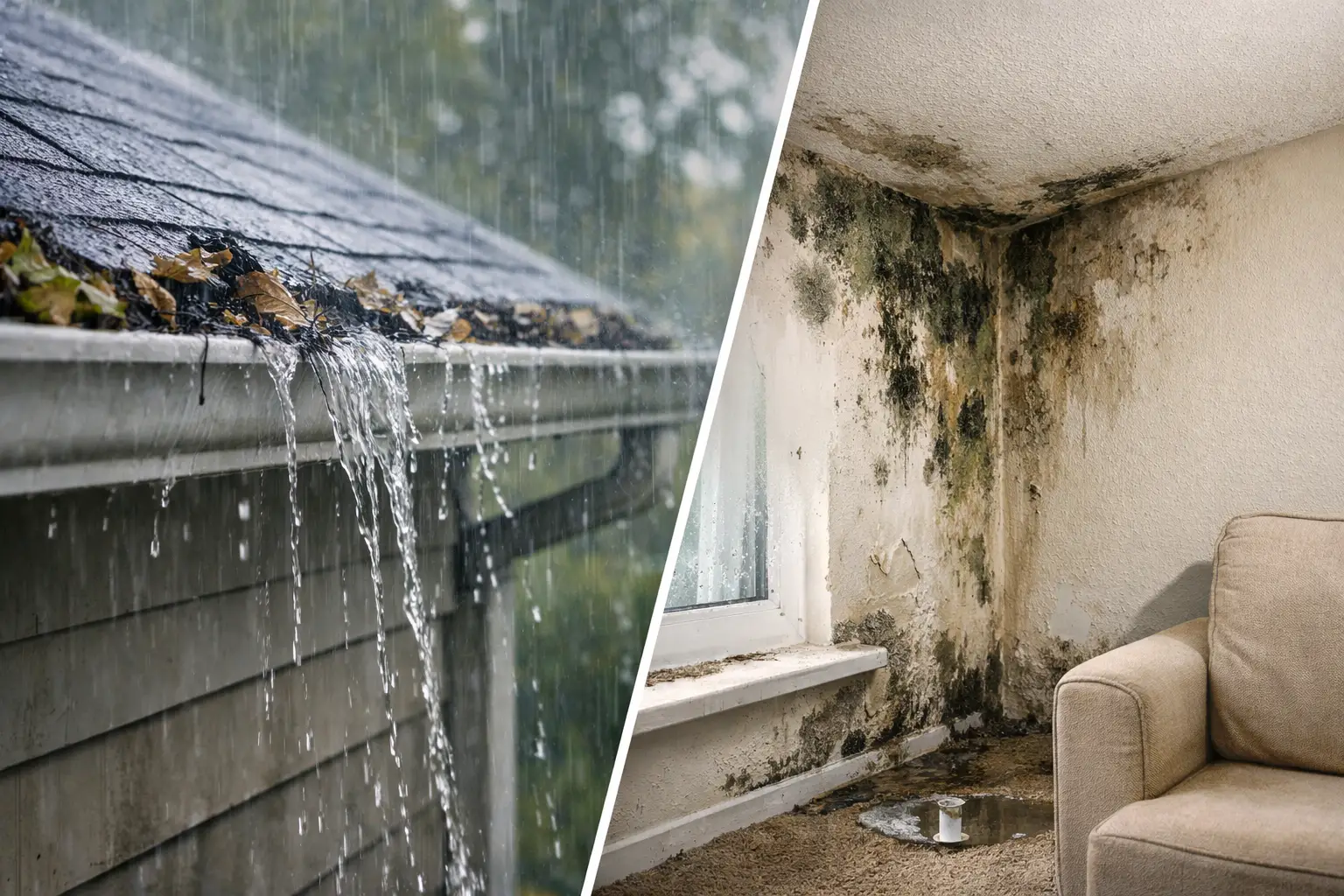
A gutter problem can look minor from the ground: a little overflow during a hard storm, a dark streak near the roofline, or water dripping from a loose seam. But can bad gutters cause mold? Yes. When failing gutters repeatedly direct water where it does not belong, they can create the damp conditions mold needs to grow inside or outside a home.
For Orlando homeowners, the risk is higher than it may be in drier climates. Heavy rain, frequent afternoon storms, warm temperatures, and humidity can keep building materials damp longer. Gutters do not create mold spores, but they can create the moisture problem that allows existing spores to take hold.
How Bad Gutters Lead to Mold
A working gutter system collects roof runoff and moves it through downspouts to a safe area away from the house. When the system is clogged, leaking, sagging, undersized, or draining in the wrong direction, water can spill over or run behind the gutter instead.
That water may soak fascia boards, roof decking, soffits, siding, window trim, and the soil around the foundation. If those materials stay wet after each storm, mold can grow on surfaces or within hidden cavities where moisture is harder to spot.
The most common gutter-related mold path starts at the roof edge. Debris blocks the gutter channel, water backs up, and overflow wets the fascia and soffit. From there, moisture can work into the attic, wall assembly, or ceiling area. A slow leak at a gutter seam can cause the same problem over time, even if it never produces a dramatic overflow.
Poor downspout drainage creates another risk. If a downspout empties beside the foundation, water can collect along the exterior wall. That moisture may enter through cracks, poorly sealed penetrations, or porous masonry. It can also raise humidity in a crawl space or lower wall area, especially after repeated storms.
Can Bad Gutters Cause Mold Inside the House?
They can, although the mold may not appear directly below the gutter problem. Water often travels along framing, insulation, or roof decking before it becomes visible indoors. By the time a ceiling stain, peeling paint, or musty smell appears, the affected area may already be larger than expected.
In some homes, a gutter issue leads to roof-edge rot first. Once wood fascia or soffit deteriorates, rain has an easier path into the attic. Attic insulation can absorb moisture, and warm Orlando air can make that space a favorable environment for mold growth.
Wall cavities are another concern. Overflowing water against siding can get behind trim, especially around windows, doors, and exterior utility penetrations. The drywall inside may remain dry-looking for a while, but the backing paper, wood framing, or insulation can hold moisture out of sight.
It depends on the home and the severity of the drainage problem. A single overflow during an extreme storm will not automatically cause mold. Repeated wetting, slow leaks, poor drying conditions, and neglected repairs are what turn a drainage issue into a moisture problem.
Warning Signs That Gutters May Be Feeding a Moisture Problem
A mold issue is not always visible right away. Watch for changes after heavy rain, particularly around roof edges and exterior walls. These signs are worth addressing before the next storm cycle:
- Water spilling over the front or back of gutters during normal rainfall.
- Dark staining, peeling paint, soft wood, or visible rot on fascia and soffits.
- A musty odor in the attic, near exterior walls, or in rooms below the roofline.
- Mildew spots on exterior siding, soffits, ceilings, or interior walls.
- Soil erosion, standing water, or mulch washout near downspouts and the foundation.
You may also notice sagging gutter sections or downspouts that discharge too close to the home. These are drainage warnings, not just appearance issues. If water is not leaving the roofline and property correctly, it will eventually find another place to go.
The Gutter Problems That Deserve Fast Attention
Clogs are the most familiar issue, but they are not the only cause of overflow. Leaves, pine needles, roof grit, seed pods, and nesting material can stop water from moving toward the downspout. In Central Florida, debris can build up quickly, especially after storms.
Loose hangers and sagging sections can change the gutter pitch. Gutters need a gradual slope so water reaches the downspout instead of pooling in the middle. Standing water adds weight, puts more stress on the system, and can accelerate leaks at seams and end caps.
Leaks behind the gutter are especially easy to miss. This often happens when the drip edge is not directing roof water into the gutter or when a damaged section has pulled away from the fascia. Rain then runs down the back of the gutter, keeping the wood behind it wet.
Downspouts also need to be sized, placed, and aimed properly. A downspout that is clogged, crushed, disconnected, or too short can dump roof runoff directly against the house. Adjusting the outlet or adding an extension may be a simple fix, but it needs to move water to an area that drains safely.
How to Prevent Mold From Gutter-Related Water Damage
The practical goal is simple: keep water moving off the roof, through the gutters, and away from the home. Start by checking the system during or shortly after a steady rain. You do not need to climb a ladder to spot every issue. From the ground, look for overflow, dripping seams, sagging runs, and water collecting near the foundation.
Gutter cleaning is the first line of defense when debris is the problem. Clean gutters and downspouts allow water to move freely, but cleaning alone will not correct a poor slope, damaged fascia, failed fasteners, or a downspout that drains in the wrong location.
For homes with recurring debris buildup, leaf guard solutions can reduce how often material enters the gutter channel. They are not a replacement for all maintenance, and the right option depends on roof design, nearby trees, and the type of debris on the property. Still, a properly selected guard can help reduce clogs and overflow between cleanings.
Seamless K-gutters are also worth considering when an older sectional system has multiple leaking joints. Because they are custom measured and formed for the home, seamless systems have fewer connection points along each run. They still require correct installation and maintenance, but fewer seams can mean fewer common leak locations.
If you already see mold indoors, do not assume gutter repair alone will solve every part of the issue. The moisture source must be corrected, and affected building materials may need inspection, drying, cleaning, or replacement depending on the extent of the damage. Mold that covers a large area, returns after cleaning, or appears alongside soft drywall or visible water damage should be evaluated promptly.
When to Call a Gutter Professional
A professional inspection makes sense when gutters overflow despite cleaning, sections are pulling away from the house, water is getting behind the gutter, or downspouts are depositing water near the foundation. These issues are often more than a quick patch, especially if wood rot has started around the roofline.
Precision K-Gutters helps Orlando-area homeowners address clogged, leaking, sagging, and poorly draining gutter systems with clear recommendations and clean, professional work. Whether the right answer is a repair, downspout adjustment, cleaning, leaf guards, or a custom seamless gutter installation, the focus should be on directing water where it belongs.
After the next hard rain, take a few minutes to walk around the property. The water patterns you see at the roofline and foundation can reveal a problem early, before moisture has time to become mold, rot, or a larger repair.